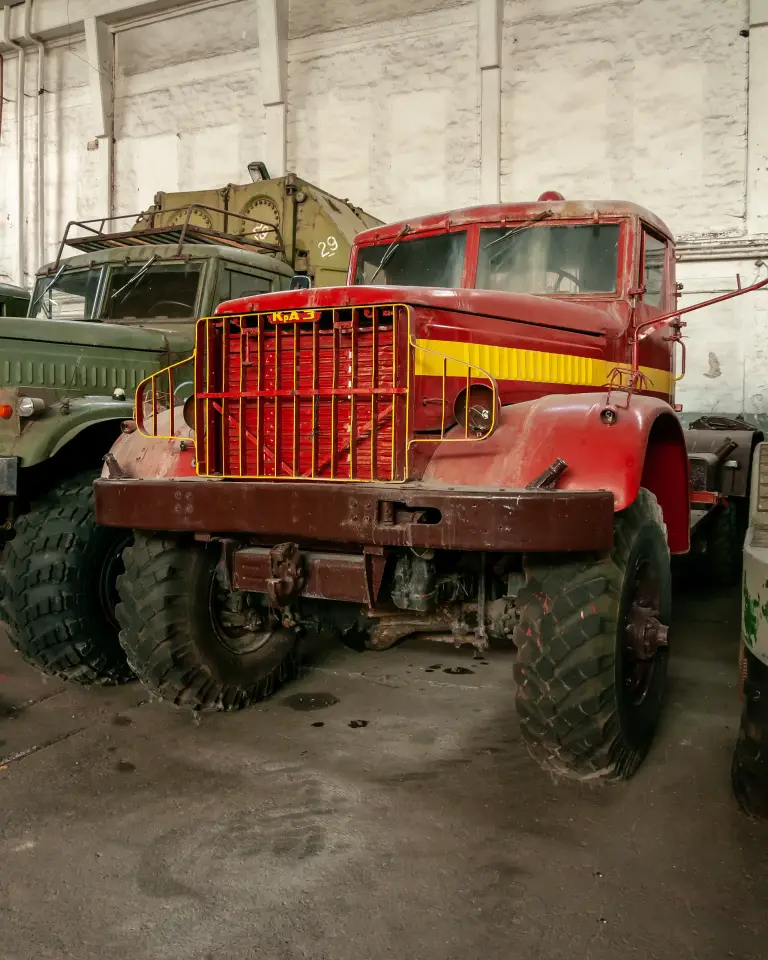
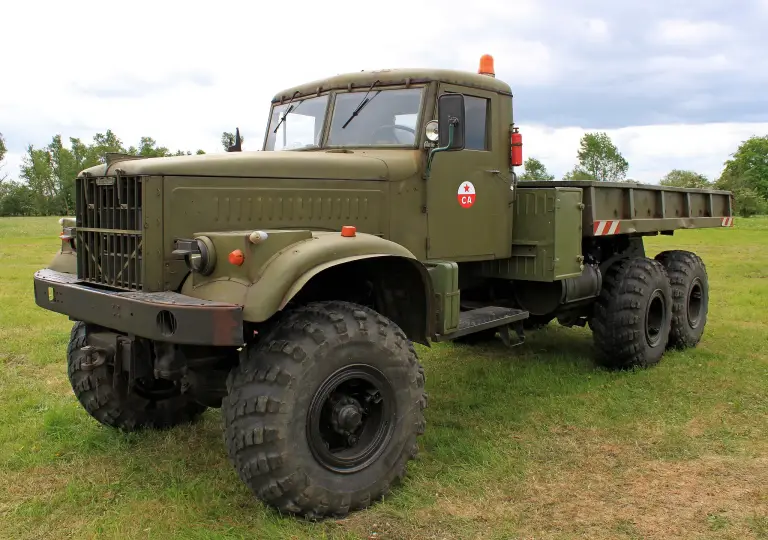
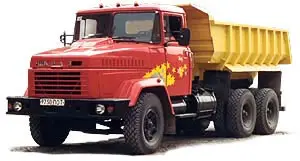
The KrAZ-250 was a family of heavy lorries of the third generation, built by the Kremenchuk automobile plant from 1978 to 1994 and developed further from the KrAZ-257. It brought the plant an all-metal three-seat cab and new V8 engines, and it became the base for the later KrAZ-260, KrAZ-6510 and KrAZ-6443.
KrAZ-250 at a glance
| Maker | KrAZ, Kremenchuk |
|---|---|
| Production | 1978–1994 |
| Layout | 6×4 |
| Payload | 14.5 tonnes |
| Platform | 5770 × 2450 mm, wooden drop sides |
| Top speed | 75 km/h |
| Fuel consumption | 33 litres per 100 km |
| Cab | all-metal, three seats, radio set |
| Electrical system | 24 V |
| Tyres | 11.00R-20, disc-less wheels |
| Resource | 200,000 km, later 220,000 km |
| Shared parts | 80.9% unified with the KrAZ-260 |
The article is based on the Russian Wikipedia page on the KrAZ-250; the English Wikipedia page on the plant supplies the model’s place in the range.
History of the KrAZ-250
Work on a new family of heavy trucks began at Yaroslavl in the 1950s. When lorry production moved from Yaroslavl to Kremenchuk in 1958, the plans for a family with the index 250 moved with it. The main novelties were to be new eight- and twelve-cylinder engines, later the YaMZ-238 and YaMZ-240, a new cab and all-metal platform sides instead of the wooden-framed bodies then in use. The first prototypes of the early 1960s used a cab from the ZiL-130, but ZiL could not hand over the press tooling, so Kremenchuk designed its own cab, ready by the middle of the 1960s.
The plant could not obtain the tooling it asked for, and production of the older 255, 256, 257 and 258 models continued well into the 1970s. Only from 1978 did the 250 family enter production, at first in small series using a workaround technology for the cab. That made it possible to start building at least the KrAZ-250 flatbed truck and the army KrAZ-260. Rigidity tests forced the designers to give up the small side windows behind the doors and to split the windscreen into four parts. A new Soviet standard, GOST 8769-75, moved the headlights into the bumper and the turn signals onto the front wings.
Operation soon showed that the front wings, with their reverse-sloping shape inherited from the 1960s, were difficult to make, and by the early 1990s they were replaced by simpler trapezoidal panels. In 1992 the plant created the KrAZ-6443 tractor unit and the KrAZ-6510 dump truck on a shortened wheelbase of 4080 + 1400 mm, unified with the KrAZ-250 in their main units. In 1993 7,015 KrAZ-250 chassis were built, and the plant offered the model on special order until 1994.
Design and features
- All-metal cab: three seats and a radio set, built to Soviet standards and to COMECON and UNECE recommendations.
- New engines: the family was designed around the eight- and twelve-cylinder YaMZ engines that replaced the older two-stroke diesels.
- Common parts: 80.9% of the KrAZ-250 and KrAZ-260 parts were unified from the start; the front axle, disc-less wheels and radial tyres were shared with the MAZ-500A.
- Steel platform: bent-profile steel sides and new side locks instead of the wooden body of the KrAZ-257.
KrAZ-250 versions
- KrAZ-250: the base flatbed truck with a 14.5-tonne payload.
- KrAZ-250V: a tractor unit.
- KrAZ-250K: a chassis for mounting truck cranes.
- Later derivatives: the KrAZ-260 army truck, the KrAZ-6443 tractor and the KrAZ-6510 dump truck, all built on the 250 family’s units.
The 250 was developed from the KrAZ-257 and was replaced by the KrAZ-6510; its off-road sister was the KrAZ-260. More trucks are in the KrAZ collection.
Video: Краз 250.
Video on YouTube.
Sources
- КрАЗ-250, Russian Wikipedia: history, design, specifications, variants
- KrAZ, English Wikipedia: place of the model in the plant’s range