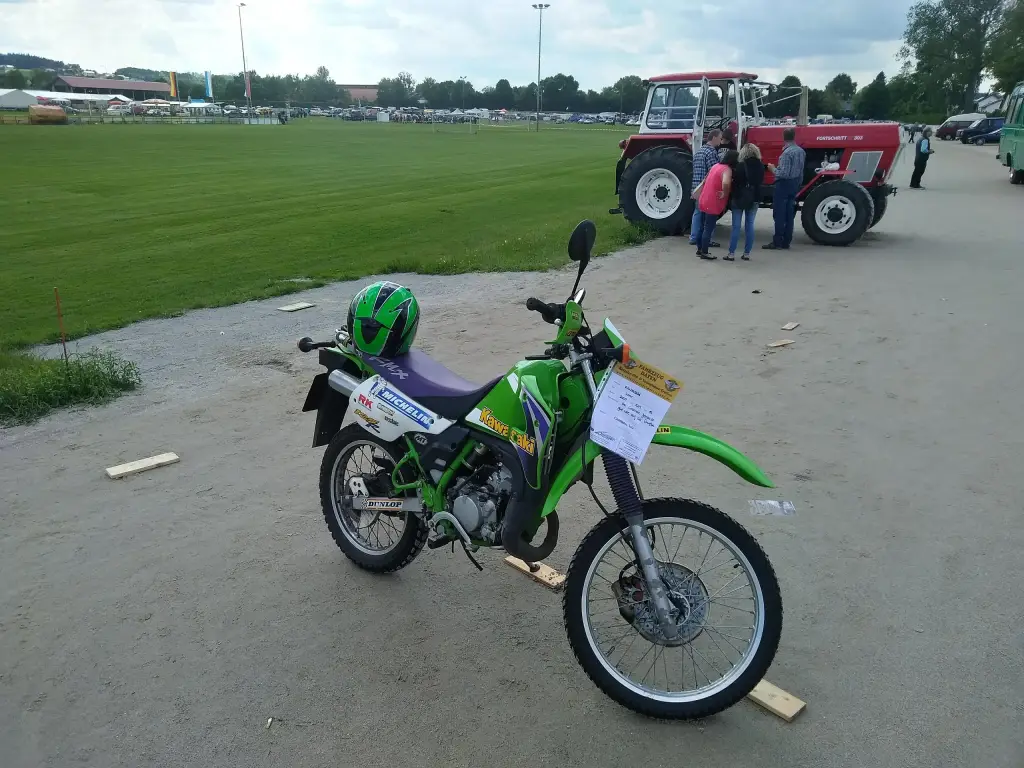
The Kawasaki KMX is a lightweight dual-purpose trail motorcycle that Kawasaki produced from the mid-1980s to the early 2000s. It had a liquid-cooled two-stroke single-cylinder engine, front and rear disc brakes, Uni-Trak monoshock rear suspension and the KIPS power valve system.
Kawasaki KMX at a glance
| Maker | Kawasaki |
|---|---|
| Produced | mid-1980s to early 2000s |
| Class | lightweight trail bike |
| Engine | liquid-cooled two-stroke single |
| Power valve | KIPS, Kawasaki Integrated Power-valve System |
| Rear suspension | Uni-Trak monoshock |
| Brakes | disc front and rear |
| Versions | KMX 125 and KMX 200 |
| KMX 200 engine | 191 cc, about 25–30 hp derestricted |
| KMX 200 wheels | 17-inch rear |
| Restricted power | about 12–13 hp for learners in Britain |
Based on one source, the English Wikipedia article on the KMX.
History of the Kawasaki KMX
The KMX was Kawasaki’s small trail bike of the 1980s and 1990s, built in two main variants: the widely exported KMX 125 and the rarer KMX 200, sold mainly in markets such as Britain. It was aimed at riders who wanted a light machine that worked both on the road and on trails, and in restricted form it was popular with learners.
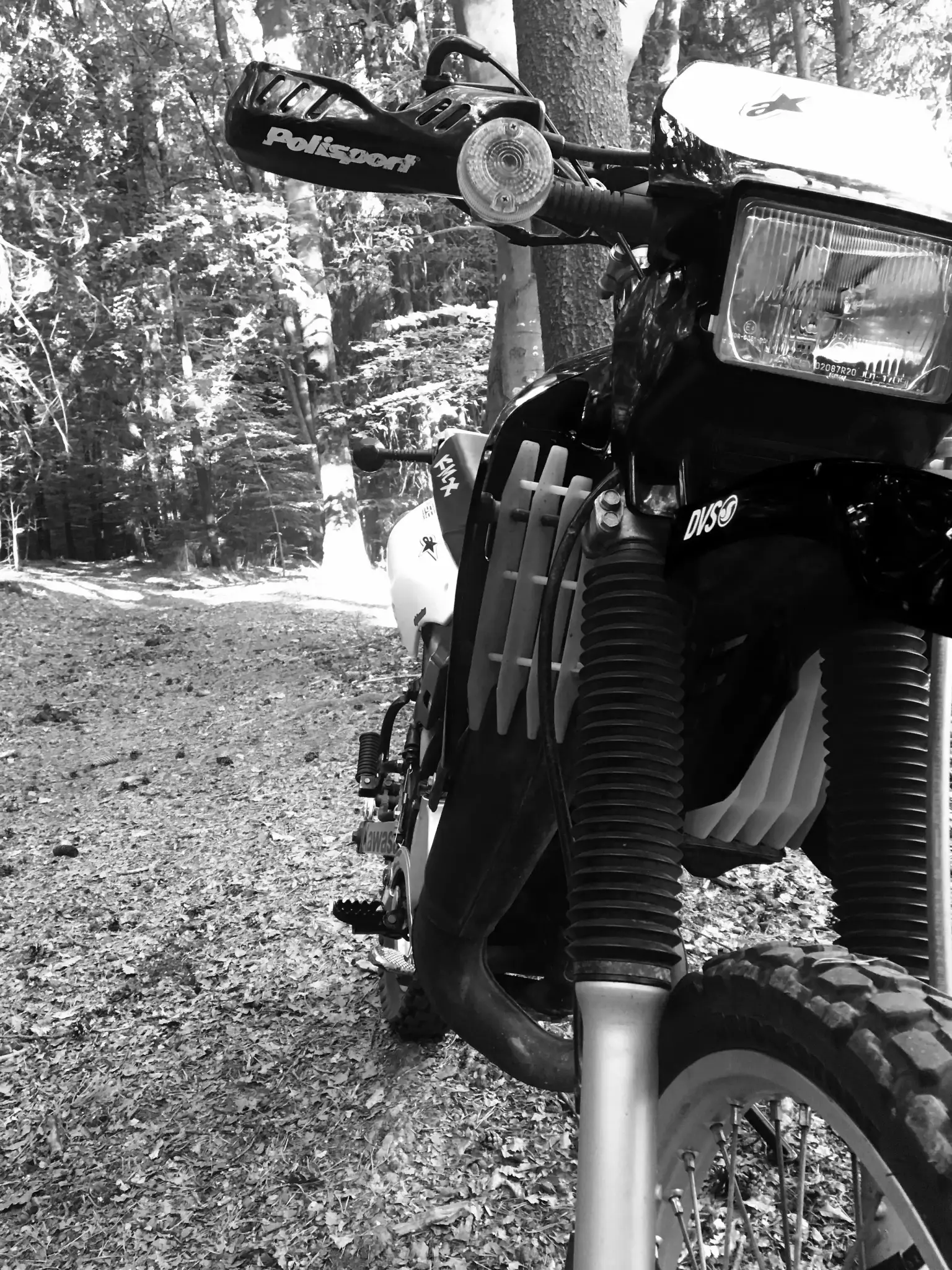
KMX 125
The 125 was the common model across Europe and Britain. In restricted form it was typically limited to around 12–13 hp to comply with A1 and provisional licence rules, usually by a washer in the exhaust or by carburettor and jetting changes, and the restriction was straightforward to remove. Derestricted, it offered lively two-stroke performance with a strong mid-to-top-end powerband thanks to KIPS, light handling and good trail ability; its rival was the Yamaha DT125R. Like other two-strokes it needed regular top-end maintenance and cleaning of the power valve, and it relied on correct pre-mix oil, but many examples proved durable with basic care.
KMX 200
The 200 used a 191 cc engine producing around 25–30 hp derestricted, with noticeably more low-end torque for trail use. It shared the 125’s frame but had upgraded forks, yokes and a rear swingarm exclusive to the model, plus a 17-inch rear wheel. It felt punchier than the 125 but had a shorter production life and is much less common.
Design and features
- KIPS power valve: broadens the two-stroke powerband, giving the KMX strong mid-range and top-end pull.
- Uni-Trak rear suspension: Kawasaki’s monoshock linkage system on a small trail bike.
- Disc brakes both ends: unusual in the small trail class when the KMX was new.
- Easy restriction: a washer or jetting change was all it took to bring the 125 within learner limits.
Kawasaki KMX versions
- KMX 125: the widely exported version, restricted for learners in Britain.
- KMX 200: 191 cc, stronger low-end torque, upgraded forks, yokes and swingarm, 17-inch rear wheel.
The KMX was the road-friendly relative of the KDX enduro, and its ideas carried on in the KLX250S. More models are in the Kawasaki collection.
Video: Erste Wheelieversuche – Kawasaki Kmx 125
Video by Hart Amlimit on YouTube.
Sources
- Kawasaki KMX, English Wikipedia: variants, equipment, restrictions, reliability