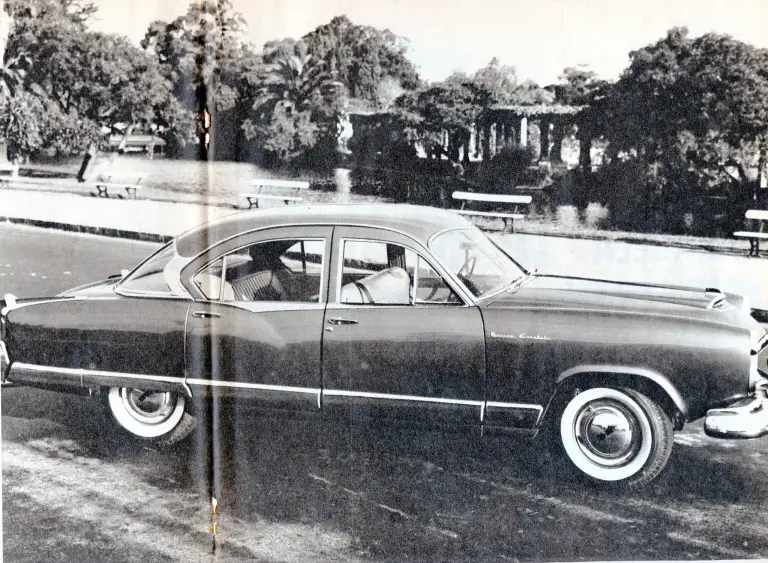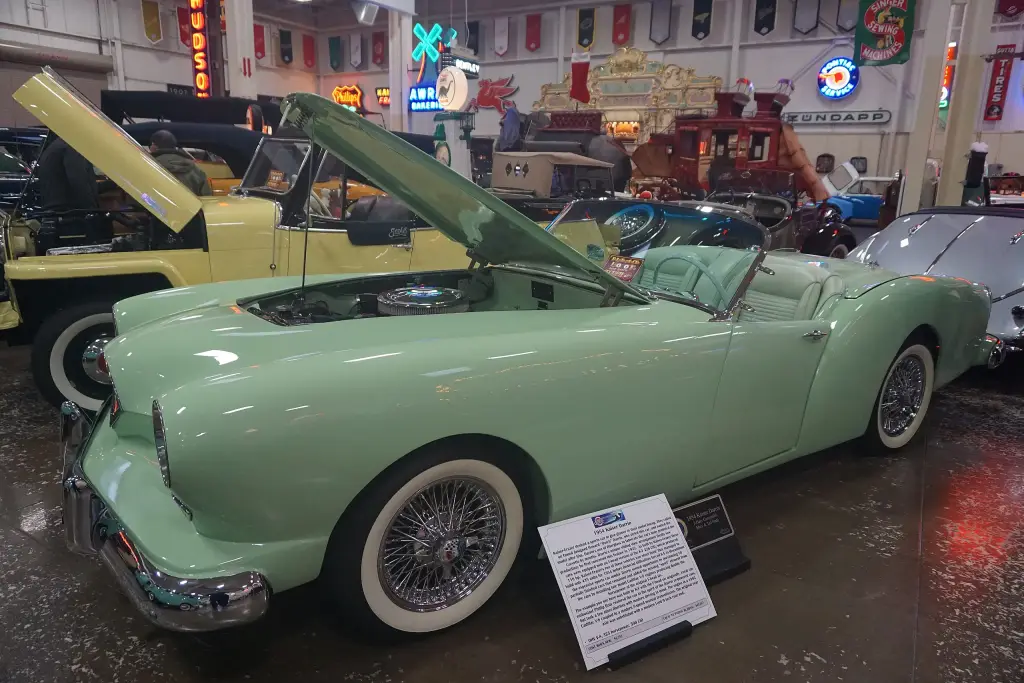
The Kaiser Darrin, also called the Kaiser Darrin 161, was an American sports car designed by Howard “Dutch” Darrin and built by Kaiser Motors for the 1954 model year. It was essentially a revamp of the Kaiser Henry J compact, and it was the second American car with a glassfibre body after the 1953 Corvette. Its doors slid on tracks into the front fender wells.
Kaiser Darrin at a glance
| Designer | Howard “Dutch” Darrin |
|---|---|
| Maker | Kaiser Motors |
| Model year | 1954 |
| Body | glassfibre, two-seat roadster |
| Based on | Kaiser Henry J |
| Doors | slid on tracks into the front fender wells |
| Engine | 161 cu in (2.6 L) six-cylinder |
| Production | 435 cars and six prototypes |
| Name | after Henry J. Kaiser and Howard Darrin |
| Price | high for the class |
| Fate | a snowstorm reportedly ruined 50 cars; Darrin bought the leftovers and sold them from Hollywood |
based on one source: the English Wikipedia article on the Kaiser Darrin.
History of the Kaiser Darrin
A sports car from Kaiser
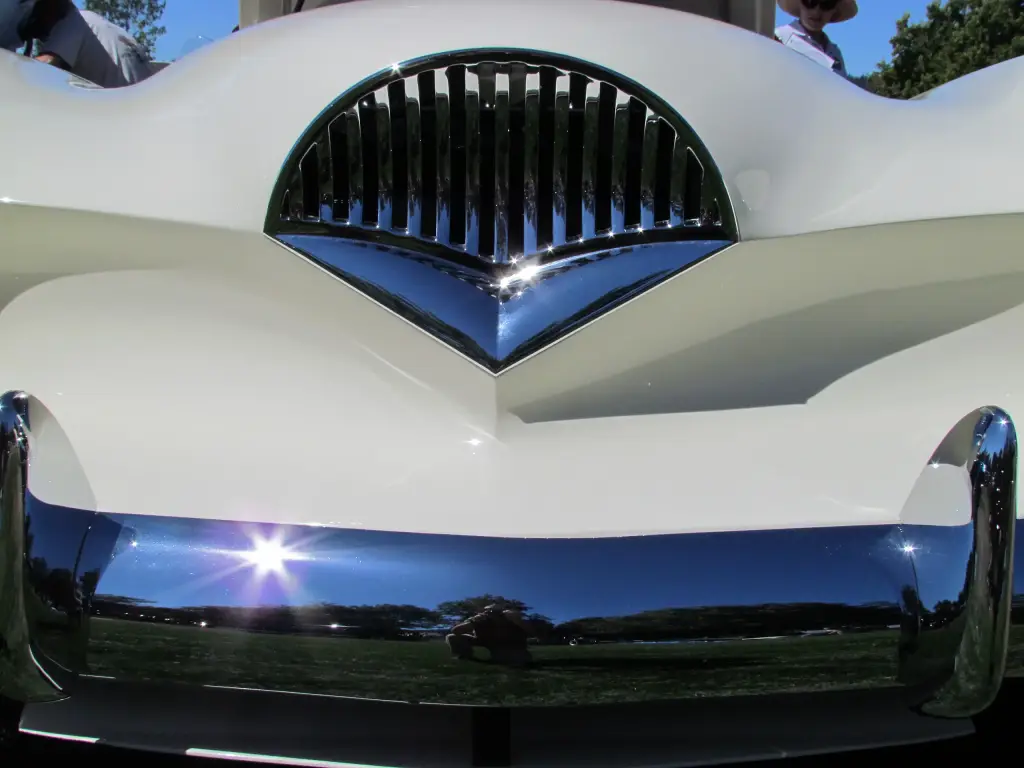
The Darrin was conceived as part of a movement in Detroit to compete head-on with the European roadsters being imported into the United States after the Second World War; the Ford Thunderbird and the Chevrolet Corvette came from the same impulse. The car was named both for Henry J. Kaiser, head of Kaiser Motors, and for its designer. Darrin had begun coachbuilding in Paris in 1923 with Thomas L. Hibbard, returned to the United States in 1937 and set up his own coachworks on Sunset Boulevard in Hollywood, working with Packard on models such as the 120 and Clipper. His trademark became a sweeping fender line that dipped at the head of the rear fender.
Kaiser’s own history was turbulent. Henry J. Kaiser had built an empire of more than 100 companies, from cement in Vancouver to the Hoover and Grand Coulee dams, and had entered shipbuilding in 1939, building 1,490 Liberty Ships during the war. He formed Kaiser-Frazer with Joseph W. Frazer on 25 July 1945 and leased the Ford factory complex at Willow Run. Frazer stepped down as president in early 1949 and was replaced by Edgar Kaiser, the company was renamed Kaiser Motors, and sales slumped that year; the Henry J of 1951 was meant to turn the business around.
The sliding-door body
The Darrin used the Henry J compact as its basis, with a glassfibre body and doors that slid forward on tracks into the front fender wells instead of opening outwards. The design was praised, but the car was considered underpowered and, while a good performer overall, did not measure up to foreign cars such as the Nash-Healey or Triumph TR2. Its high price, a lack of consumer confidence in Kaiser’s future and practical problems with the design kept sales low, although sports cars of the period were generally not fast sellers.
435 cars
Only 435 production Darrins and six prototypes were built. Crumbling corporate finances, the pending loss of assembly facilities and a snowstorm that reportedly ruined 50 of the cars ended the programme. Darrin bought those 50 cars and whatever others Kaiser had left in storage and sold them from his Hollywood showroom. Many had their engines retrofitted with superchargers and multiple carburation to improve performance. Six were rumoured to have been re-engined with Cadillac Eldorado V8s, but none survive and the story is treated with some scepticism; one V8-engined Darrin was raced in November 1954, and a wrecked car was rebuilt into a drag racer by Lee and Gary Abrahams of Tucson, Arizona, in the early 1960s.
Design and features
- Sliding doors: the doors ran on tracks into the front fenders instead of swinging open.
- Glassfibre body: the second American car with one, after the 1953 Corvette.
- Henry J basis: the compact Kaiser platform lay under the sports-car body.
- Darrin styling: the designer’s trademark sweeping fender line with a dip at the rear.
- Rare: 435 production cars and six prototypes.
Kaiser Darrin versions
- Prototype: six cars built before production.
- Production Darrin (1954): the standard glassfibre roadster.
- Supercharged cars: many of the leftovers sold by Darrin had superchargers and multiple carburation fitted.
- V8 car: one Darrin was raced with a V8 engine in November 1954.
- Drag racer: a wrecked car rebuilt by Lee and Gary Abrahams in the early 1960s.
The Darrin was built on the Henry J compact, and it was the last car sold under the Kaiser marque in Toledo before the Kaiser saloons ended. More cars are in the Kaiser collection.
Video: 1954 Kaiser Darrin | Ride Along
Video on YouTube.
Sources
- Kaiser Darrin, English Wikipedia: design, doors, production numbers, sales problems, Kaiser and Darrin background