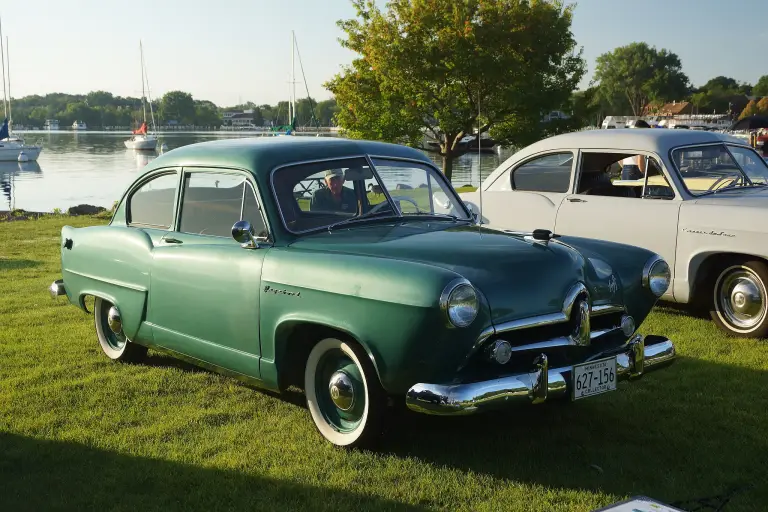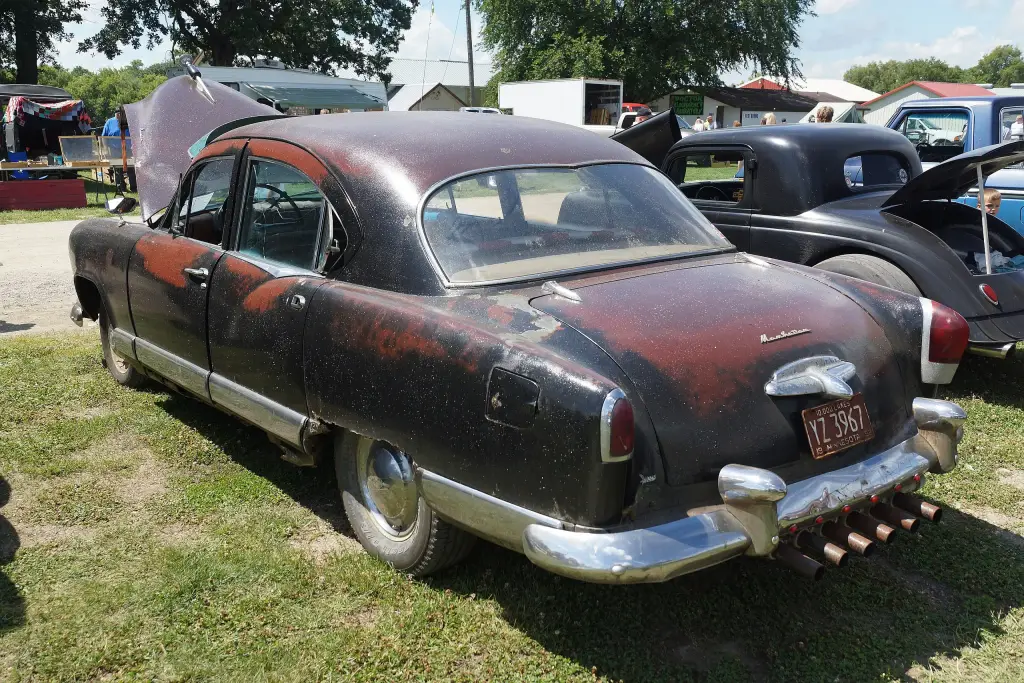
Kaiser’s American passenger cars of 1946 to 1955 were sold under model names such as Special, Deluxe and Manhattan. They came from the Kaiser-Frazer Corporation, which had been formed as a joint venture in 1945, and they were built first at Willow Run in Michigan and then at Toledo, Ohio, after Kaiser took over Willys-Overland.
Kaiser saloons at a glance
| Maker | Kaiser-Frazer Corporation, later Kaiser Motors |
|---|---|
| Production | 1946–1955 in the United States |
| First factory | Willow Run, Michigan, leased from Ford |
| Second factory | Toledo, Ohio, from the Willys-Overland purchase |
| First cars | Kaiser and Frazer, within a year of the company’s formation |
| 1948 milestone | the 300,000th car left the line in summer 1948 |
| 1949 sales | 58,000 cars |
| 1953 | renamed Kaiser Motors; Willys-Overland assets bought |
| Last American Kaisers | the 1955 model year |
| Total built | close to 760,000 cars of all makes and models, May 1946 to September 1955 |
| Later name | Kaiser Jeep Corporation from 1963 |
| South America | passenger cars built into the 1960s |
based on one source: English Wikipedia has no separate articles on the Kaiser Special, Deluxe or Manhattan, so this page uses the article on Kaiser Motors.
History of the Kaiser saloons
Kaiser-Frazer
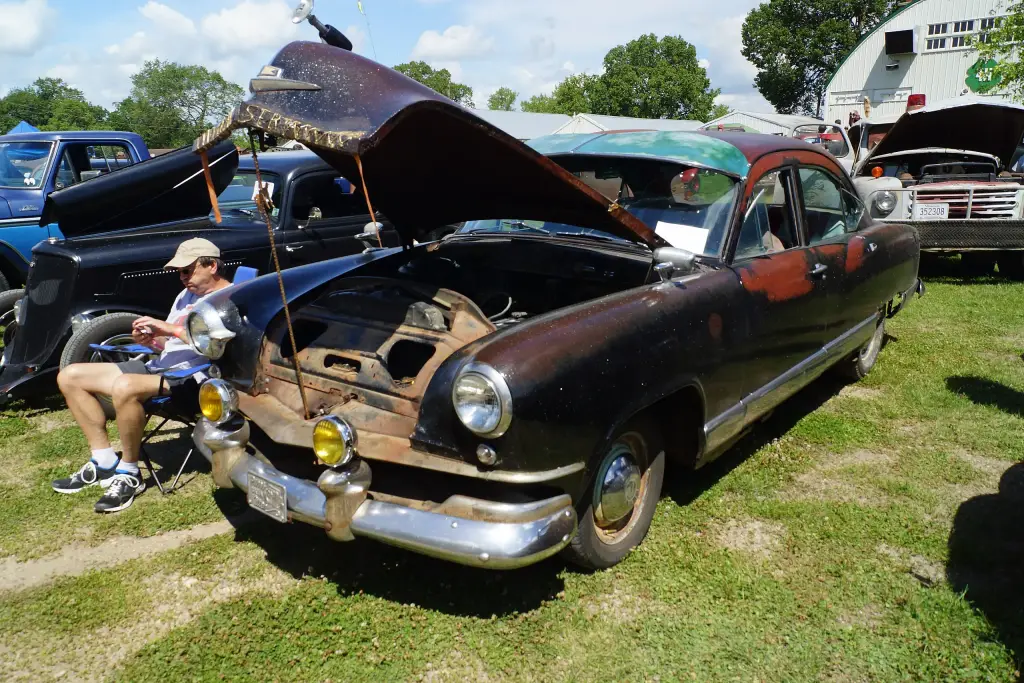
The Kaiser-Frazer Corporation was established in August 1945 as a joint venture between the Henry J. Kaiser Company and Graham-Paige Motors. Henry J. Kaiser, a California industrialist, and Joseph W. Frazer, chief executive of Graham-Paige, both wanted to enter the car business and pooled their resources and talents. Less than a year after the company was formed, the first Kaiser and Frazer cars were being built at Willow Run in Michigan, the former Ford factory complex that Kaiser-Frazer leased as its base. By the end of 1946 over 11,000 cars had been shipped to dealers and distributors, and in the summer of 1948 the 300,000th car came off the line.
Frazer leaves, sales slump
Frazer warned Kaiser not to tool up for 200,000 cars for the 1949 model year, believing the company could not compete with the new cars coming from Ford, Chrysler and General Motors; Kaiser did not heed the warning, saying “The Kaisers never retrench”. A total of 58,000 cars were sold that year. Frazer resigned as president in 1948 but stayed on as a lame duck until April 1949, when Henry J. Kaiser’s eldest son Edgar took his place. The Frazer marque was discontinued after the 1951 models, and in 1950 Kaiser-Frazer began production of the compact Henry J.
Willys and Toledo
At the 1953 stockholders’ meeting the company’s name was changed to Kaiser Motors Corporation by vote. Shortly before it, the Kaiser Manufacturing Corporation division had worked out a deal to buy certain assets and assume certain liabilities of Willys-Overland, makers of Willys cars and Jeep vehicles; after the acquisition the division was renamed Willys Motors, Incorporated. During late 1953 and 1954 Kaiser’s Willow Run operations were closed or moved to the Willys plant at Toledo, Ohio. Kaiser-Frazer also arranged to buy GM Hydramatic automatic transmissions and detuned Oldsmobile Rocket 88 engines, with deliveries from the 1952 model year, but the planned expansion of the engine plant was cancelled because of the Korean War; the company’s own V8 programme ran to 1949 and, as its engineers told the Society of Automotive Engineers, was leading down a blind alley.
The end of the American Kaiser
The company paid the highest wages of any American car maker while achieving only 60–65% productivity, and it tried to make up for its weaknesses with elaborate designer interiors and upscale dashboards. A line of Traveler sedans, with the trunk connected to the interior, was an improvised attempt to compete with station wagons. The last Kaisers were built in America for the 1955 model year. Close to 760,000 cars of all makes and models were built between May 1946 and September 1955. At the end of 1955 the management team turned Kaiser Motors into Kaiser Industries Corporation, a holding company for the wider Kaiser business, while the South American operations continued to build passenger cars into the 1960s and the company became Kaiser Jeep Corporation in 1963.
Design and features
- Post-war start: Kaiser and Frazer cars were in production within a year of the company’s formation in 1945.
- Rapid growth: 300,000 cars built by the summer of 1948.
- Willys purchase: the 1953 deal brought Jeep into the company and moved car production to Toledo.
- Distinctive design: elaborate interiors and upscale dashboards were used to offset a limited model range.
- Long reach: South American operations kept building Kaiser cars into the 1960s.
Kaiser saloons versions
- Kaiser saloons: the main line, sold under names such as Special, Deluxe and Manhattan.
- Frazer: the partner marque, discontinued after the 1951 models.
- Traveler: sedans with the trunk connected to the interior, aimed at station-wagon buyers.
- Henry J: the compact added in 1950.
- Argentine Kaisers: the Carabela and related cars built by IKA into the 1960s.
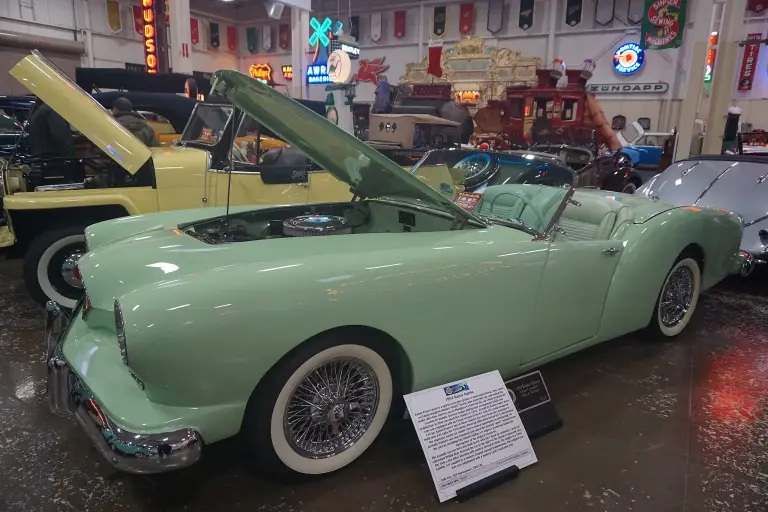
The compact member of the range was the Henry J, and the sporting one the Kaiser Darrin. The Argentine continuation is described under the Kaiser Carabela, and more cars are in the Kaiser collection.
Sources
- Kaiser Motors, English Wikipedia: company history, models, production, Willys purchase, end of American production