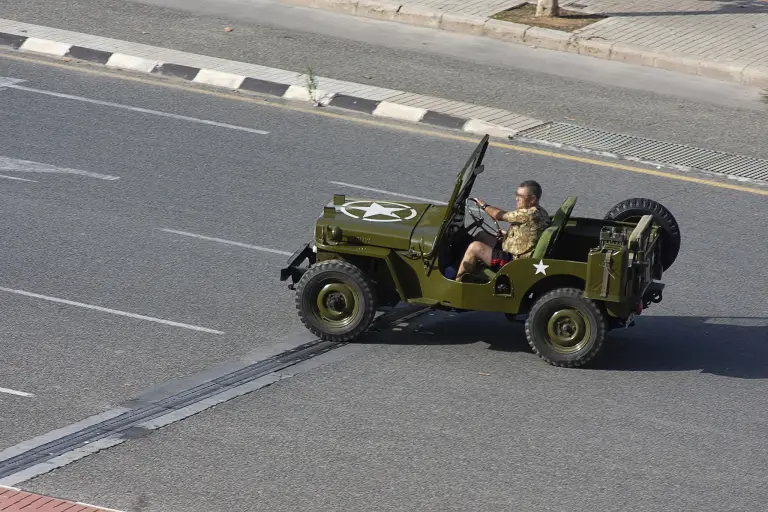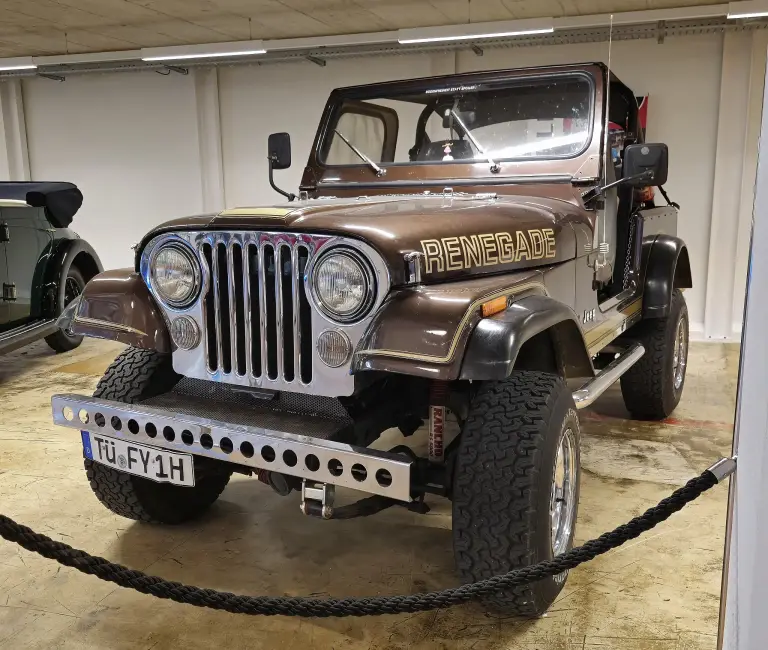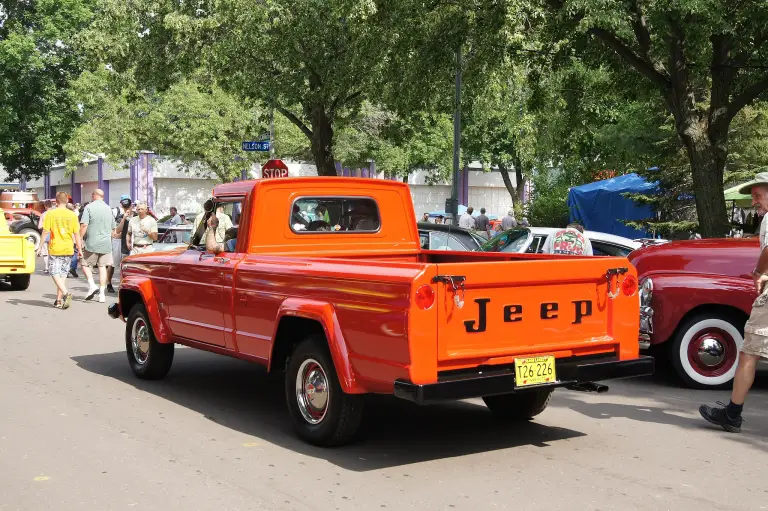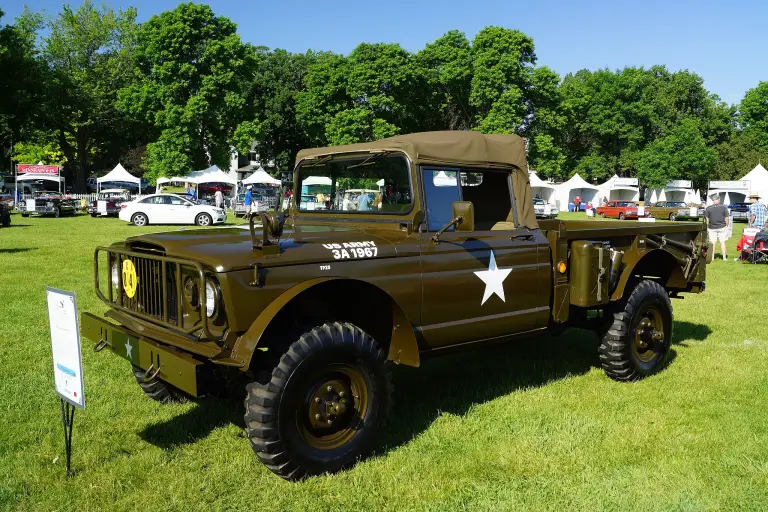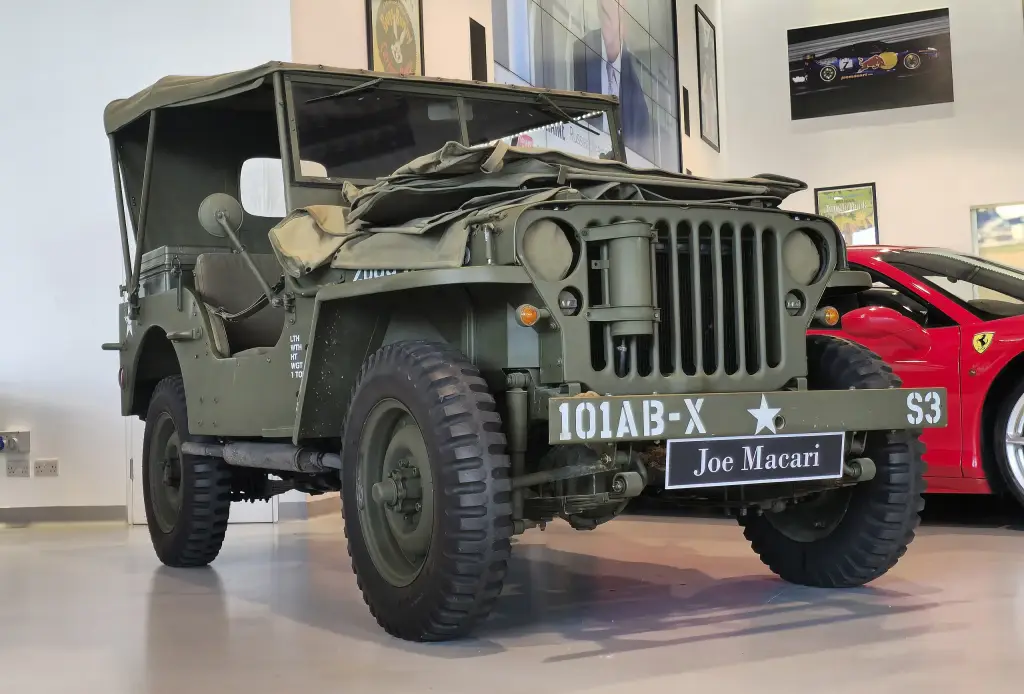
The Willys MB and the Ford GPW, both formally the U.S. Army truck, 1/4-ton, 4×4, command reconnaissance, are the Jeeps of the Second World War. Over 600,000 were built to a single standardised design for the United States and its allies between 1941 and 1945, which made the Jeep the world’s first mass-produced four-wheel-drive car, built in six-figure numbers.
Willys MB at a glance
| Maker | Willys-Overland, with Ford building the GPW |
|---|---|
| Production | 1941–1945 |
| Built | over 600,000; about 640,000 including all quarter-ton jeeps |
| Type | 1/4-ton, four-wheel-drive command and reconnaissance truck |
| Army designation | G-503 |
| Share of US output | a quarter of military support motor vehicles |
| Sent to the USSR | some 50,000 |
| Post-war successors | M38 (1949), M38A1 (1952), M151 (1960) |
| Civilian heir | CJ-2A, from 1945 |
| Landmark | ASME International Historic Mechanical Engineering Landmark, 1991 |
The article covers the wartime Jeep and its immediate successors; the separate entries on military Jeeps are folded into it.
History of the Willys MB
The race to build a light 4×4
Germany had been standardising military vehicles since 1933 and had the Volkswagen Kübelwagen on the way, while the American army was still buying commercial trucks with minor modifications. In June 1940 the Quartermaster Corps began a race to produce a light, four-wheel-drive cross-country vehicle able to carry men and equipment over rough ground. The result was the quarter-ton jeep, built to one design by Willys and Ford and produced in six-figure numbers. It became the primary light wheeled multi-role vehicle of the American military and its allies: some 640,000 quarter-ton jeeps amounted to a quarter of the military support motor vehicles the United States built during the war, and almost two-thirds of the 988,000 light four-wheel-drive vehicles when counted with the Dodge WC series.
Allies and reputation
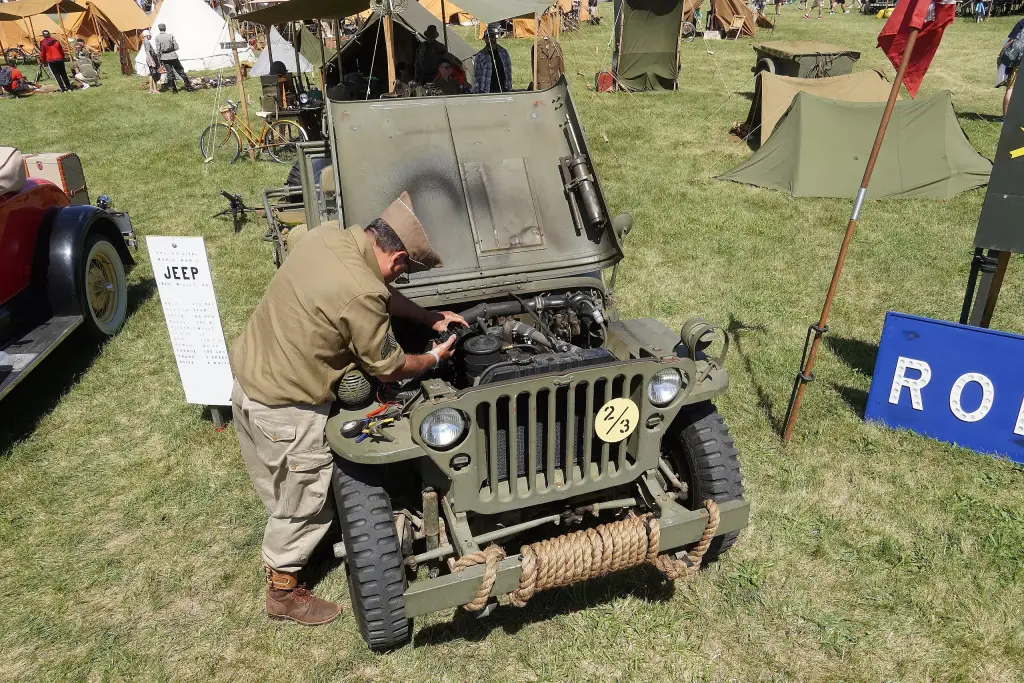
Large numbers of jeeps went to America’s allies, including some 50,000 shipped to the Soviet Union to fight Nazi Germany, whose own Kübelwagen production came to just over 50,000. Historian Charles K. Hyde wrote that “in many respects, the jeep became the iconic vehicle of World War II, with an almost mythological reputation of toughness, durability, and versatility”. It replaced horses, other draft animals and motorcycles in every role from messaging and cavalry to supply trains, and soldiers adapted it in the field to almost any job. Eisenhower recorded that most senior officers counted it among the five pieces of equipment most vital to success in Africa and Europe, and George Marshall called it “America’s greatest contribution to modern warfare”. In 1991 the American Society of Mechanical Engineers named the MB an International Historic Mechanical Engineering Landmark.
After the war
The Jeep served on in the Korean War and other conflicts, updated as the M38 Willys MC in 1949 and the M38A1 Willys MD in 1952, and redesigned by Ford as the M151 of 1960. Its influence went much further: makers around the world built jeeps and similar designs, licensed or not, first for military use and later for civilians. Willys turned the MB into the civilian CJ, beginning with the CJ-2A in 1945, the world’s first mass-produced civilian four-wheel drive, and the Jeep name became a trademarked brand. The “sardine tin on wheels” silhouette and slotted grille remain recognisable in today’s Wrangler, and in 2010 the American Enterprise Institute called the jeep one of the most influential designs in automotive history.
Design and features
- One standard design: Willys and Ford built the same vehicle to the same drawings.
- Six-figure output: over 600,000 built between 1941 and 1945.
- Multi-role: messaging, cavalry, supply and anything soldiers improvised.
- Allied aid: about 50,000 sent to the Soviet Union.
- Engineering landmark: recognised by the ASME in 1991.
Willys MB versions
- Willys MB (1941–1945): the Willys-built jeep.
- Ford GPW (1941–1945): Ford’s version of the same design.
- M38 (1949): the post-war military update.
- M38A1 (1952): the next military generation.
- CJ-2A (1945): the first civilian Jeep, derived from the MB.
The wartime Jeep led to the civilian CJ and to the post-war military M38, and its shape survives in the Wrangler. More models are in the Jeep collection.
Video: ein Klassiker: Jeep Willys Overland
Video by MotorAktion on YouTube.
Sources
- Willys MB, English Wikipedia: production, numbers, wartime role, reputation, legacy