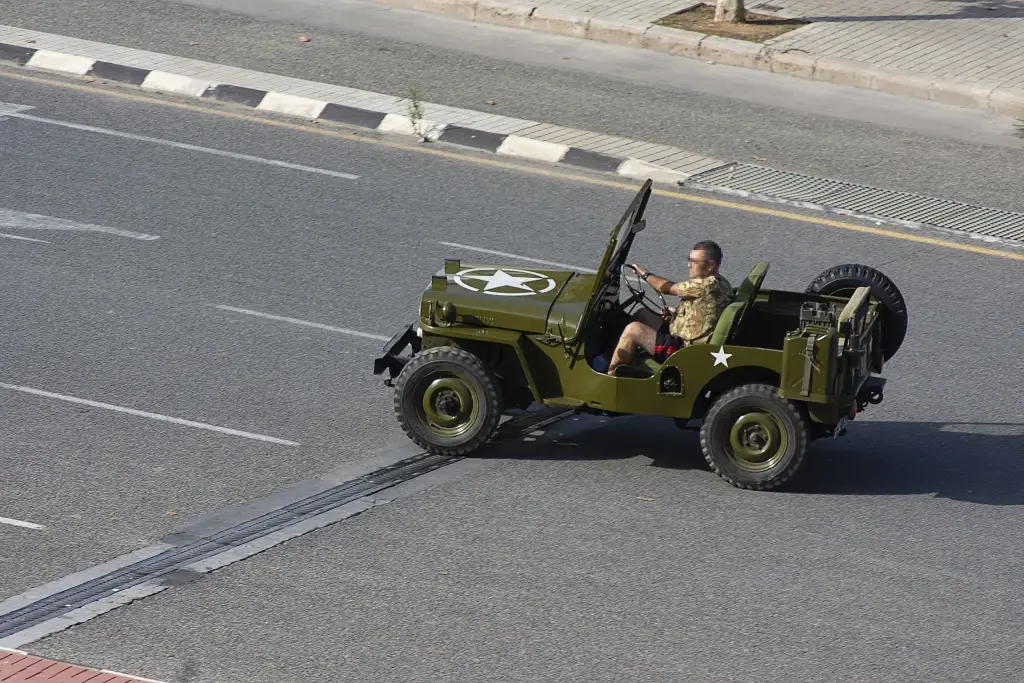
The Willys M38, formally the 1/4-Ton, 4×4, Utility Truck M38 and known to the Army as the G-740, is a quarter-ton four-wheel-drive military utility vehicle built by Willys between 1949 and 1952. It succeeded the wartime Willys MB and Ford GPW, and about 50,000 were made, less than a tenth of the number of World War II Jeeps.
Willys M38 at a glance
| Maker | Willys-Overland, Toledo |
|---|---|
| Production | 1949–1952 |
| Built | about 50,000 |
| Based on | Willys CJ-3A |
| Engine | 134.2 cu in L-head four, 60 hp |
| Gearbox | T-90 three-speed |
| Transfer case | Dana 18 |
| Axles | Dana 25 front, full-floating; Dana 44 rear, semi-floating |
| Electrical system | 24 volt, two 12-volt batteries |
| Wheelbase | 80 in (2.03 m) |
| Empty weight | 2,625 lb (1,191 kg) |
| Succeeded by | M38A1, 1952 |
History of the Willys M38
A CJ-3A in uniform
The M38 was the military version of the civilian CJ-3A, but it differed in many ways: a reinforced frame and suspension, a waterproof 24-volt electrical system, and a sealed vent system for the engine, transmission, transfer case, fuel system and brakes. The full-floating Dana 25 front axle took its load through the hub instead of the axle itself, and the semi-floating Dana 44 rear axle was standard. The engine was the L-head 134.2 cu in four of 60 hp with a T-90 gearbox and a Dana 18 transfer case. A few jeeps were fitted with a power-take-off driven winch, though it was not used in regular production because of the extra weight on the front and the maintenance it demanded.
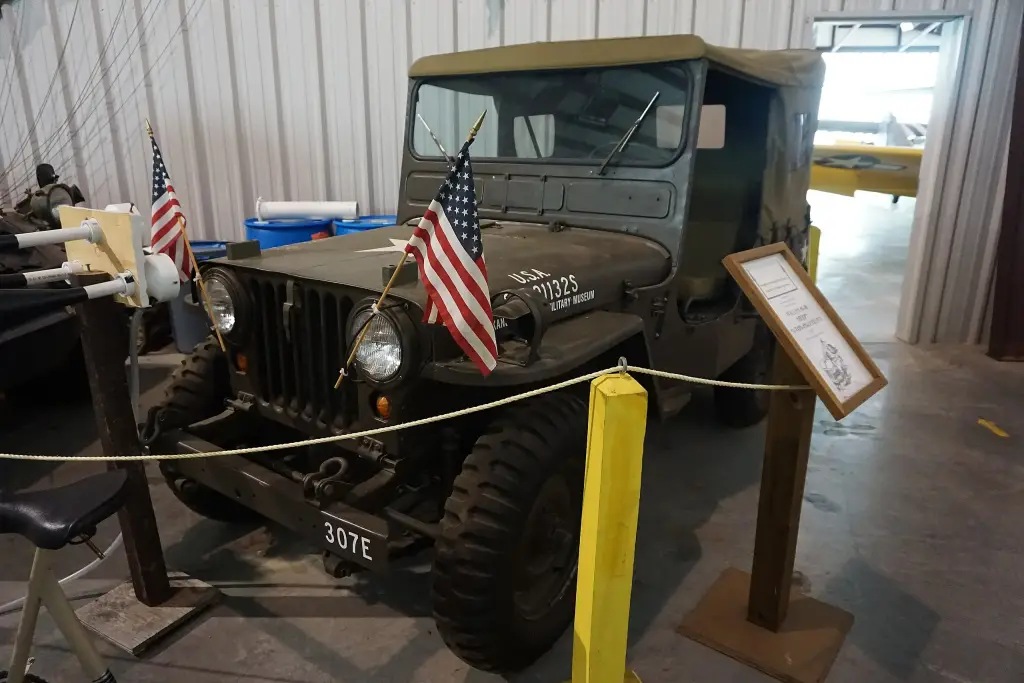
Waterproofing and details
The whole air intake and axle system were vented so the truck could run submerged, and the 24-volt system, with two 12-volt batteries in series, had waterproof ignition and electrics — a valuable feature in rain and deep fording. The windshield folded flat for firing, and the body carried a pintle hook for towing and lifting shackles front and rear. The headlights were no longer recessed as on earlier Jeeps but protruded with a guard wire in front, and the pioneer tools, an axe and a shovel, moved from the driver’s side to the passenger side.
Service
Some M38s served in the Korean theatre, although most of the jeeps used there were remanufactured World War II models. About 2,300 were built by Ford of Canada in 1952 for the Canadian armed forces as the M38-CDN. The M38 was succeeded in 1952 by the M38A1 Willys MD, and the type served with the armed forces of Canada, Greece, Indonesia, South Korea, Taiwan and the United States; in South Korea the police used it on patrol in the 1950s.
Design and features
- Sealed vents: engine, transmission, transfer case, fuel and brake systems vented for fording.
- 24-volt electrics: waterproof ignition and two batteries in series.
- Reinforced frame: heavier suspension and chassis than the civilian CJ-3A.
- Guard-wire headlights: protruding lamps protected by wire instead of recessed ones.
- Field details: folding windshield, pintle hook and lifting shackles.
Willys M38 versions
- M38 (1949–1952): the standard quarter-ton truck.
- M38-CDN (1952): about 2,300 built by Ford of Canada.
- M38 with winch: a few fitted with a PTO-driven winch.
- M38A1 (1952): the successor, the Willys MD.
The M38 is the military form of the CJ-3A and follows the wartime Willys MB; its civilian relatives include the CJ-5. More models are in the Jeep collection.
Video: willys m38 jeep
Video by mc68838 on YouTube.
Sources
- Willys M38, English Wikipedia: development, specification, service and operators