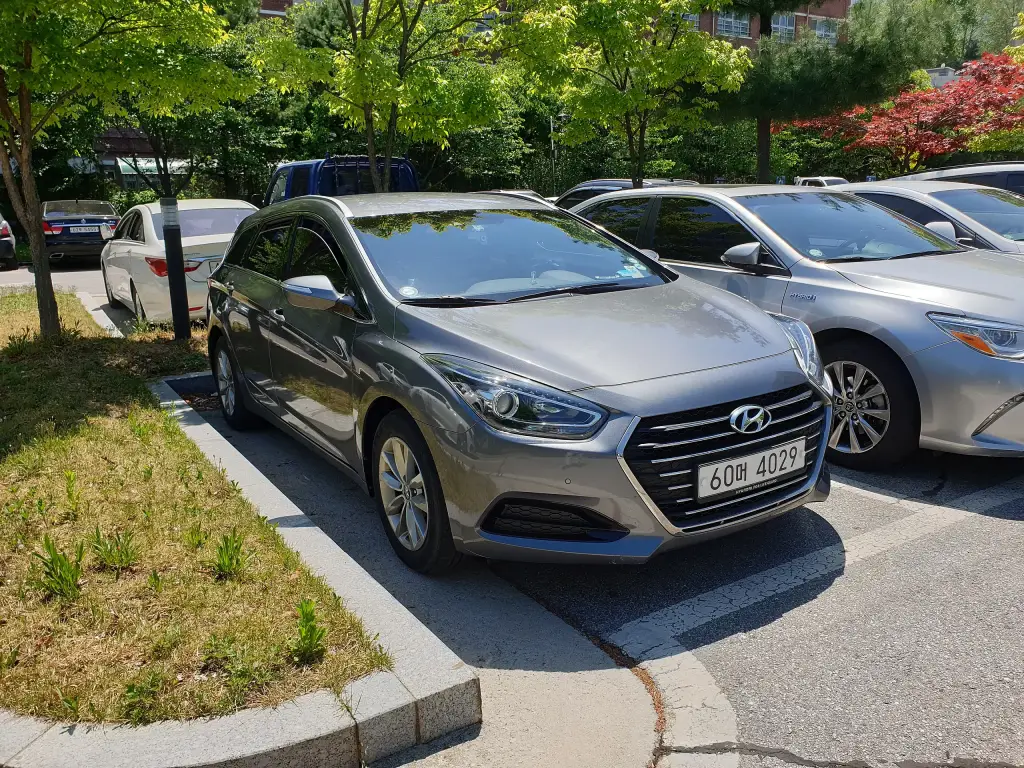
The Hyundai i40 is the large family car Hyundai designed for Europe and built from 2011 to 2019. It shared its platform with the Sonata and was styled at Hyundai’s European research centre in Rüsselsheim, with a body in the “fluidic sculpture” language. It went on sale first as an estate, the i40 Tourer, followed by the saloon.
Hyundai i40 at a glance
| Maker | Hyundai Motor Company |
|---|---|
| Production | 2011–2019 |
| Designed at | Hyundai European R&D, Rüsselsheim |
| Built at | Ulsan, South Korea |
| Platform | shared with the Hyundai Sonata |
| Saloon debut | Barcelona motor show, 2011 |
| Estate on sale | Europe and Korea, September 2011 |
| Saloon on sale | January 2012 |
| Boot space | 553 litres, 1,719 litres with the rear seats folded |
| Diesel engines | 1.7-litre CRDi, 114 or 134 bhp |
| Petrol engines | 1.6 (133 bhp), 2.0 GDI (175 bhp) or 2.0 MPi (164 bhp) |
| Lowest CO2 | 113 g/km with BlueDrive and the 114 bhp diesel |
Based on one source, the English Wikipedia article on the Hyundai i40.
History of the Hyundai i40
The i40 was designed in Rüsselsheim, Germany, and built in Ulsan, Korea. The saloon was unveiled at the 2011 Barcelona motor show, but Europe got the estate first: the i40 Tourer went on sale there and in Korea in September 2011, and the saloon followed in January 2012. The car was also sold in Australia and New Zealand, and Hyundai launched it in Malaysia at the 2013 Kuala Lumpur international motor show in both sedan and tourer form, with a two-litre GDI engine and a paddle-shifted six-speed automatic, positioned above the Sonata.
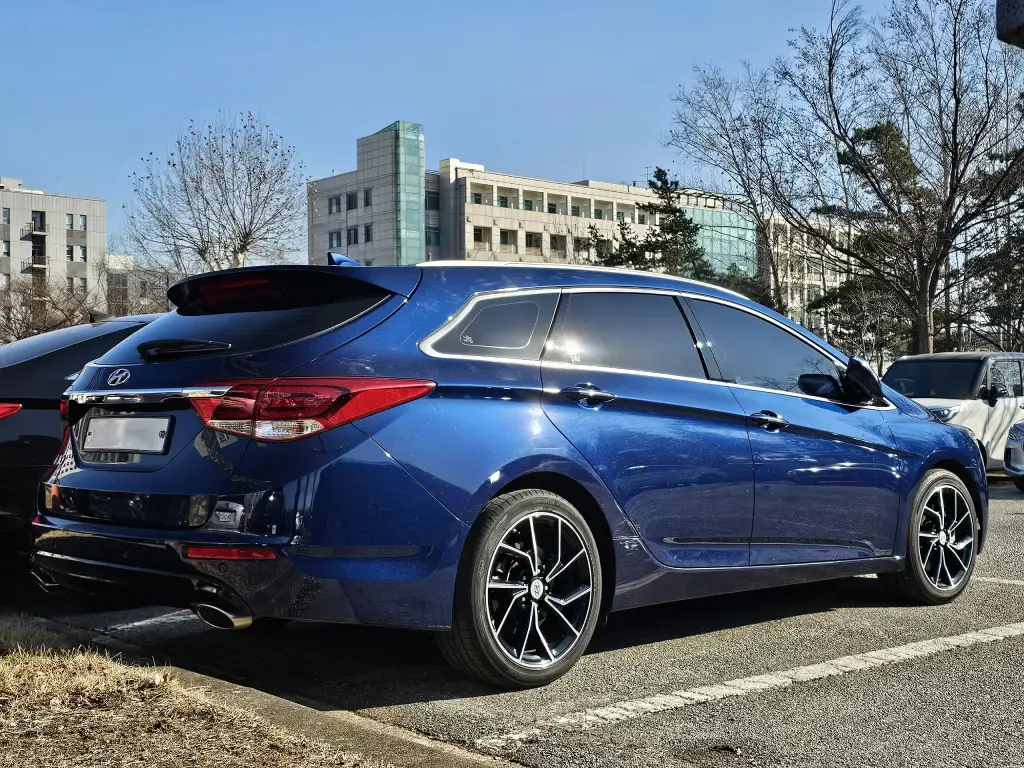
Practicality was the point of the estate, which held 553 litres behind the rear seats and 1,719 litres with them folded. Engines varied by market from a choice of four: a 1.7-litre diesel in 114 or 134 bhp form and petrol units of 1.6 litres with 133 bhp, 2.0 GDI with 175 bhp and 2.0 MPi with 164 bhp, each market taking up to three of them. The BlueDrive option added an Intelligent Stop & Go start-stop system and 16-inch low-rolling-resistance tyres, bringing the 114 bhp diesel down to 113 g/km of CO2.
In markets where the Sonata was still sold, such as the United States, the i40 was not offered at all. As mid-sized car sales slowed worldwide, Hyundai withdrew the i40 from Australia and New Zealand early in 2019, leaving the Sonata to cover the segment, and it was discontinued in Europe that year. The car won the 2011 Eurocarbody Golden Award, and Hyundai supplied i40 estates for the 2011 FIFA Beach Soccer World Cup.
Design and features
- Made for Europe: designed in Rüsselsheim rather than Korea.
- Estate first: the Tourer arrived before the saloon.
- Big boot: 553 litres, or 1,719 with the rear seats folded.
- BlueDrive: start-stop and low-rolling-resistance tyres gave 113 g/km of CO2.
Hyundai i40 versions
- i40 Tourer (2011): the estate that opened the range.
- i40 saloon (2012): the four-door car.
- 1.7 CRDi: the 114 or 134 bhp diesel.
- BlueDrive: the low-emission option with start-stop.
The i40 shared its platform with the Sonata and sat above the i30 in Hyundai’s European range. More Hyundai models are in the Hyundai collection.
Video: Hyundai i40 im stern.de-Test
Video by stern on YouTube.
Sources
- Hyundai i40, English Wikipedia: design, production, launch, engines, boot space, discontinuation