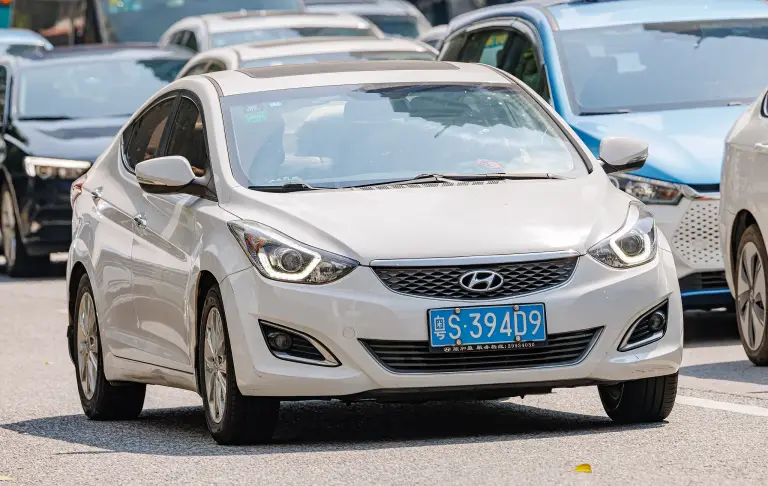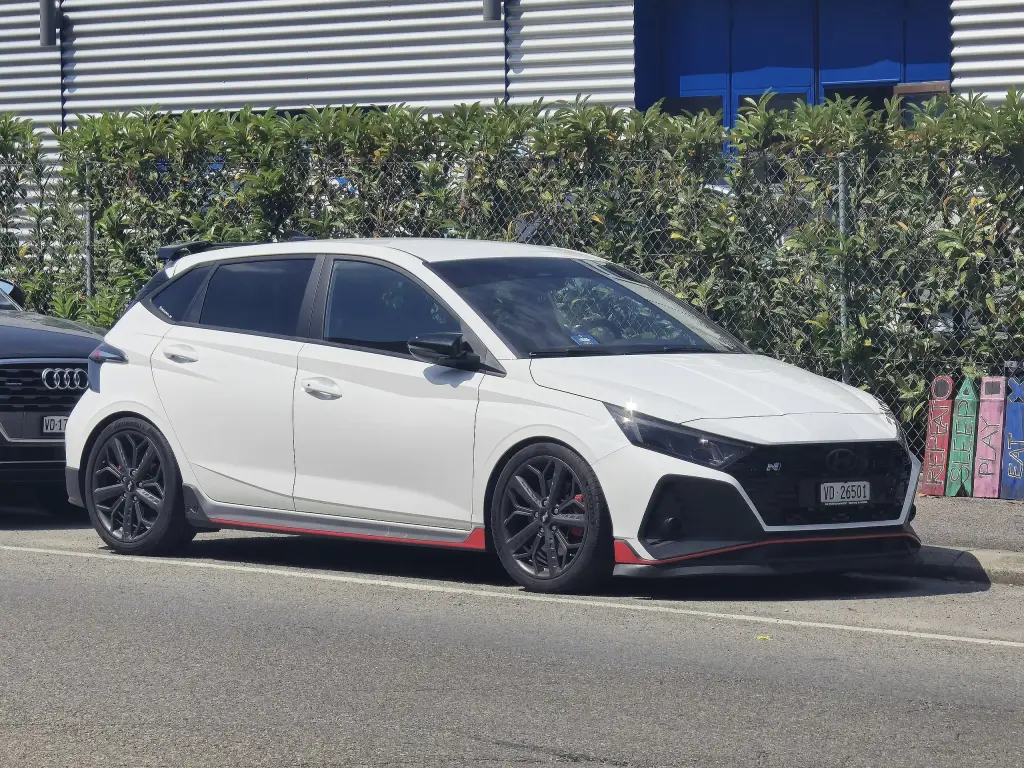
The Hyundai i20 is the supermini Hyundai has made since 2008. It debuted at the Paris motor show in October 2008 and sits between the i10 and the i30. It replaced the Getz in nearly all of its markets, and it was developed on a new platform created at Hyundai’s European technical centre in Rüsselsheim so that the company could compete in Europe’s crowded B-segment.
Hyundai i20 at a glance
| Maker | Hyundai Motor Company |
|---|---|
| Production | since 2008 |
| Debut | Paris motor show, October 2008 |
| Position | between the i10 and the i30 |
| Replaced | Hyundai Getz |
| First generation | PB, 2008 |
| Wheelbase | 2,525 mm |
| Suspension | MacPherson struts front, torsion beam rear |
| Engines | 1.2 and 1.4 petrol, 1.4 and 1.6 diesel, 1.6 petrol |
| Built in | Sriperumbudur, India; İzmit, Turkey |
| Euro NCAP | five stars |
History of the Hyundai i20
The first i20 used a platform created at Hyundai’s European technical centre in Rüsselsheim, with a 2,525 mm wheelbase that gave it a large cabin for its size. The chassis followed the supermini norm of MacPherson struts at the front, a torsion beam at the rear and rack-and-pinion steering. The car was not sold in South Korea, North America or the Philippines, where the Accent filled the same place, and it was discontinued in Indonesia in 2012 when the Accent hatchback arrived there as the Grand Avega.
Production was concentrated in India, at Sriperumbudur near Chennai, for Asia and Oceania, with the European cars assembled in İzmit, Turkey, from CKD kits sent from India. Hyundai offered seven four-cylinder engines in all: four petrol units, including a 1,248 cc sixteen-valve engine, and three diesels, two of 1,396 cc with 75 or 90 PS and 220 N·m, plus two 1,582 cc units with 115 or 128 PS. The 115 PS diesel was quoted at 115 g/km of CO2 and 4.3 litres per 100 km on the European combined cycle. Diesels and the 1.2 and 1.4-litre petrols used five-speed manuals, some 1.4-litre petrol cars had a four-speed automatic and the 1.6-litre came with a six-speed manual.
The i20 earned five stars from Euro NCAP and six of seven points for safety assist, with top marks for its belt reminder and electronic stability programme, and was named one of Euro NCAP’s top five safest cars for 2009. Standard safety equipment included six airbags and ABS with electronic brakeforce distribution, and the car also offered rain-sensing wipers, automatic headlamps, impact-sensing door unlocking and an engine immobiliser. A Monash University study of real-world crash data, however, gave the 2010–2015 car only two stars for driver protection.
In India a slightly updated iGen i20 went on sale in March 2012, and a facelift reached India on 28 March 2012 before other markets. The second generation, launched in India in August 2014 and in Europe that November, adopted the “Fluidic Sculpture 2.0” design language, again developed at Rüsselsheim, with a new 1.4-litre diesel engine; in India it was sold as the Elite i20.
Design and features
- European development: the platform and the design came from Hyundai’s Rüsselsheim centre.
- Big cabin: a 2,525 mm wheelbase in a supermini package.
- Seven engines: four petrol and three diesel four-cylinders.
- Five Euro NCAP stars: with six of seven points for safety assist.
Hyundai i20 versions
- i20 PB (2008–2012): the first generation, built in India and Turkey.
- iGen i20 (2012): Indian update with new lights and grille.
- i20 facelift (2012): revised car for India and other markets.
- Elite i20 (2014): the second generation in India.
- Second-generation i20 (2014): Fluidic Sculpture 2.0 design and a new 1.4 diesel.
The i20 replaced the Getz and sits between the i10 and the i30. More Hyundai models are in the Hyundai collection.
Video: Hyundai i20: Die zweite Generation
Video by AUTO BILD on YouTube.
Sources
- Hyundai i20, English Wikipedia: platform, production, engines, safety, generations