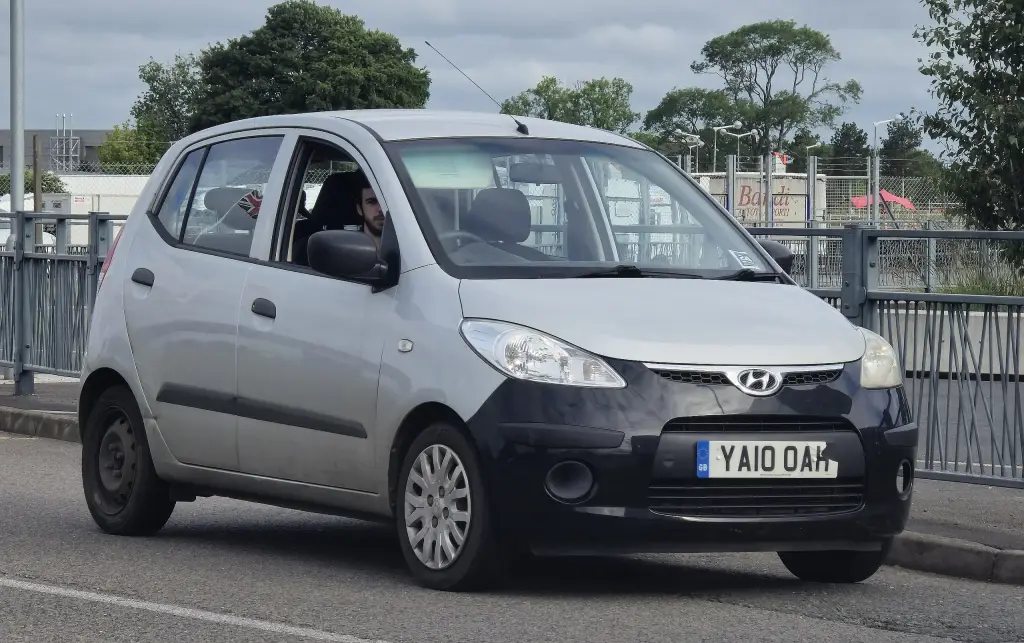
The Hyundai i10 is the city car Hyundai has built since 2007, when it replaced the Atos. At first it was offered only as a five-door hatchback, and it was aimed first of all at India, where it was announced in New Delhi on 31 October 2007 and built at Hyundai’s Chennai plant for both the domestic and the export market.
Hyundai i10 at a glance
| Maker | Hyundai Motor Company |
|---|---|
| Production | since 2007 |
| Replaced | Hyundai Atos |
| First generation | PA, 2007 |
| Announced | New Delhi, 31 October 2007 |
| Built at | Chennai, India |
| Body | five-door hatchback |
| Engines | 1.1 iRDE, 1.2 Kappa, 1.1 three-cylinder CRDi diesel |
| Length | 3,565 mm |
| Wheelbase | 2,380 mm |
| Boot | 225 litres |
| Facelift | September 2010 in India, 2011 in most other markets |
History of the Hyundai i10
Development began under the codename Hyundai PA with the Indian market in mind, because small hatchbacks sell strongly there. The car was announced in New Delhi on 31 October 2007 in three Indian variants, D-Lite, Era and Magna, all with the 1.1-litre iDREZ engine; in July 2008 Hyundai added the Sportz and Asta versions and a 1.2-litre Kappa engine. European cars came in Classic, Style, Comfort and Eco Blue versions with a 1.0-litre engine, all with four airbags, ABS, front electric windows, air conditioning and an RDS radio and CD player, while the higher versions added heated front seats, a sunroof, start-stop and optional ESP.
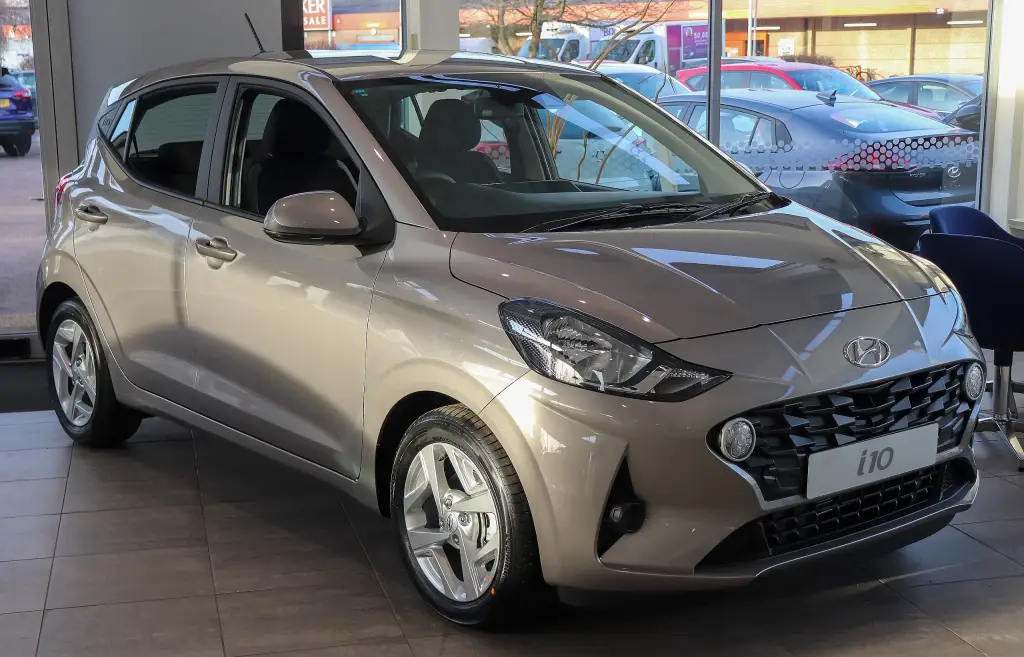
The i10 kept the Atos’s length of 3,565 mm and its 2,380 mm wheelbase but was 70 mm wider for more shoulder room and 40 mm lower. The boot held 225 litres, noticeably less than the Getz. Inside there was a plastic dashboard with an optional integrated stereo, a large white-faced speedometer flanked by a tachometer and fuel and temperature gauges, and a gear lever built into the centre console that left room for two cup holders between the seats.
The engine range started with the 1.1-litre iRDE four of 65 PS, the same engine used in the Kia Picanto and the Atos Prime, with lower CO2 emissions, joined by a 1.2-litre Kappa unit that met Euro 5 with the same CO2 figure and, in Europe and India, a 1.1-litre three-cylinder CRDi diesel.
A facelift was revealed in India on 23 September 2010 and went on sale there on 17 October, with a front end in Hyundai’s “Fluidic Sculpture” style, redesigned tail lamps and bumpers and a new interior with a gear shift indicator and a digital fuel gauge; other countries received it mostly in 2011. At the 2010 Delhi auto show Hyundai showed an electric i10 concept, which led to the BlueOn electric car built in Korea the same year. In India the i10 was named Car of the Year 2008 by several magazines and won the Indian Car of the Year award, and in 2008 two i10 Kappas were driven 10,000 km from Delhi to Paris in 17 days before being shown at the Paris motor show.
Design and features
- Built in India: the Chennai plant supplied both India and export markets.
- Small outside, roomy inside: unchanged length and wheelbase over the Atos, but 70 mm wider.
- Frugal engines: 1.1 and 1.2-litre petrol units and a three-cylinder diesel.
- Award winner: Indian Car of the Year 2008.
Hyundai i10 versions
- i10 (2007–2010): the original five-door with 1.1 and 1.2-litre petrol engines.
- i10 facelift (2010–2011): Fluidic Sculpture front end and revised interior.
- i10 BlueOn: the electric car that followed the 2010 electric concept.
- Indian trims: D-Lite, Era and Magna, later Sportz and Asta.
- European trims: Classic, Style, Comfort and Eco Blue.
The i10 replaced the Atos and sits below the i20 in Hyundai’s range. More Hyundai models are in the Hyundai collection.
Video: Am Start: Hyundai i10
Video by DW Deutsch on YouTube.
Sources
- Hyundai i10, English Wikipedia: launch, variants, engines, dimensions, facelift, awards