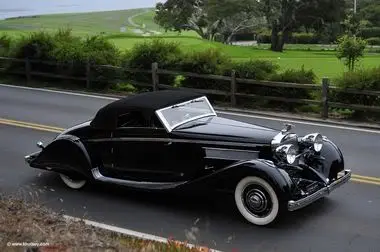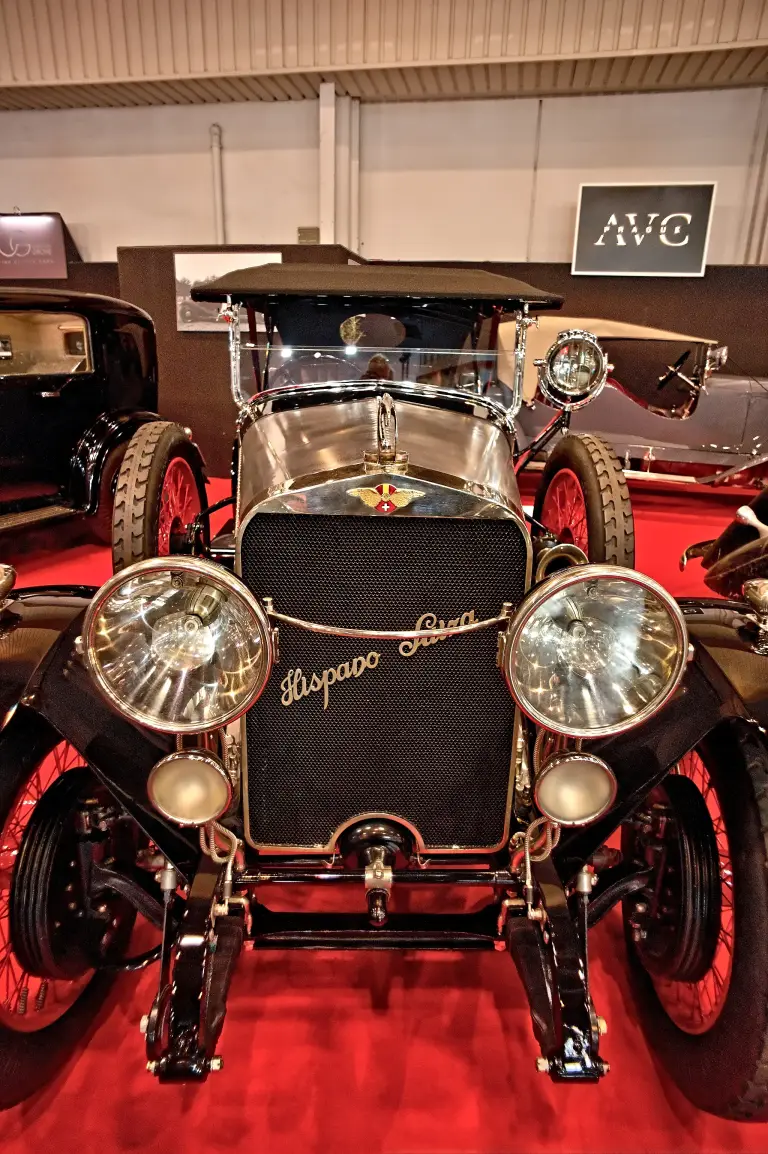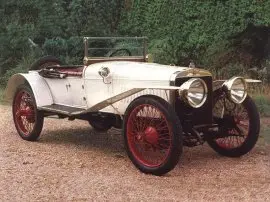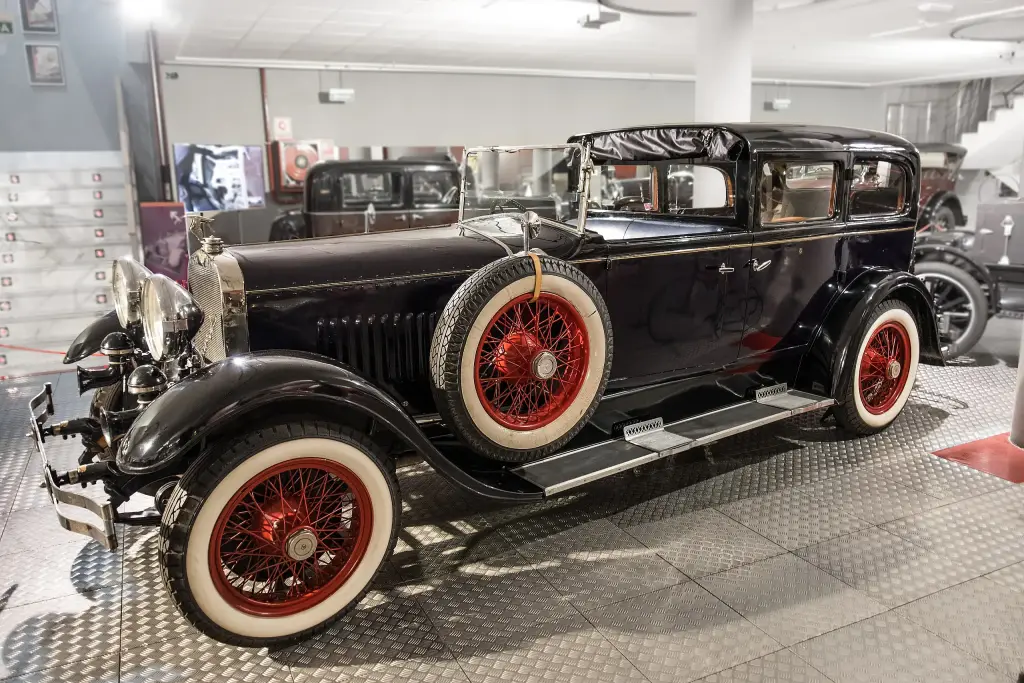
The Hispano-Suiza T49 was a car manufactured by the Spanish company Hispano-Suiza between 1924 and 1944. It was a smaller version of the successful H6B model, with a 3,746 cc six-cylinder engine, and its chassis was produced completely in Spain.
Hispano-Suiza T49 at a glance
| Maker | Hispano-Suiza, La Sagrera, Barcelona |
|---|---|
| Production | 1924–1944 |
| Based on | Hispano-Suiza H6B |
| Engine | 3,746 cc six-cylinder |
| Power | 85 hp (63 kW) |
| Top speed | 120–135 km/h, depending on wheelbase and body |
| Brakes | four-wheel drum brakes with brake booster |
| Gearbox | three-speed with reverse |
| Chassis production | at La Sagrera from December 1925 |
| French version | Hispano-Suiza I 6, six examples built |
| Coachbuilders | Fiol, Farré, Roca, Badia, Mateu and Marrugat, among others |
| Bodies | designed to order |
This page is based on English Wikipedia only and the article there is short, so the facts were not cross-checked against a second source.
History of the Hispano-Suiza T49
Smaller than the H6
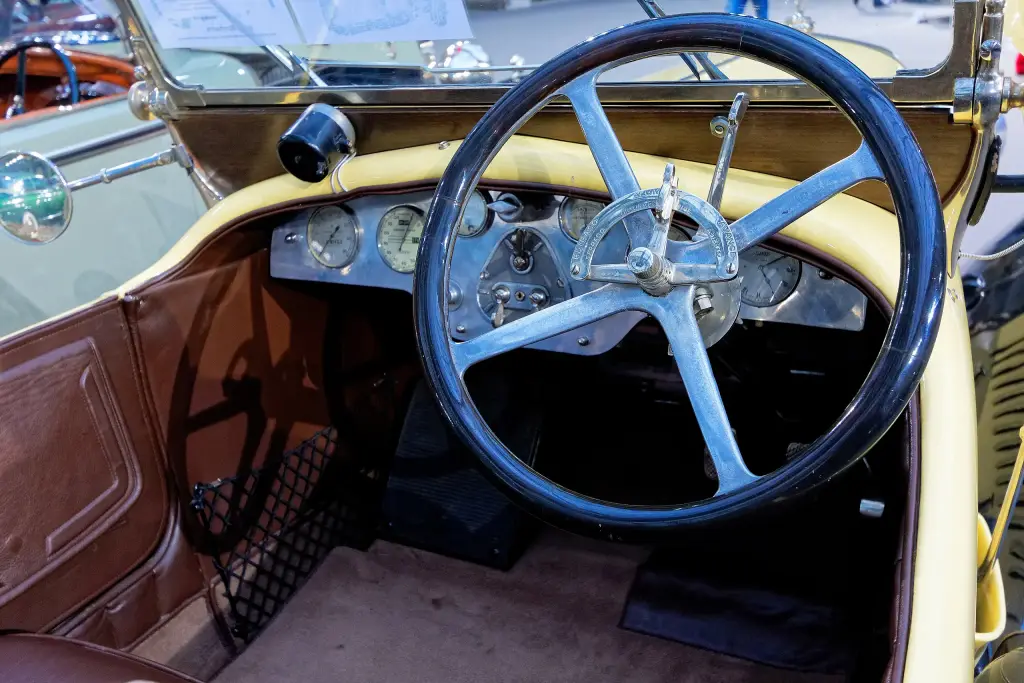
The T49 was a smaller version of the successful H6B. Its six-cylinder engine displaced 3,746 cc and produced 85 hp (63 kW), giving a maximum speed of 120–135 km/h depending on the wheelbase and the body fitted. The car had four-wheel drum brakes with a brake booster and a three-speed gearshift with reverse.
A prototype for the queen
In 1924 the T49 prototype was tested by the company’s president, Damian Mateu, who travelled from Barcelona to Paris with his driver on a two-day trip. With the Coupé de Ville body, the car was commissioned by the Spanish Royal House for the private service of Queen Maria Cristina.
Spanish production, French start
The car was developed in France, but its manufacturing was completely Spanish. The chassis — engine, mechanics, axles, wheels, front and control panel — was produced at the La Sagrera factory beginning in December 1925. Six examples were also built in France as the Hispano-Suiza I 6, but this effort was soon abandoned because the car met with no market response there; the French production may have been only a pre-series run to set up the manufacturing process.
Bodies by Spanish coachbuilders
The bodywork was designed by order. The main bodybuilders were Fiol, Farré, Roca and Badia, Mateu and Marrugat, and others, and the car remained in the production programme until 1934.
Design and features
- Six-cylinder engine: a 3,746 cc unit of 85 hp, smaller than the H6’s 6.6 litres.
- Flexible top speed: 120–135 km/h depending on wheelbase and bodywork.
- Servo brakes: four-wheel drum brakes with a brake booster.
- Built in Barcelona: the chassis came from the La Sagrera factory from December 1925.
- Coachbuilt: bodywork was ordered from Spanish coachbuilders such as Fiol, Farré and Roca.
Hispano-Suiza T49 versions
- T49 (1924–1944): the standard Spanish-built car.
- Coupé de Ville: the body of the prototype, ordered for Queen Maria Cristina.
- Hispano-Suiza I 6: the French-built version, of which six examples were made.
- Coachbuilt bodies: individual designs from Fiol, Farré, Roca, Badia, Mateu and Marrugat.
The T49 was the smaller companion of the Hispano-Suiza H6, and the J12 later became the largest car of the marque. More Hispano-Suizas are in the Hispano-Suiza collection.
Video: Hispano-Suiza T49 built in Barcelona in 1928
Video on YouTube.
Sources
- Hispano-Suiza T49, English Wikipedia: engine, performance, prototype, production