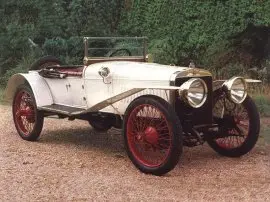
The Hispano-Suiza 15.9 HP, better known as the Alfonso XIII, was produced from 1911 to 1914 and is without doubt the most celebrated car the Barcelona company built before the First World War. It took its name from the King of Spain, Alfonso XIII, who was closely involved with the marque.
Hispano-Suiza Alfonso XIII at a glance
| Maker | Hispano-Suiza, Barcelona |
|---|---|
| Also known as | 15.9 HP, Alfonso XIII |
| Debut | Paris Motor Show 1910; first chassis July 1911 |
| Production | 1911–1914 |
| Engine | 3,619 cc four-cylinder, 80 by 180 mm |
| Power | 56 hp at 2300 rpm |
| Valves | T-head, side valves on both sides, one camshaft per side |
| Gearbox | three-speed; four-speed from 1913 |
| Top speed | over 100 km/h, up to 120 km/h |
| Wheelbase | 264 cm; 300 cm from 1913 |
| Brakes | two rear drums plus one at the gearbox output |
| Body | spider as standard, other styles on request |
There is no English Wikipedia page for this model, so the page is based on Italian Wikipedia only and the facts were not cross-checked against a second source.
History of the Hispano-Suiza Alfonso XIII
How the king gave his name
The origins of the 15.9 HP go back to 1905, when the Spanish monarch travelled to visit the castle of Sagunto near Valencia. A family friend and sporting motorist, Francisco Abadal, escorted the king in a car of the Spanish company, which was then little known because it had been founded only the year before. The king was so impressed by the car’s performance that he became a great enthusiast of the Barcelona marque and later a shareholder in the company.
From racing to the road
As a sporting car, the 15.9 HP came directly from competition. The company had made its name in sport through the performance of its cars, although the Coppa della Catalogna instituted by King Alfonso XIII went badly for the Hispano-Suizas prepared by Marc Birkigt and was won by Peugeot. It mattered little: the victory in the Coupe de l’Auto was so celebrated that the management of Hispano-Suiza was convinced to put a road version into production. With few changes it was presented at the Paris Motor Show of 1910, and the king was so enthusiastic that he accepted that the car should be named after him. Production began only months later: the first chassis left the factory in July 1911.
Design
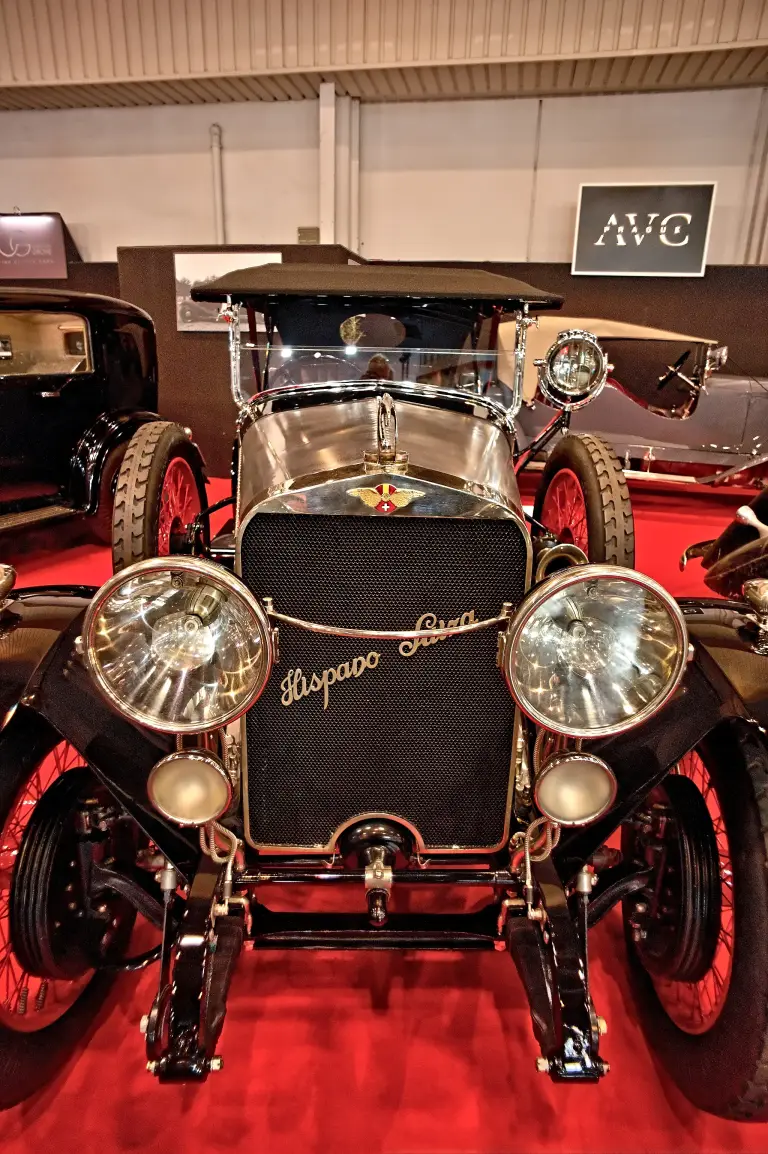
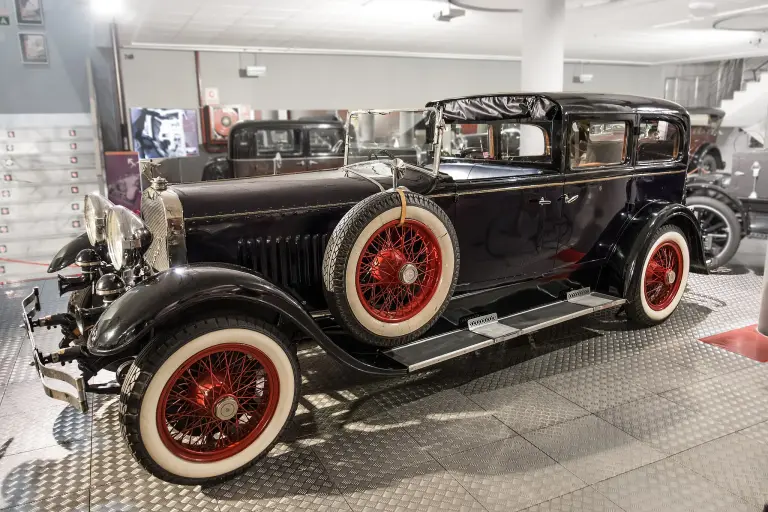
The Alfonso XIII was fundamentally a spider, although other bodies could be had on request. Its dimensions were generous for the period but not excessive, and it remained a very high-class car. At the front large circular headlamps sat between big angular wings that enclosed a bonnet with twelve vertical louvres on each side and joined the running boards and the arched rear wings. The high running boards gave the impression of a much lower waistline and added dynamism to the side view. At the rear there was a spare wheel, wire-spoked like the standard wheels.
Mechanics
At its debut the Alfonso XIII had a front-mounted longitudinal four-cylinder engine of 3,619 cc with an 80 by 180 mm bore and stroke, producing 56 hp at 2300 rpm. The cylinder head was of the T type, with side valves on both sides, exhaust and inlet on opposite sides, each controlled by its own camshaft. Lubrication was by pump and ignition by a high-tension magneto. The gearbox had three ratios and drive went to the rear wheels. Top speed was certainly over 100 km/h and could reach 120 km/h depending on the body, a remarkable figure for the time. The chassis was a ladder frame with rigid axles, longitudinal leaf springs and a braking system of two drum brakes on the rear axle plus one at the gearbox output.
1913 changes and the end
In 1913 the car received substantial changes: the wheelbase was lengthened from 264 to 300 cm to improve roominess. The unladen weight rose noticeably, and to keep the liveliness that distinguished it a new four-speed gearbox was adopted, generally with shorter ratios than the previous three-speed. Production of the Alfonso XIII ended in 1914, when the car was replaced by the Hispano-Suiza T26.
Design and features
- Racing origins: developed from the car that won the Coupe de l’Auto.
- T-head four: a 3,619 cc engine with side valves on both sides and a camshaft for each.
- Speed for its day: over 100 km/h, and up to 120 km/h with lighter bodies.
- King’s name: named after Alfonso XIII, a patron and shareholder of the company.
- 1913 update: a longer wheelbase and a new four-speed gearbox.
Hispano-Suiza Alfonso XIII versions
- Alfonso XIII spider: the standard open body.
- Other bodies: closed and alternative styles available on request.
- 1913 model: longer 300 cm wheelbase and four-speed gearbox.
- Racing cars: the competition Hispano-Suizas from which the road car was developed.
The Alfonso XIII was replaced by the T26 and was an ancestor of the Hispano-Suiza H6; the later six-cylinder model was the T49. More cars of the marque are in the Hispano-Suiza collection.
Video: 1911 Hispano-Suiza Alfonso XIII Berline
Video on YouTube.
Sources
- Hispano-Suiza 15.9 HP Alfonso XIII, Italian Wikipedia: history, design, engine, 1913 changes