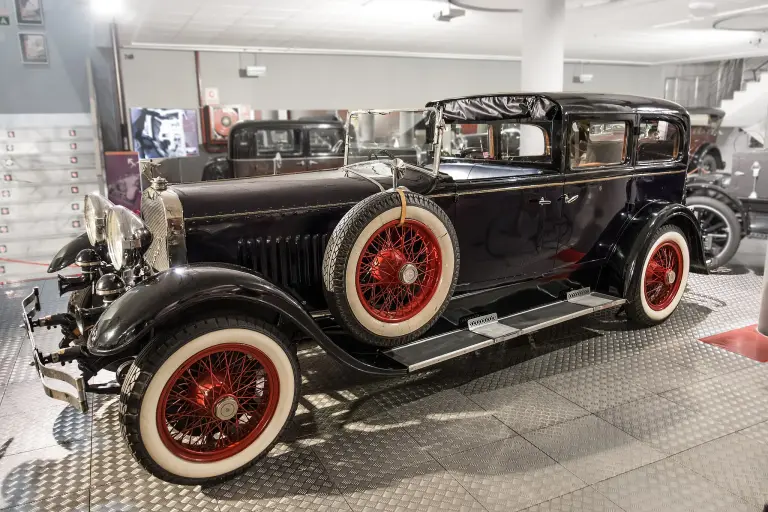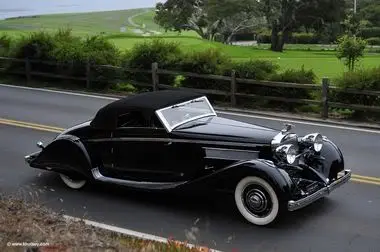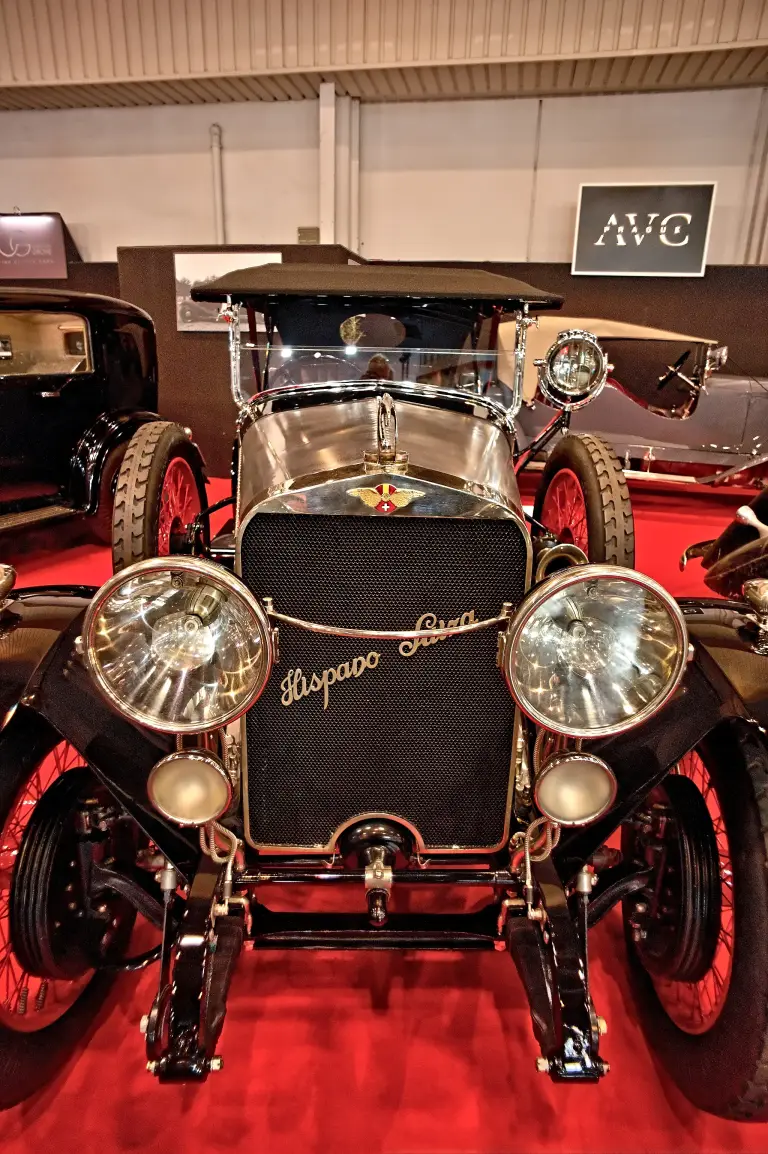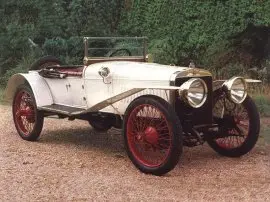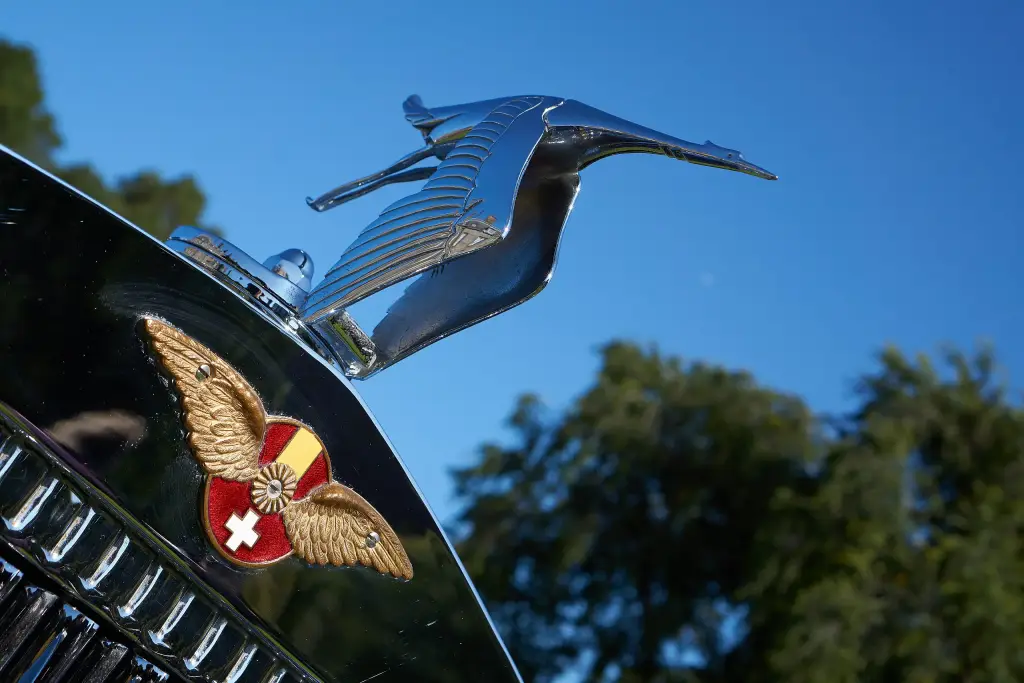
The Hispano-Suiza J12 is a luxury automobile that was made by Hispano-Suiza in France from 1931 to 1938. It was the largest and most expensive car ever built by Hispano-Suiza, it replaced the H6, and it was available only as a chassis for outside coachbuilders.
Hispano-Suiza J12 at a glance
| Maker | Hispano-Suiza, France |
|---|---|
| Production | 1931–1938 |
| Replaced | Hispano-Suiza H6 |
| Engine | 60° V12, pushrod-operated overhead valves |
| Displacement | 9.4 litres, 100 by 100 mm bore and stroke |
| Compression | 5.0:1 |
| Power | 220 PS (162 kW) at 3000 rpm |
| Crankshaft | seven bearings |
| Engine blocks | each machined from a single 700 lb (318 kg) billet |
| Larger engine | 11.3-litre type 68 bis, 250 PS |
| Sold as | chassis only |
| Production stop | 1938, to concentrate on aircraft engines |
This page is based on one source, English Wikipedia, so the facts were not cross-checked against a second source.
History of the Hispano-Suiza J12
The biggest Hispano-Suiza
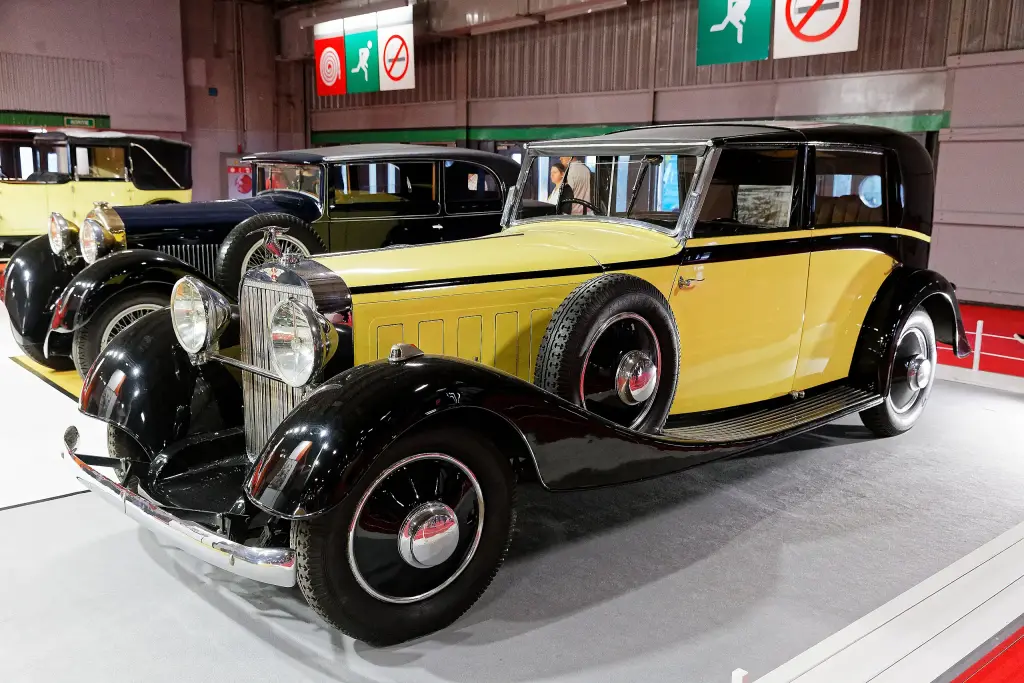
The J12 replaced the H6 and was the largest and most expensive car the company ever built. Like other luxury cars of the period it was sold only as a chassis, and buyers had to arrange with an outside coachbuilder to add a body. Hispano-Suiza suspended automobile production in 1938 to concentrate on the manufacture of aircraft engines.
A V12 built for silence
The J12 was powered by a 60° V12 engine with pushrod-operated overhead valves and a seven-bearing crankshaft. The pushrod design may have seemed a retrograde step after the overhead camshaft layout of the preceding H6, but Birkigt’s main goal for the J12 was silence and smoothness. The engine initially displaced 9.4 litres with bore and stroke both of 100 mm and a compression ratio of 5.0:1, and it delivered 220 PS (162 kW) at 3000 rpm. Each engine block was machined from a single 700 lb (318 kg) billet.
Railcar engines
Hispano-Suiza also entered a French competition for engines for railcars. After testing variants of the H6, the company chose to develop a version of the tipo 68 with a 120 mm stroke, called the type 68 bis. Two existing cars were fitted with this engine, which displaced 11.3 litres and delivered 250 PS (184 kW). The J12 was later regularly available with the larger engine, although total production of these remained in single figures.
Paris to Nice and back
To demonstrate the quality and reliability of the J12, one car was driven from Paris to Nice and back without needing oil or water.
Heads of state
In 1935 the Spanish Government ordered a J12 as a ceremonial car for the President of the Republic. The body was to be a four-door convertible built by Carrosserie Vanvooren of Paris. When the Spanish Civil War broke out in 1936 the bodied car was still in the French Hispano-Suiza plant, and in 1938 Miguel Mateu y Pla, one of the company’s owners, decided to deliver it to the Nationalist side. The car was sent to the Fichet plant in Marseille to receive armour plate and was eventually delivered to the new Spanish Government; it was first used by General Franco in the victory parade in Madrid on 19 May 1939. In 1952 it was replaced by a Rolls-Royce Phantom IV. The Shah of Iran, Mohammad Reza Shah, was given a J12 by his father in 1931 at the age of 12, before attending the Institut Le Rosey in Switzerland; its body was made by the Paris coachbuilder Carrosserie J. Saoutchik.
Design and features
- 9.4-litre V12: a 60° engine with pushrods, a seven-bearing crankshaft and 220 PS at 3000 rpm.
- Silence and smoothness: pushrod valves were chosen over the H6’s overhead camshaft to make the V12 quiet and refined.
- Engine from a billet: each block was machined from a single 700 lb (318 kg) steel billet.
- Chassis only: buyers had the body made by an outside coachbuilder of their choice.
- Proven reliability: one car covered Paris–Nice–Paris without needing oil or water.
Hispano-Suiza J12 versions
- J12 (1931): the standard 9.4-litre car with a 100 mm stroke.
- Type 68 bis: the 11.3-litre railcar-derived engine, fitted to two cars.
- Spanish state car: the armoured four-door convertible by Vanvooren, used from 1939.
- Shah of Iran’s car: a 1931 J12 with Saoutchik bodywork.
The J12 succeeded the Hispano-Suiza H6, and the smaller model of the range was the T49. More cars of the marque are in the Hispano-Suiza collection.
Sources
- Hispano-Suiza J12, English Wikipedia: engine, performance, state cars