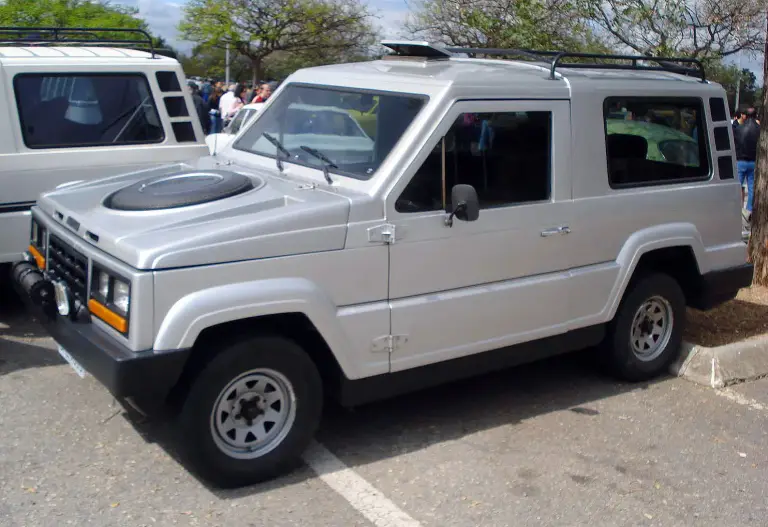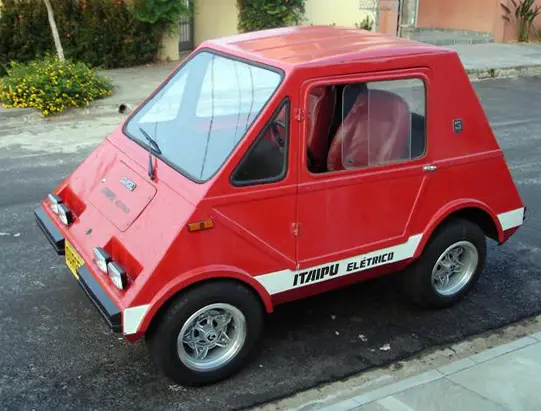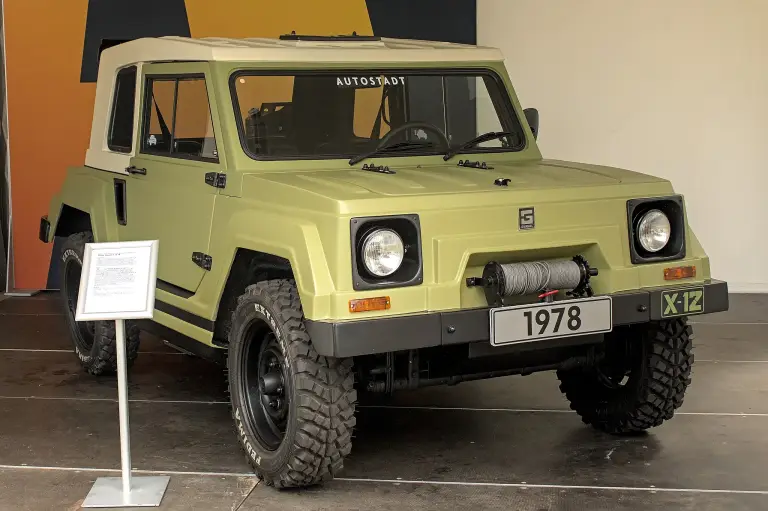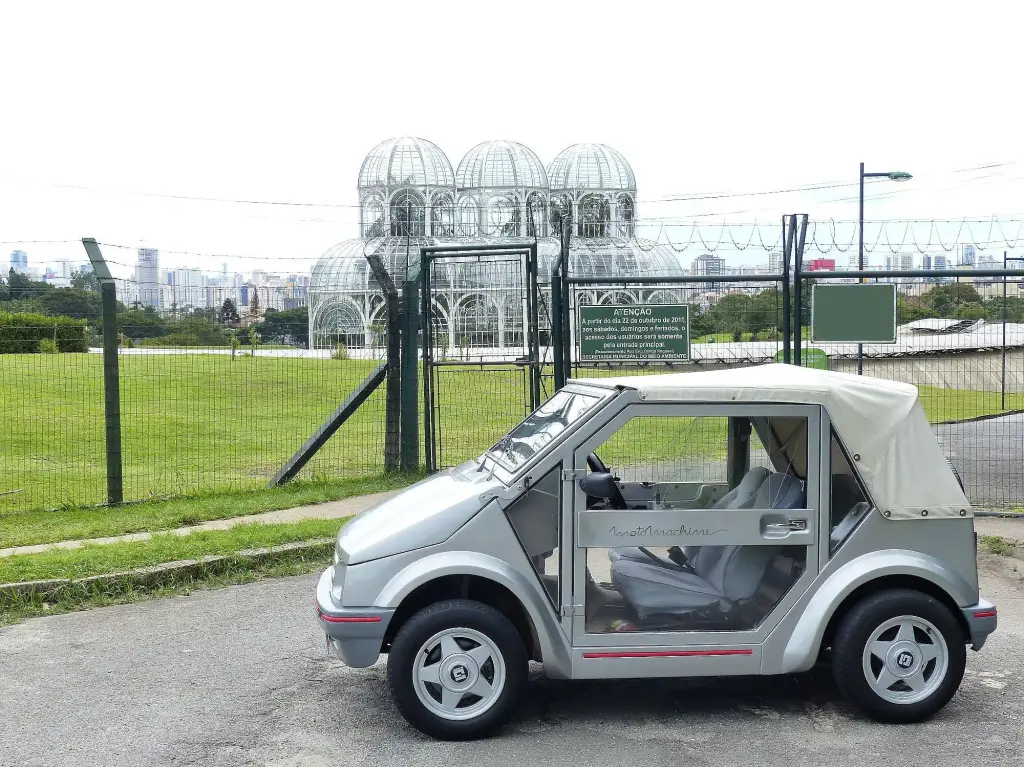
The Gurgel Motomachine was a minicar built by the Brazilian manufacturer Gurgel. Exceptionally square and small, it carried two people and very little luggage, and it was unusual in almost every detail: its doors were made of acrylic, and it came with the parts to turn it into four different cars.
Gurgel Motomachine at a glance
| Maker | Gurgel, Brazil |
|---|---|
| Type | minicar, two seats |
| Engine | 800 cc, two cylinders |
| Doors | acrylic, so the driver sees the road go by |
| Bodywork | four configurations from one car |
| Roof | fibreglass and acrylic hardtop, or canvas |
| Spare wheel | outside, on the rear |
| Dashboard | height-adjustable |
| Role | prototype for the Gurgel Supermini |
| Production | not built in large numbers |
Based on one source: the Motomachine has a Portuguese Wikipedia article only.
History of the Gurgel Motomachine
The idea
At first sight strange, the Motomachine was exceptionally square, small and able to carry only two occupants with almost no luggage. Its most obvious feature was the doors: they were made of acrylic, so that the occupant could see the road running underneath and feel something of the freedom of a motorcycle. The engine was a simple, small and versatile 800 cc unit.
Four cars in one
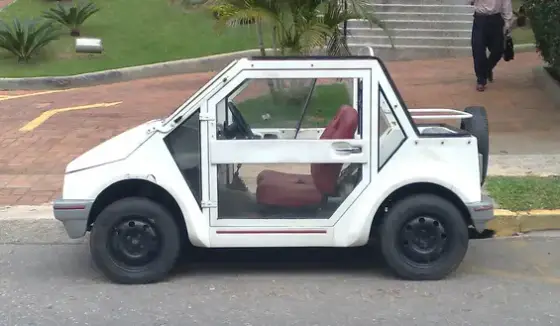
Gurgel called the Motomachine a 4-in-1 vehicle. The first form was a closed urban car with a roof of fibreglass and acrylic. The second was a convertible with the roof removed and only the window pillars left. The third was a convertible whose glass folded back towards the roof, so the driver felt the breeze on his face. The fourth was a changeable car with a canvas top that could be folded down to become the second version. The buyer did not have to choose: one car came with all the parts and keys needed for the transformations, with the folded canvas top carried inside.
Details and purpose
The spare wheel sat outside on the rear, like the Ford EcoSport two decades later, and the dashboard could be adjusted in height, which was rare at the time. The car was never built in large numbers and was considered an exclusive object even at its launch. Above all it was an experiment for Gurgel: on it the company worked on the power of the small engine, put into service a new patented rear suspension that then went into the Supermini, and tried out a longer wheelbase and more interior space. Today the surviving cars are collector’s items, and many are in poor condition.
Design and features
- Acrylic doors: the occupant sees the road moving underneath.
- Four configurations: closed car, full convertible, breeze-in-the-face convertible and a canvas-top version.
- Outside spare wheel: mounted on the rear, an idea taken up by later off-roaders.
- Adjustable dashboard: rare in small cars of the time.
- Test bed: the new rear suspension developed here went into the Supermini.
Gurgel Motomachine versions
- Closed car: fibreglass and acrylic hardtop.
- Open car: roof removed, window pillars retained.
- Folding-glass convertible: windscreen glass folded back towards the roof.
- Canvas-top car: soft top that folded away to make the open car.
The Motomachine was the prototype for the Gurgel Supermini, which inherited its mechanical layout. Its shortened body was related to the BR-800 family, and more cars are in the Gurgel collection.
Video: Gurgel Motomachine
Video by Felipe Bonventi on YouTube.
Sources
- Gurgel Motomachine, Portuguese Wikipedia: design, four bodies, role, details