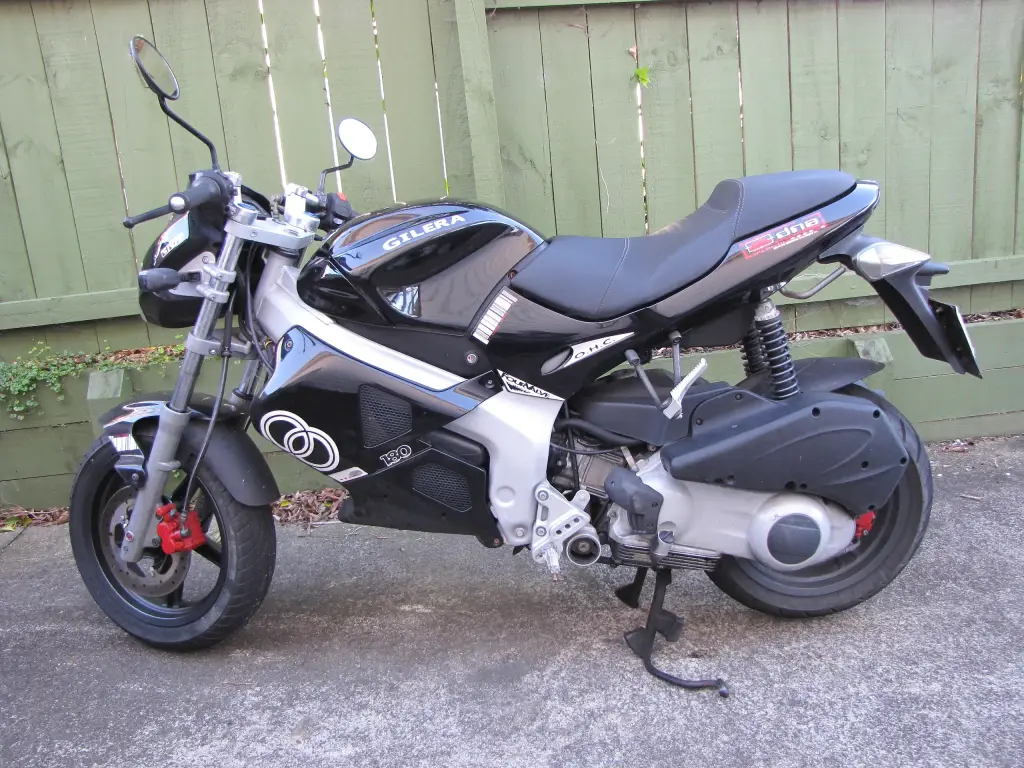
The Gilera DNA was a small scooter built from 1996 to 2009 that looked and sat like a motorcycle. It came with 50, 125 and 180 cm³ engines, an automatic transmission, 14-inch wheels and disc brakes at both ends, and the 125 was nominated for the Machine of the Year award of Motorcycle News in 2001.
Gilera DNA at a glance
| Maker | Gilera, Piaggio group |
|---|---|
| Production | 1996–2009 |
| Engines | 50 cm³ two-stroke; 125 and 180 cm³ four-stroke |
| Transmission | continuously variable, electric start |
| Top speed | 47 km/h (50); 116 km/h (125); 142 km/h (180) |
| Frame | steel open cradle, double down tube |
| Wheels | 14-inch cast aluminium, 120/70 and 140/70 tyres |
| Brakes | 240 mm front and 200 mm rear discs |
| Forks | 35 mm hydraulic |
| Weight | 110 kg dry (50); 125 kg dry (125 and 180) |
| Fuel tank | 10 litres, 2 of them reserve |
| Later version | RST of 2005 |
History of the Gilera DNA
Two dates
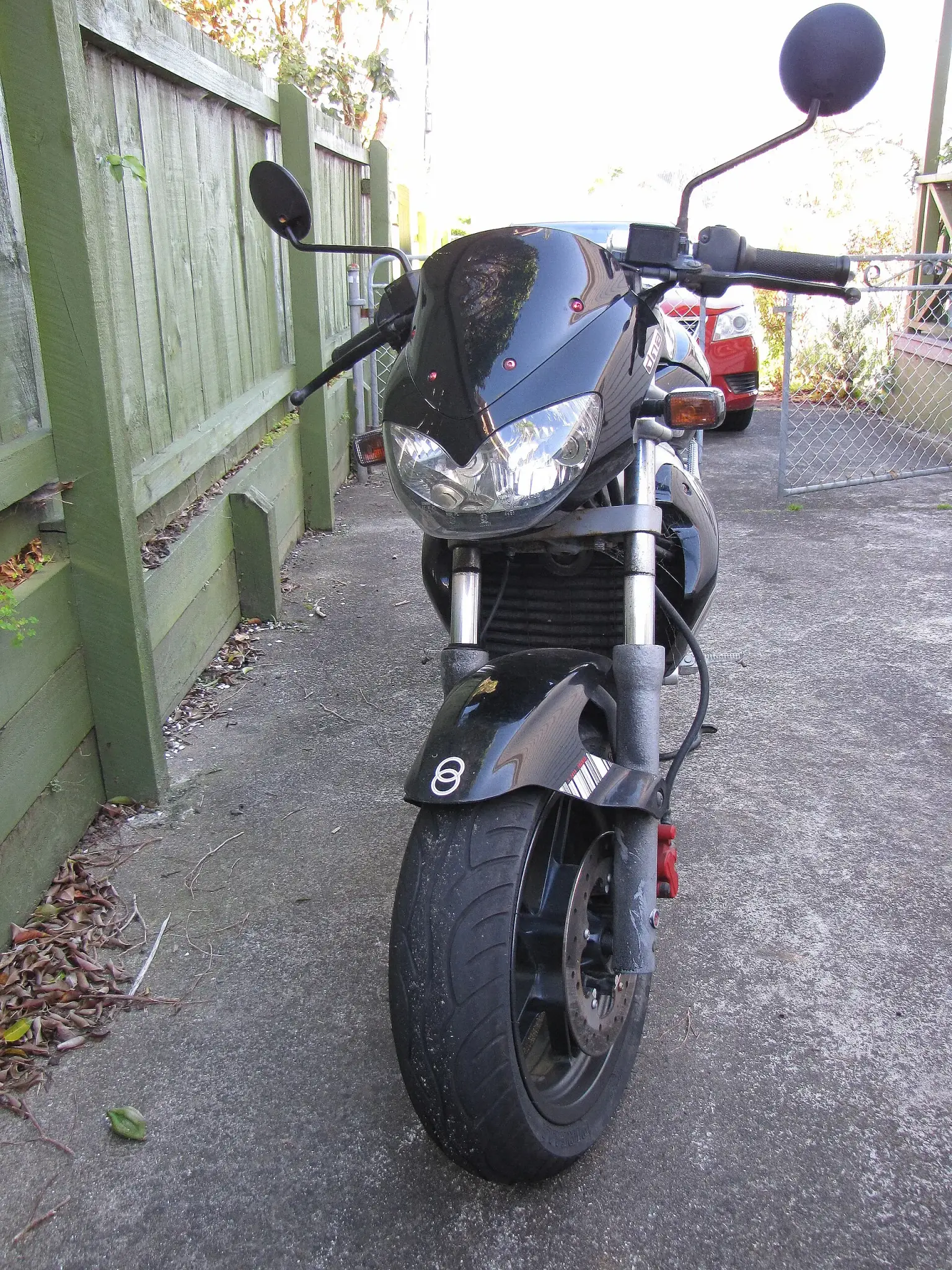
English Wikipedia gives the DNA a production life from 1996 to 2009; the Italian article says it went on sale in 2000, a few months after being presented at the Geneva show. Either way it was one of the first small scooters designed to feel like a motorcycle, with a tank between the rider’s knees, footpegs instead of a floorboard and a chassis built for cornering.
Engines and versions
The DNA was built with three engines: a Piaggio 50 cm³ two-stroke and 125 and 180 cm³ four-strokes, all with carburettors and all single-cylinder. The 50 was limited to 47 km/h, the 125 reached 116 km/h and the 180 reached 142 km/h. Colours were red, yellow and black, in a normal or a racing style with much more aggressive graphics.
In 2005 Gilera released the RST model, which replaced the handlebars with a different design and brought a new colour scheme; it was discontinued in 2009. The 50 was restyled in 2006 with a new handlebar and new colours. The 125 was nominated for the Machine of the Year award by Motorcycle News in 2001.
The chassis
The frame was a steel open cradle with a double down tube, the same for all three engines with one difference: the two larger versions had two rear shock absorbers, one on each side, although the right-hand mount was present and unused on frames built for the 50.
The DNA rode on 14-inch cast aluminium wheels, 3.50 wide, with 120/70-14 tubeless tyres in front and 140/70-14 at the rear. The 240 mm front and 200 mm rear discs were both ventilated and worked with Grimeca or Brembo calipers; the forks were hydraulic with 35 mm stanchions. At 125 kg dry, 110 kg for the 50, and 189 by 72 by 78 cm, the bike was still agile in traffic and in tight manoeuvres.
Practical details
The instrumentation combined an analogue rev counter with a completely digital dashboard, both integrated into the front fairing. The fuel tank sat much lower than usual to leave room for a large helmet compartment; the removable seat covered the battery, the oil tank on the two-stroke and a small plastic box of about 12 cm for documents or a disc lock. The tank held 10 litres, two of them reserve, and the oil tank of the two-stroke 1.2 litres.
Fuel was raised by a pump into a small 40 cm³ header tank with a return line, and from there reached the carburettor by depression. The transmission was the CVT common to scooters, so both levers on the handlebar worked the brakes. The DNA had no conventional electrical system: indicator flashing, battery charging and some functions and lights were managed by an eight-pole Magneti Marelli regulator, common on Piaggio-derived scooters. The bike was also prepared for quick fitting of an alarm sold separately, connected to a hidden terminal under the seat.
Design and features
- Motorcycle stance: a tank between the knees and footpegs instead of a scooter floorboard.
- Three engines: 50 two-stroke and 125 and 180 four-stroke, all with CVT.
- Proper chassis: steel open-cradle frame, 35 mm forks, discs at both ends.
- Helmet compartment: made possible by moving the fuel tank low in the frame.
- Digital dashboard: analogue rev counter combined with a digital display.
Gilera DNA versions
- DNA 50: two-stroke, limited to 47 km/h, 110 kg dry.
- DNA 125: four-stroke, 116 km/h, two rear shock absorbers.
- DNA 180: four-stroke, 142 km/h, 125 kg dry.
- DNA RST (2005–2009): new handlebar design and colour scheme.
- 2006 50 restyling: new handlebar and colours.
The DNA sat between the sporty Runner and the big-wheel Nexus in the Gilera range. More models are in the Gilera collection.
Video: Mein Gilera DNA Tuning Projekt / Kamp-Lintfort
Video by JamesRaien on YouTube.
Sources
- Gilera DNA, English Wikipedia: production years, versions, top speeds, RST model, award nomination
- Gilera DNA, Italian Wikipedia: launch, chassis, dimensions, equipment, electrical system