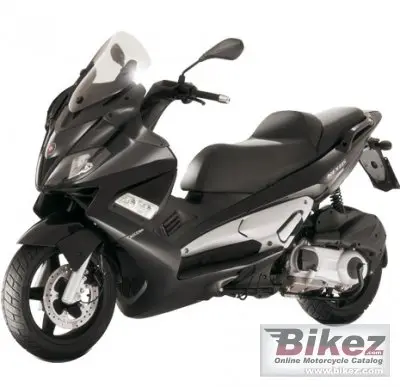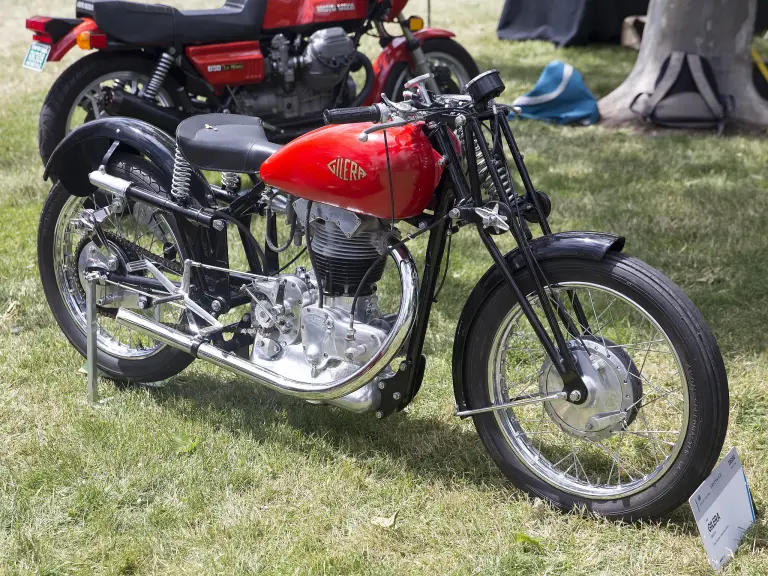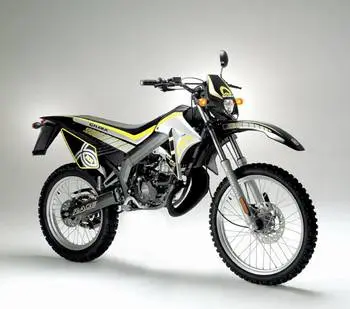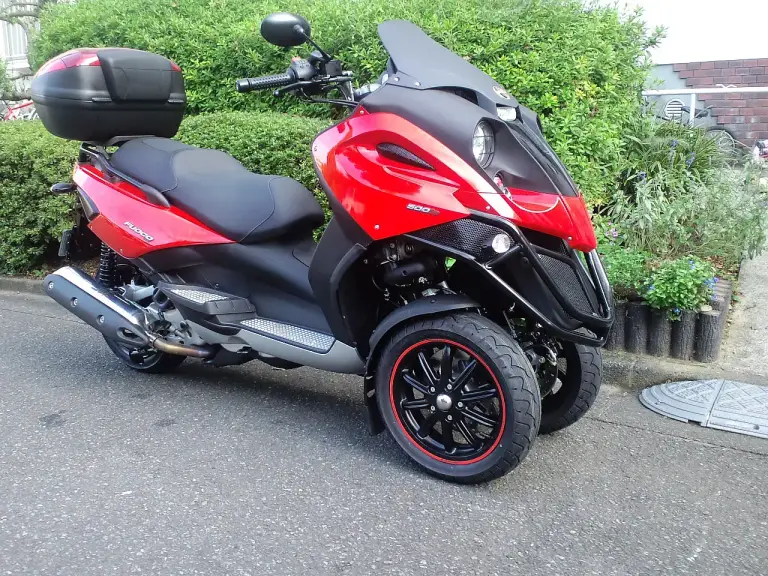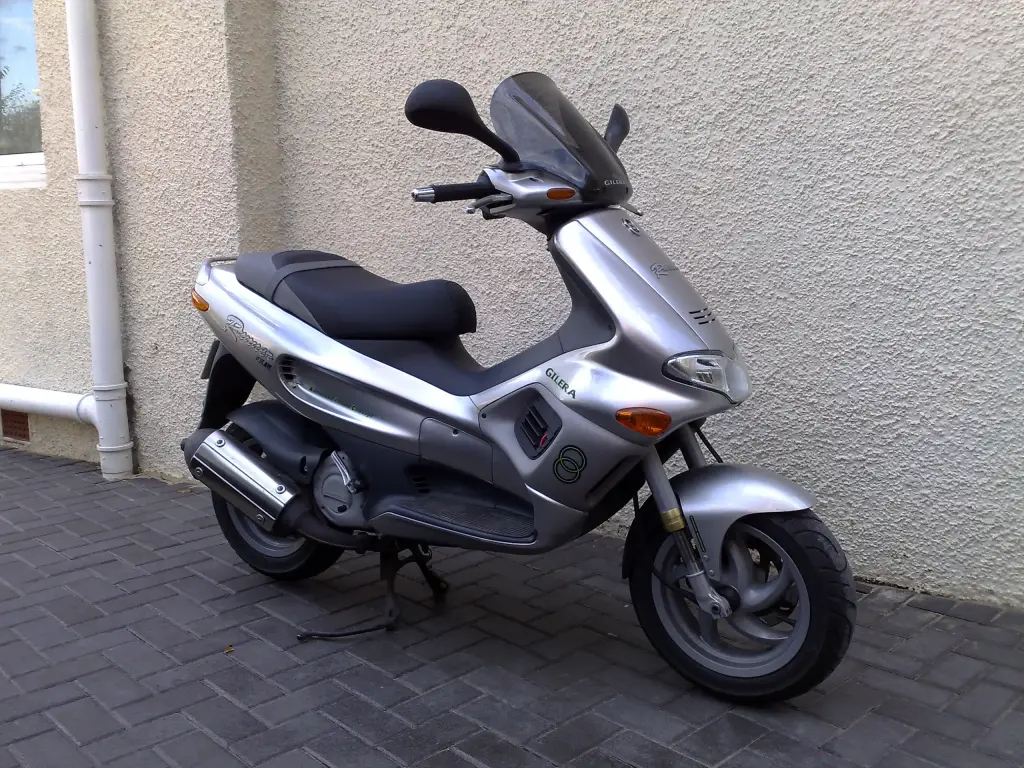
The Gilera Runner was a scooter produced from 1997 to 2020 and designed by Luciano Marabese. When it appeared it was unlike any other scooter: a stiffening tube across the footboard, a three-part motorcycle-style headlight and a chassis built for cornering, with engines from 50 to 200 cm³.
Gilera Runner at a glance
| Maker | Gilera, Piaggio group |
|---|---|
| Production | 1997–2020 |
| Design | Luciano Marabese |
| Registered | 1994, on sale 1997 |
| Engines | 50, 125, 180 and 200 cm³ |
| First series | front disc, rear drum, 9-litre tank |
| First series fork | Showa/Sebac upside-down, 30 mm |
| Four-strokes | Piaggio Leader VX 125 and VXR 180/200 |
| Second generation | 2005, 14-inch front and 13-inch rear wheels |
| Sold by 2005 | about 330,000 |
History of the Gilera Runner
A scooter with motorcycle manners
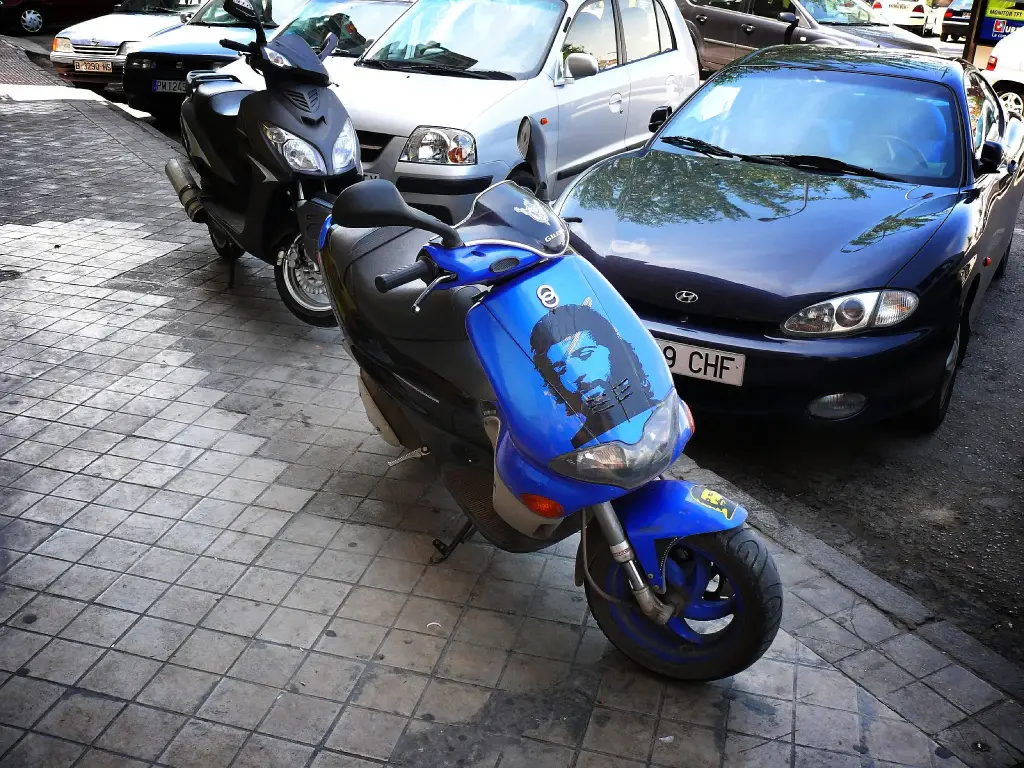
When the Runner entered production it had features that no other scooter had. Its structure recalled a motorcycle, in particular because of an extra tube stiffening the frame: it takes space from the footboard but adds a lot of strength. The engine gave brisk acceleration and was matched to a sporting chassis, and the headlight was of motorcycle origin, split into three parts with the main beam on the right, the dipped beam on the left and the position light in the middle; the first version was also known for a headlight that worked poorly and was later replaced by the one of the larger models.
The scooter was registered in 1994 and went on sale in 1997 as a 50 cm³; a year later, in March 1998, the two-stroke 125 (FX) and 180 (FXR) versions were presented, all liquid-cooled.
The first series
The first series had a front disc brake, a rear drum brake, a 9-litre tank, a non-catalytic exhaust and a Showa/Sebac upside-down fork with 30 mm stanchions, called “grease” by enthusiasts. The DD (Double Disc) and SP (Sport Production) models followed, distinguished mainly by more sporting colours; the DD had two disc brakes instead of one.
The Runner was then updated with the battery moved under the seat instead of behind the tank, a larger 12-litre tank, a rear shock adjustable in preload, revised instruments, the option of catalytic homologation, several versions of the control unit (Magneti Marelli black, Facind or Mitsuba red), an improved electrical system with separate position, dipped and main light selection on the 50, and twin disc brakes.
Two-strokes give way to four
Tightening emissions rules cut two-stroke 125 and 180 production from 2001 and then ended it, with sales continuing until 2003 alongside the four-strokes, to make room for the new Piaggio Leader engines of 125 (VX) and 180 (VXR) cm³. The four-stroke brought Sebac 35 mm conventional forks, which were also fitted to the last two-strokes from 2001.
A general restyling came in 2002 with new, more angular bodywork, new colours including metallics and twin rear shock absorbers on the four-stroke, while the two-stroke kept a single shock. That version was built in four forms: 50 carburettor, 50 injection (PJ, Purejet), 125 (VX) and 200 (VXR); the 180 was replaced by the 200, probably to close the performance gap with the old two-stroke FXR. The first 50 used a Weber 12 carburettor, later replaced by a Dell’Orto 17.5 PHVA with a larger choke.
Second generation
A new Runner reached the market in July 2005, pairing the Leader 125 and 200 engines with a completely revised chassis, 14-inch front and 13-inch rear wheels and revised fork and twin rear shocks. Cumulative sales since the launch reached 330,000 units. In 2008 the 125 and 200 were updated and both took the ST name: a luggage rack became standard, the screen grew and lost its dark tint, air deflectors appeared on the leg shield in the style of the Nexus, the headlight was darkened inside, the mirrors became easier to adjust and the colours became less racing, probably to widen a traditionally niche market.
A Special Series with a grey front and black rear appeared in 2008, and in February 2009 came the Simoncelli version with the colours of the 250 cc rider. By 2020 the range had shrunk to a single model, the SP 50, in Black Soul and White Soul finishes. Because of its motorcycle-derived chassis, its strong engine and the ease with which it could be tuned, the Runner, especially the two-stroke, was very popular with sporting riders and in one-make trophy racing.
Design and features
- Stiffening tube across the footboard: the frame detail that gave the Runner its motorcycle feel.
- Three-part headlight: main and dipped beams either side of a central position light.
- Upside-down fork: a Showa/Sebac 30 mm unit on the first series.
- Wide engine range: two-stroke 50, 125 and 180, then four-stroke Leader 125 and 180/200.
- Tuning friendly: a favourite base for one-make trophies and aftermarket kits.
Gilera Runner versions
- Runner 50 (1997): the original two-stroke, restricted to 45 km/h.
- 50DD and 50SP: double disc brakes and sportier colours.
- FX 125 and FXR 180 (1998–1999): two-strokes, the 180 the fastest of the range.
- Purejet 50 (2003): direct injection with lower emissions.
- VX 125 and VXR 180/200: four-stroke Leader engines; the 200 arrived in mid-2002.
- Second generation (2005): new chassis, 14-inch front wheel, ST names from 2008.
- Special Series (2008) and Simoncelli (2009): special colour schemes.
The Runner was joined in the Gilera range by the Stalker and later by the bigger Nexus. More models are in the Gilera collection.
Video: Gilera Runner & GoPro Hero3
Video by RunnMike on YouTube.
Sources
- Gilera Runner, English Wikipedia: model years, two-stroke and four-stroke versions, generations
- Gilera Runner, Italian Wikipedia: design, first series, updates, restyling, 2005 and 2008 changes