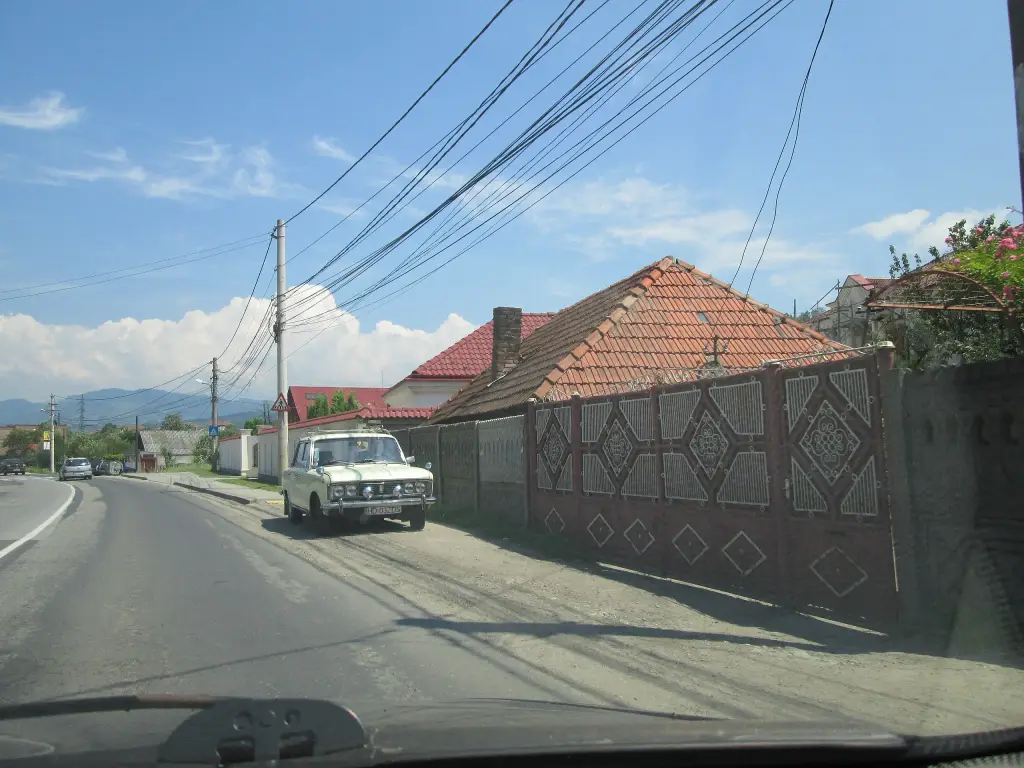
The FSO 125p is the car Poland knew as the Duży Fiat: a Fiat 125 body with the older 1300/1500 running gear, built under licence at Żerań from 1967 until 1991. It replaced the Warszawa, served as the country’s everyday family car and outlived the Italian original by more than two decades.
FSO 125p at a glance
| Maker | FSO, Warsaw, under Fiat licence |
|---|---|
| Production | 1967–1991 |
| Names | Polski Fiat 125p; FSO 125p, 1300 and 1500 from 1983 |
| Licence signed | 22 December 1965 |
| Assembly began | 28 November 1967 |
| Engines | 1,295 cc, 60 PS; 1,481 cc, 75 PS |
| Gearbox | four-speed manual; five-speed from 1985 |
| Brakes | discs on all four wheels |
| Body styles | saloon, estate (1972), pickup (1975) |
| Built | 1,445,689 |
| Exported | 586,376 |
| Last car | 26 June 1991 |
History of the FSO 125p
A Fiat designed for Poland
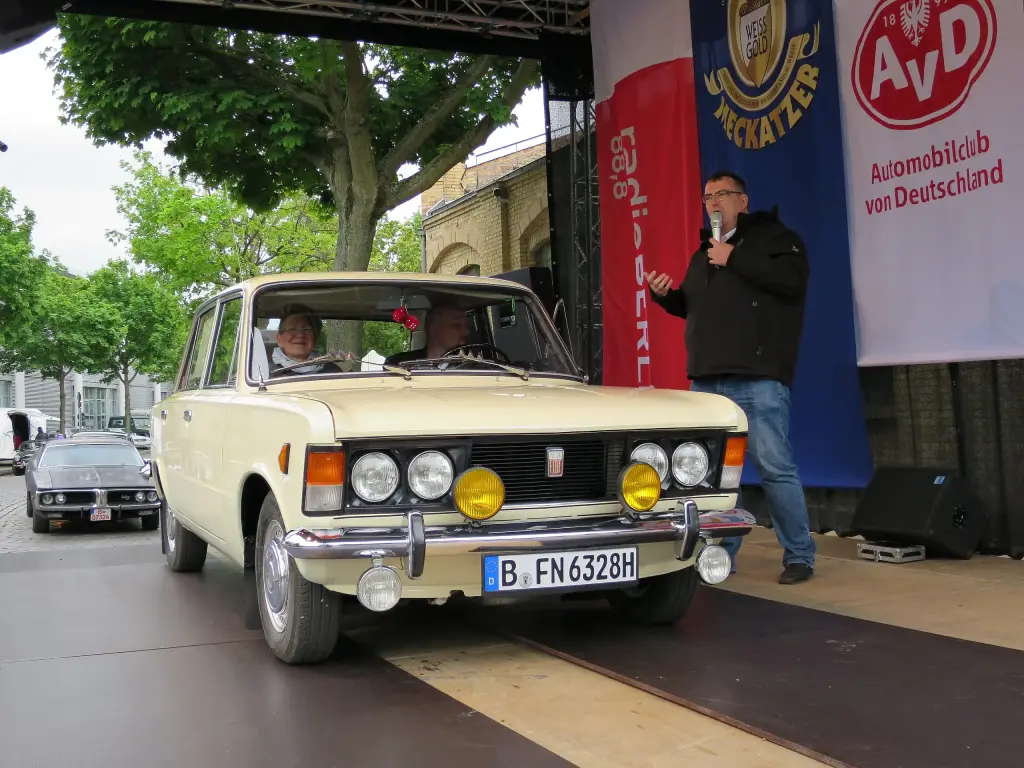
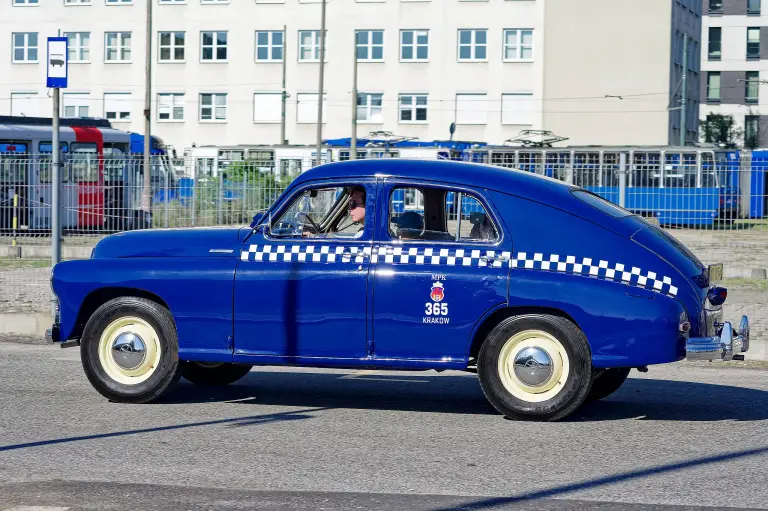
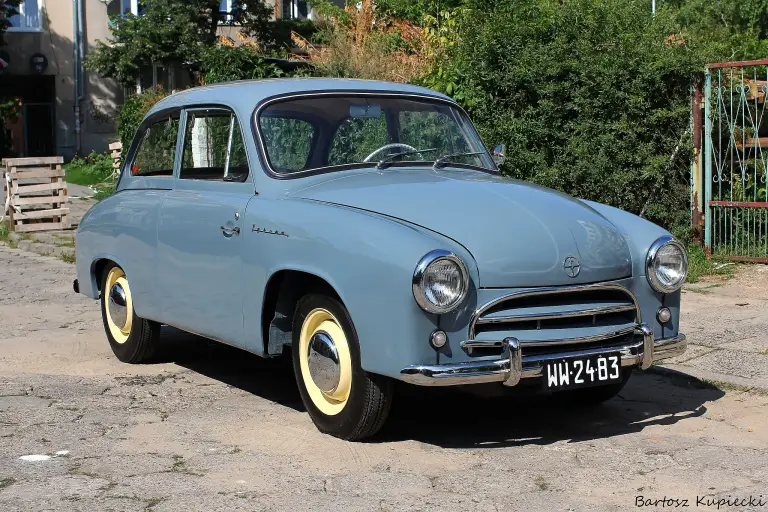
In the 1960s the only passenger car maker in socialist Poland was FSO in Warsaw, which built the dated Syrena and the Warszawa, a larger model whose roots went back to the 1940s. A replacement was needed, and the authorities turned to Fiat, which was looking for production in the Eastern Bloc. On 22 December 1965 a licence agreement was signed for an intermediate-sized car devised specially for Poland: the body and braking system of the new Fiat 125 combined with the driveline and chassis of the retired Fiat 1300/1500. The car had no equivalent in Turin, which helped FSO win export rights to Western markets and the right to use the Fiat name.
The Żerań plant had to be rebuilt for modern assembly, with machinery ordered from Western companies, and more than a hundred Polish suppliers were drawn in. Assembly of pre-production cars from Italian parts began on 28 November 1967, and 75 had been built by the end of the year. To mark the revival of the pre-war marque, the car was sold as the Polski Fiat 125p.
Two engines, Polish details
There were two main versions, differing in engine: the 1300 with a 1,295 cc unit of 60 PS (44 kW), in production from 1968 until the late 1980s, and the 1500 with 1,481 cc and 75 PS (55 kW) from 1969. The Polish car differed from the Italian in many details. The most visible were double round headlights instead of square ones, simpler bumpers and grille, orange front indicator lenses and simpler body pressings. Inside it kept the older Fiat 1300/1500 dashboard and column gearchange. More important was a flat fuel tank above the rear axle, safer than Fiat’s vertical tank on the right-hand side of the tail, and disc brakes on all four wheels.
Estates, pickups and updates
Unlike the Fiat 125, the Polish car was also built as an estate, the 125p Kombi, introduced in 1972 and winner of the 1978 Estate Car of the Year award in Britain. A pickup developed from the Kombi was shown in 1972 but only reached production in 1975. Between 1973 and 1981 FSO also assembled the Polski Fiat 132p, shipped from Italy almost complete. Small series included the 125p Monte Carlo and 125p Akropolis, homologation specials with 1600 and 1800 twin-cam engines for rallying, and a lengthened three-row cabriolet used by the Warsaw tourist bureau for sightseeing.
There was a minor restyling in 1973, when the chrome grille gave way to black plastic, and a larger one in 1975: a new grille, new indicators, wider horizontal rear lamps, a new dashboard and steering wheel and bumpers with rubber strips, with both engines gaining 3.7 kW. From 1983, after the licence expired, the car was sold as the FSO 125p 1500/1300. In the late 1980s it received the Polonez powertrain and a new instrument cluster with round gauges. Production ended on 26 June 1991 after 1,445,689 cars, by which time the design was 24 years old.
The cheapest car in Britain
Right-hand-drive cars had been available in Britain and Ireland since 1975, and for years the Polski Fiat was the cheapest car on the market there, at £3,099 in late 1991. Buyers got durable leatherette seats and a vast interior, and the mechanicals were rugged, but performance was below that of the Italian 125 and the leaf-sprung rear axle gave a rough ride. By the end, the Lada Riva was the only similar Eastern European car left on sale in Britain. Of the total, 586,376 cars were exported. The 125p’s successor, the Polonez, had been on sale since 1978.
Design and features
- Fiat 125 body: the Italian car’s shell and brakes, modified for Polish production.
- Older running gear: engines and chassis from the retired Fiat 1300/1500, not the 125’s twin-cam.
- Round headlights: the easiest way to tell a Polish 125p from an Italian 125.
- Flat fuel tank: mounted above the rear axle instead of Fiat’s vertical tank behind the right rear side.
- Estate and pickup: body styles the Italian Fiat 125 never offered.
FSO 125p versions
- 125p 1300 (1968–late 1980s): 1,295 cc, 60 PS.
- 125p 1500 (1969–1991): 1,481 cc, 75 PS.
- 125p Kombi (1972): estate, Estate Car of the Year in Britain in 1978.
- 125p pickup (1975): commercial version developed from the Kombi.
- Monte Carlo and Akropolis: rally homologation specials with 1600 and 1800 twin-cam engines.
- Three-row cabriolet: lengthened sightseeing car for the Warsaw tourist bureau.
The 125p replaced the Warszawa and was joined in 1978 by the Polonez, which used its floorpan and mechanicals. More cars are in the FSO collection.
Sources
- Polski Fiat 125p, English Wikipedia: history, engines, exports
- Polski Fiat 125p, Polish Wikipedia: production figures, versions, equipment