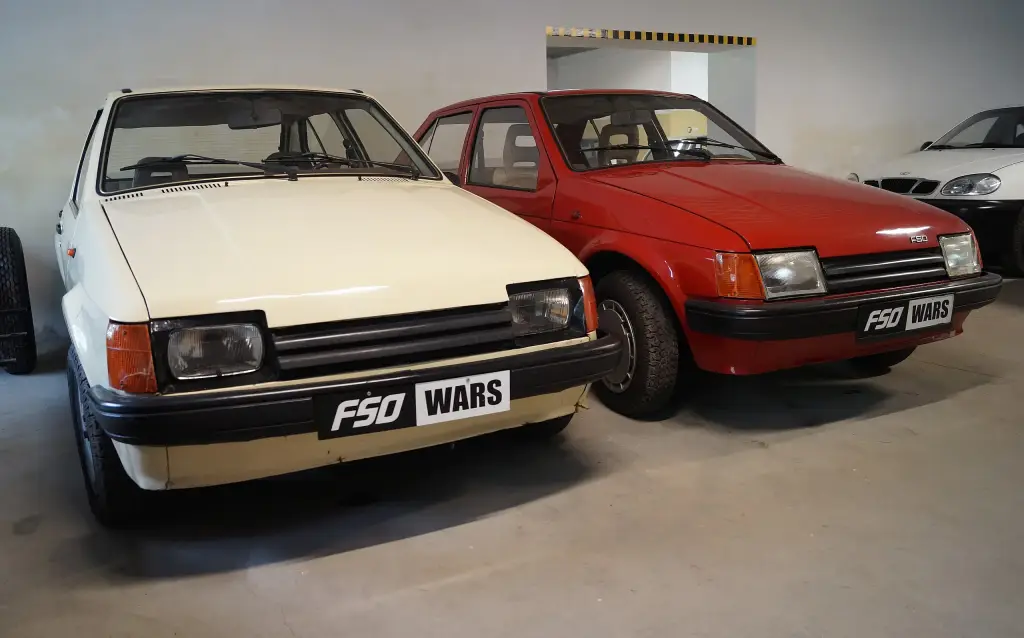
The FSO Wars was a compact front-wheel-drive hatchback prototype built in 1985 and 1986 to replace the ageing 125p. Three cars were made and the design drew positive opinions, but the programme was stopped when FSO committed to buying a Fiat licence instead.
FSO Wars at a glance
| Maker | FSO, Warsaw |
|---|---|
| Type | compact hatchback prototype |
| Programme | 1981–1985; road tests to 1987 |
| Design team | led by Mirosław Górski |
| Styling | 1:5 models from 1981; wind tunnel April 1982 |
| First prototype | October 1985 |
| Public debut | 24 October 1986, Stadion Dziesięciolecia, Warsaw |
| Prototypes | three: cream, red and blue |
| Layout | front-wheel drive |
| Planned output | up to 200,000 a year |
| Name | proposed by Edward Pietrzak |
| Status | cancelled |
based on one source: the Polish Wikipedia article on the FSO Wars.
History of the FSO Wars
Why FSO needed a new car
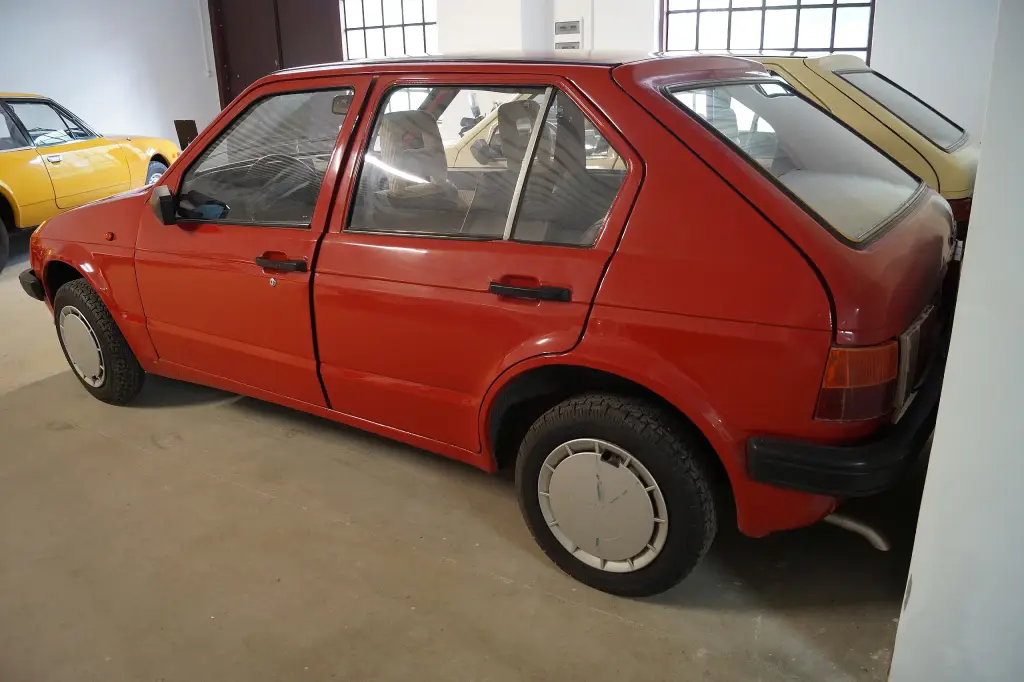
At the start of the 1980s FSO’s main product, the Polski Fiat 125p, was far behind Western competitors in its engineering. In May 1981 the factory set out its plans for future products, including a modern compact hatchback with front-wheel drive to replace the 125p. The Polonez would continue, but with substantial changes to make it more attractive and cheaper to build. Three routes were considered: buying a licence, forming a joint venture with a foreign manufacturer, or designing the car in Poland. The first and third were chosen and pursued in parallel.
The new car was to match the 125p in practicality while using much less fuel and having a simpler construction, which was expected to cut manufacturing costs by about 30 per cent and allow an annual output of up to 200,000 cars.
Design work and prototypes
The assumptions were approved in July 1981 by FSO’s technical and economic council, and work on the shape began in November 1981. A first 1:5 plaster model with interchangeable front and rear sections was tested in the wind tunnel of the Institute of Aviation in Warsaw in April 1982. A second 1:5 model followed in May 1983, and a full-size mock-up two months later.
Construction of the car began in 1983 under a team led by Mirosław Górski. It was to be built mainly by Polish specialists from domestic components, though some parts were bought abroad to shorten development and secure quality. Body documentation was ready in May 1985, and the first prototype was built in October 1985. A second, red car followed at the end of the year and a third, blue one later. The cream first prototype was shown to the press in January 1986 at a conference where photography of the car was forbidden.
Public debut and cancellation
The official presentation took place on 24 October 1986 at the “Polska motoryzacja” exhibition on the Stadion Dziesięciolecia in Warsaw, where the second and third prototypes were displayed. The name Wars was proposed by Edward Pietrzak, then FSO’s director. Road testing of the prototypes continued until 1987, and the car drew positive opinions, but a lack of funds and the advanced stage of talks with Fiat put an end to further design work.
The licence that replaced it
From the start the project had a twin: finding a foreign partner. Early in 1982 the foreign trade enterprise POL-MOT approached up to fourteen carmakers. After the replies came in, negotiations began with Daihatsu, Fiat, Renault and SEAT, and detailed talks followed with Daihatsu, which offered the Charade, and Fiat, which first proposed the Ritmo and then the smaller, more modern Uno. The Italian offer was chosen because of better financing for the new investment and Fiat’s declaration that it would end Uno production in Italy once the car was built in Poland. That decision made the Wars a dead end, and the three prototypes remain its only trace.
Design and features
- Front-wheel drive: a modern layout for FSO, whose cars until then drove the rear wheels.
- Compact hatchback body: the shape intended to succeed the 125p in the 1990s.
- Wind-tunnel testing: scale models were refined at the Institute of Aviation in Warsaw.
- Three prototypes: cream, red and blue cars, tested on the road until 1987.
- Polish engineering: designed by a team led by Mirosław Górski from mostly domestic components.
FSO Wars versions
- Cream prototype (1985): the first car, shown to the press in January 1986.
- Red prototype (late 1985): the second car built.
- Blue prototype: the third and last car, shown in October 1986.
- Scale models (1981–1983): two 1:5 models and a full-size mock-up.
The Wars was meant to replace the FSO 125p, while the Polonez was to stay in production with major changes. More cars are in the FSO collection.
Sources
- FSO Wars, Polish Wikipedia: programme, prototypes, licence negotiations