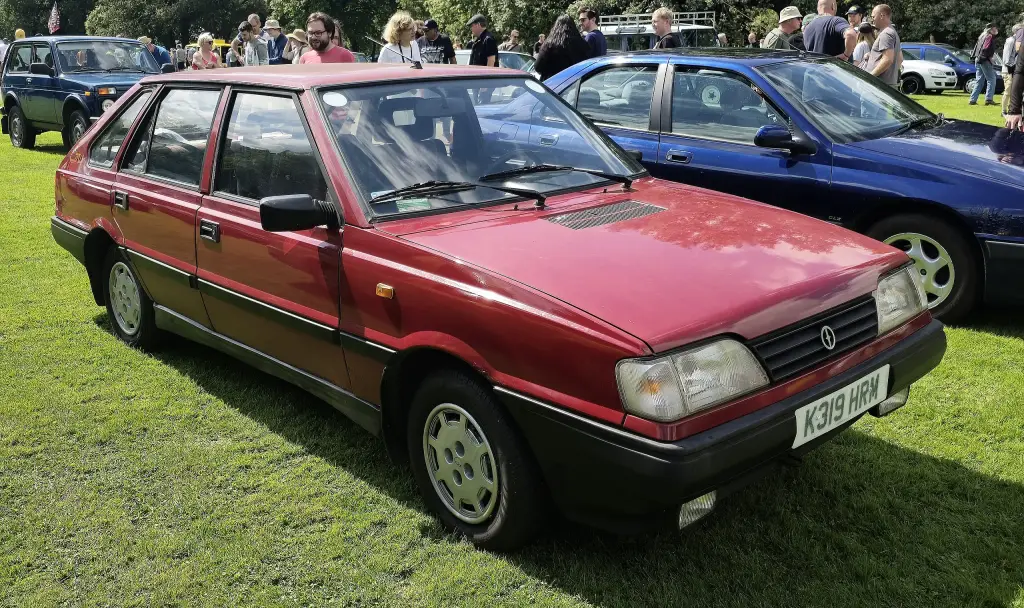
The FSO Polonez was FSO’s own hatchback, styled with Fiat’s Turin studio and built in Warsaw from 1978 to 2002. It used the floorpan and mechanicals of the 125p but a completely new five-door body, and it stayed in production for 24 years, ending its life as the Caro and Atu.
FSO Polonez at a glance
| Maker | FSO, Warsaw |
|---|---|
| Production | 3 May 1978 – 22 April 2002 |
| Based on | Polski Fiat 125p platform |
| Body design | Centro Stile Fiat; Zbigniew Wattson, Walter de Silva |
| Body styles | five-door hatchback, three-door, estate (1999), pickup, van, ambulance |
| Engines | 1.3 and 1.5 petrol; 2.0 twin-cam; 2.0 turbodiesel |
| Gearbox | four- or five-speed manual |
| Drag coefficient | 0.352 |
| Built | 1,061,807 including CKD kits |
| Still registered | about 33,000 in Poland in 2021 |
| Later versions | Truck (1988), Caro (1991), Atu (1996) |
| Name | from the polonaise, chosen by readers of Życie Warszawy |
History of the FSO Polonez
A new body on an old floorpan
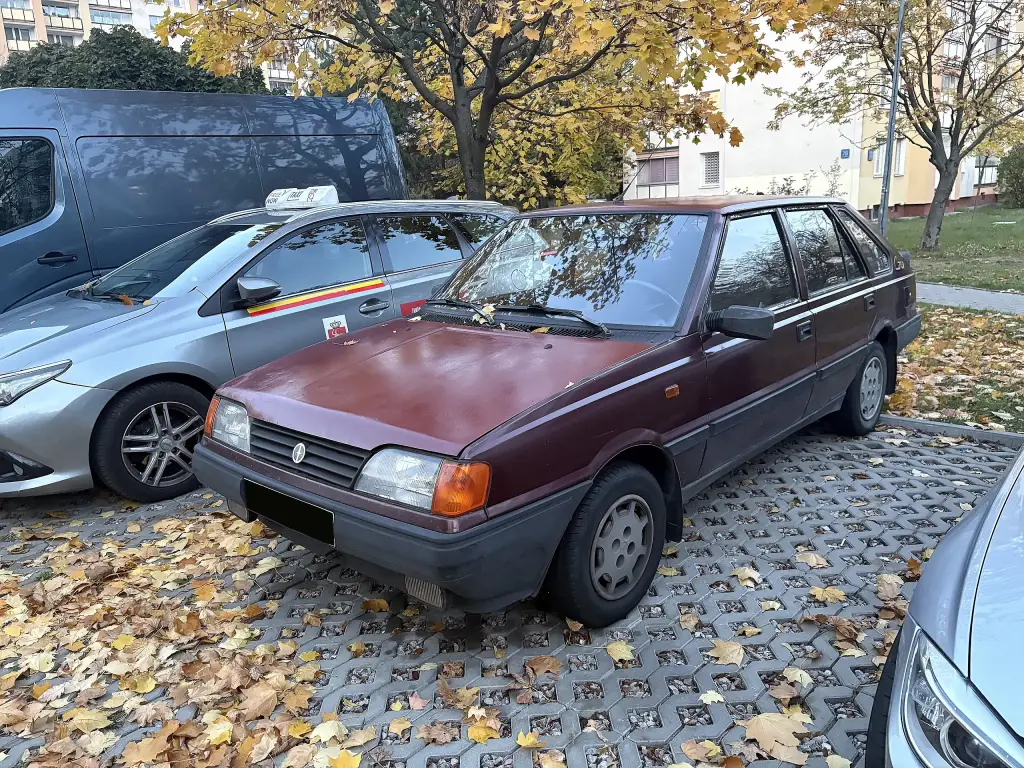
The Polonez was based on the Polski Fiat 125p that FSO built under Fiat licence. The chassis, brakes, suspension and updated 1.3 and 1.5 litre engines came from the 125p, but the body was an entirely new liftback, first sketched in the early 1970s by Centro Stile Fiat as a prototype for Fiat itself. After FSO and Fiat agreed on a new car in September 1974, the design was adapted to Polish requirements and to the 125p floorpan by FSO’s Zbigniew Wattson with Walter de Silva. Three prototypes were built in 1975 under the code 125PN, Polacco Nuova.
The first seven cars, assembled in Turin, reached Poland on 20 September 1977, and assembly began in Warsaw on 26 September. Series production started on 3 May 1978 after about 300 pre-series cars. The name was chosen in a readers’ poll run by the newspaper Życie Warszawy, and comes from the polonaise, the Polish national dance. The earliest cars were still badged FSO Polski 1300/1500; 3,506 were built in the first year.
FSO had planned a second stage with new overhead-camshaft 1.6, 1.8 and 2.0 engines and a redesigned rear suspension, but it was never carried out. The old engines were developed instead, and the 125p had to stay in production alongside the Polonez until 1991 because the two cars shared their mechanicals.
Safety and equipment
Safety was the Polonez’s strongest card. In 1978 it was the only Eastern European car built to pass American crash tests, and it had controlled crumple zones front and rear, reinforced doors and inertia-reel seat belts. The hinges of the bonnet were moved to the scuttle so that it would not be pushed into the cabin in a collision. All this made the car about 90 kg heavier than the 125p. A 1994 test to European rules, a Caro 1.9 GLD hitting a concrete block with 40 per cent of its front at 50 km/h, showed the doors still opened without difficulty and no fuel leaked. Even the standard car came with velour trim, a rev counter, a clock, a heated rear window with wiper and fog lamps.
From 2000 to Prima
In 1979 came the Polonez 2000, mostly sold to government officials: a 1,995 cc Fiat twin-cam with 82 kW (110 hp), a five-speed gearbox, 0–100 km/h in 12.0 seconds and 175 km/h. A Polonez 2000 Rally competed in the Monte Carlo Rally. In 1980 a three-door 1300 and 1500 appeared, about 300 built up to 1981, and in 1981 and 1983 a three-door Coupé with the 1,481 cc engine or the 2.0 twin-cam; it was the first FSO with electronic ignition, but only a few dozen were made.
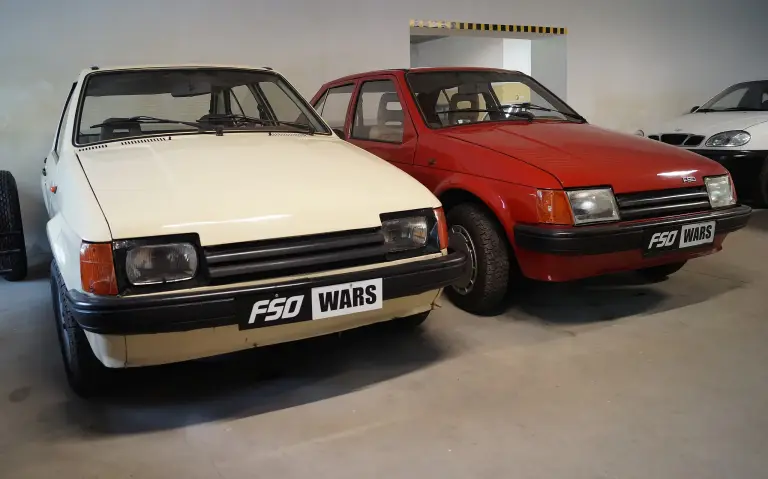
In 1983 the crisis years brought the stripped Polonez C and CE, known as the Kryzysowy: black painted steel bumpers instead of rubber, a pair of rectangular headlights from the Wartburg 353, no side strips, rear wiper, fog lamps or tachometer, vinyl seats and static belts. At the other end of the range sat the 1500 X with a 60 kW engine, five-speed gearbox and radio, usually sold for dollars. That year also brought the 2.0 D Turbo with an Italian VM Motori diesel of 62 kW (84 PS); about 100 were built. In 1985 the five-door cars received the Coupé-style front, and the British importer offered an upmarket Polonez Prima.
Caro, Atu and the end
A utility version called the Truck arrived in 1988, and in 1991 a thorough facelift created the Caro with a heavily reworked body. The Atu saloon followed in 1996, the Caro and Atu Plus in 1997 and an estate in 1999. Production stopped on 22 April 2002. Counting CKD kits, 1,061,807 Polonezes of all versions were made, and the model remained popular in Poland until the country joined the European Union in 2004. In 2021 about 33,000 were still registered there; in the 1990s it had also been the most frequently stolen car in Poland.
Design and features
- New hatchback body: a modern liftback styled in Turin with Polish engineers, on the old 125p floorpan.
- 125p mechanicals: the trusted 1.3 and 1.5 engines, rear-wheel drive and leaf-sprung rear axle.
- Crash safety: the only Eastern European car to pass American crash tests in 1978.
- Commercial versions: the Truck pickup and Cargo van gave the range a working life.
- Long production: 24 years and more than a million cars, ending with the Caro and Atu.
FSO Polonez versions
- Polonez 1300/1500 (1978): the original five-door hatchback.
- Polonez 2000 (1979): 1,995 cc twin-cam, 110 hp, mostly for officials.
- Coupé (1981–1983): three-door with electronic ignition, a few dozen built.
- C and CE Kryzysowy (1983): stripped crisis version with steel bumpers.
- 2.0 D Turbo (1983): VM Motori diesel, about 100 cars.
- Truck (1988): pickup version of the hatchback.
- Caro (1991) and Atu (1996): facelifted hatchback and saloon.
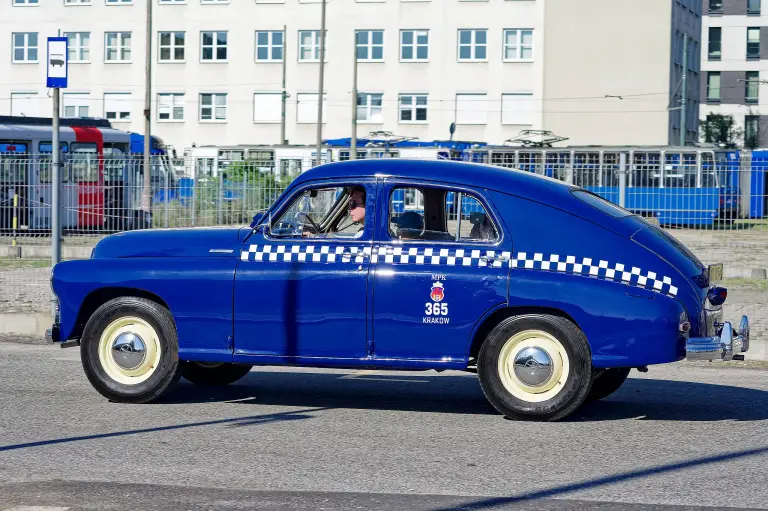
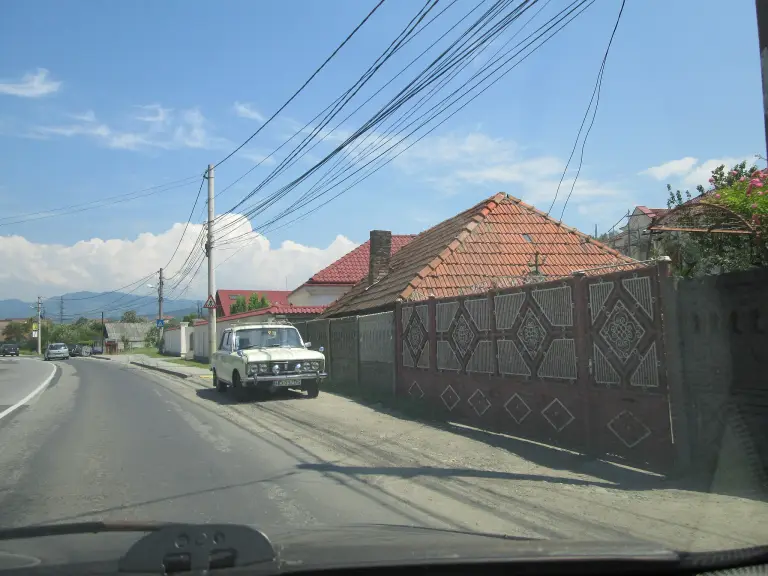
The Polonez was developed from the FSO 125p, which stayed in production alongside it until 1991. The earlier Warszawa and the small Syrena complete the story. More cars are in the FSO collection.
Sources
- FSO Polonez, English Wikipedia: development, versions, safety
- FSO Polonez, Polish Wikipedia: production dates, totals, Caro and Atu