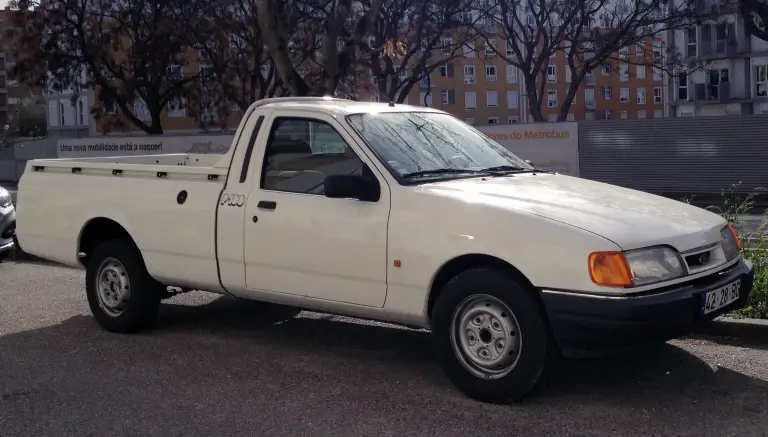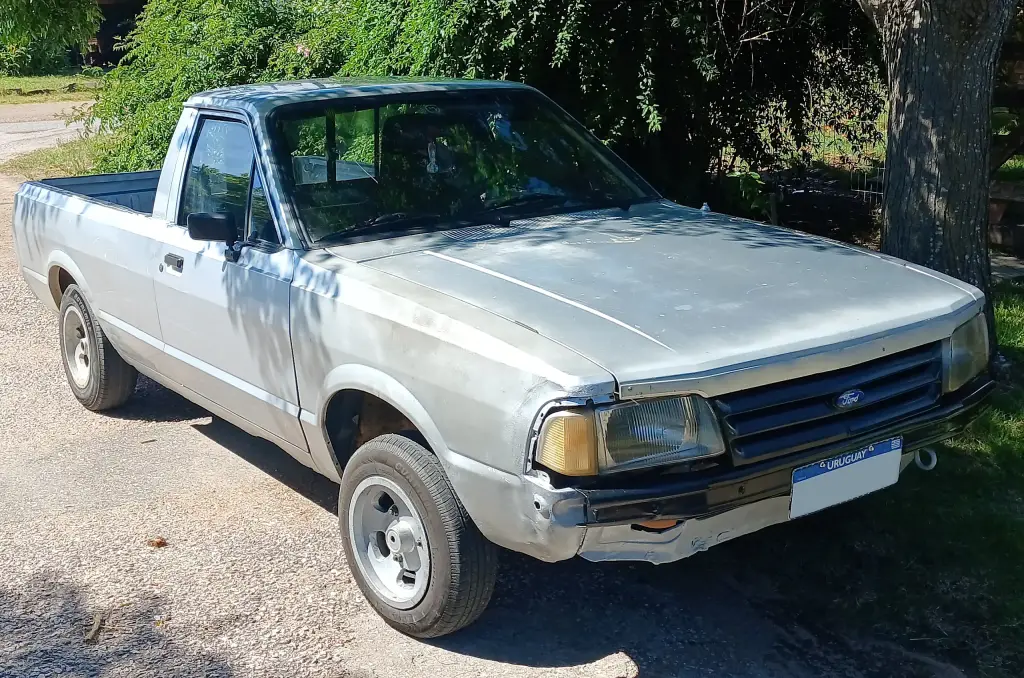
The Ford Pampa was a coupe utility manufactured by Ford do Brasil between 1982 and 1997. It was derived from the Corcel II and the Del Rey, and for several years it was the best-selling coupe utility in Brazil.
Ford Pampa at a glance
| Maker | Ford do Brasil |
|---|---|
| Production | 1982–1997 |
| Base | Ford Corcel II and Del Rey |
| Engine | 1.6-litre four, 66 hp (69 hp on alcohol) |
| Gearbox | four- or five-speed manual |
| Payload | 620 kg |
| Top speed | about 160 km/h |
| Fuel tank | 76 litres, moved behind the cabin |
| 1984 engines | 1.6 CHT, 73 hp petrol or 75 hp alcohol |
| 1984 addition | four-wheel-drive version |
| Replaced by | Ford Courier |
This page is based on English Wikipedia only.
History of the Ford Pampa
A pickup with car comfort
In 1982 Ford do Brasil launched a pickup based on the Corcel II, the second vehicle of its kind in the segment after the Fiat Fiorino, then sold as the City. The Pampa offered the comfort of a car in the cabin with the strength of a utility vehicle and a larger load capacity than its smaller rival: it had the front of the Corcel II and a load bay inspired by the much larger American-style F-100. Unlike the Fiat pickup, which kept the independent rear suspension of the Fiat 147, the Ford used a rigid rear axle with semi-elliptical springs instead of coils, better suited to heavy loads. Its success brought imitators: Volkswagen launched the Saveiro the same year and Chevrolet the Chevy 500 in 1983.
What was underneath
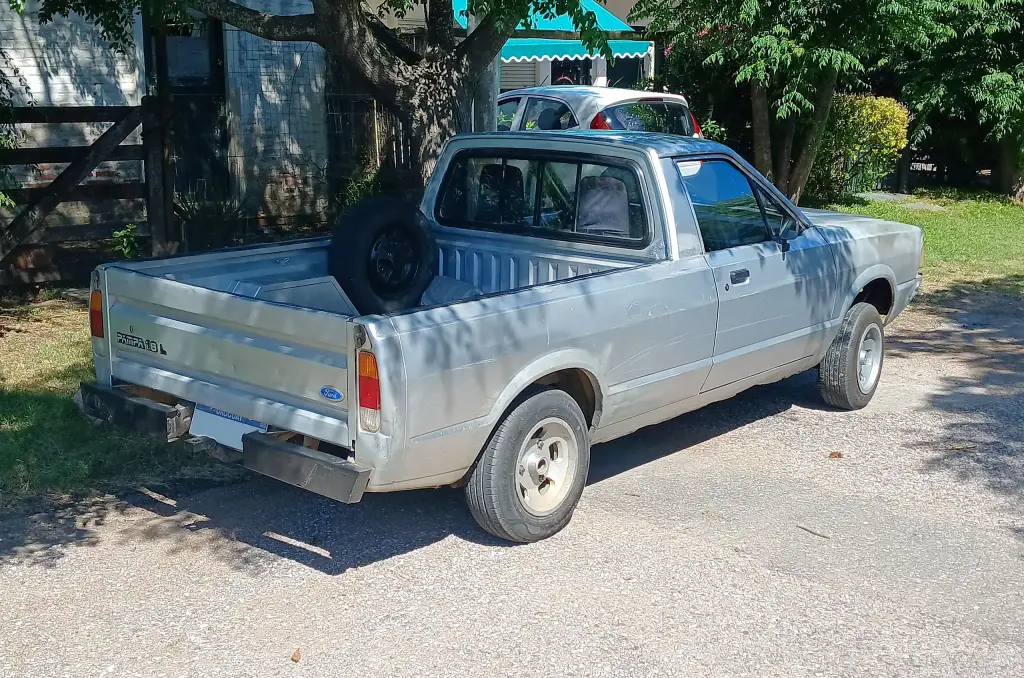
The Pampa used the Corcel’s 1.6-litre engine and a four- or five-speed manual gearbox, with the Corcel’s 1:4 differential to make the most of the engine, and its front suspension with stiffer springs and shock absorbers for bigger loads. It could carry up to 620 kg. The wheelbase was increased over the Corcel’s, the fuel tank was moved behind the cabin and the doors were made smaller, identical to those of the four-door Del Rey. With the 1.6 engine it produced 66 hp, or 69 hp on alcohol, reached about 160 km/h and had a 76-litre tank. Options included a digital clock, air conditioning, adjustable head restraints, a radio and inertia-reel seat belts, many of them from the luxury Del Rey.
The 1984 changes and the end
For 1984 the Pampa received the Ford CHT engine, more powerful and economical, with 75 hp on alcohol and 73 hp on petrol, giving a top speed of 160 or 156 km/h. The same year brought a 4×4 version, the only Brazilian pickup derived from a two-wheel-drive car to offer four-wheel drive; externally it differed in a squared-off grille, off-road tyres, free-wheeling hubs and bumper over-riders. Production ended in 1997, and the Pampa was replaced in the small pickup market by the Fiesta-based Ford Courier.
Design and features
- Car-based pickup: Corcel II and Del Rey mechanicals with a rigid rear axle.
- 620 kg payload: more than its smaller rivals could carry.
- 4×4 option: added in 1984, unique among Brazilian car-based pickups.
- Del Rey equipment: options borrowed from the luxury saloon.
Ford Pampa versions
- Pampa 1.6 (1982): the original petrol and alcohol versions.
- Pampa CHT (1984): the more powerful and economical engine.
- Pampa 4×4 (1984): with off-road tyres and free-wheeling hubs.
The Pampa was derived from the Corcel and shared its doors with the Del Rey. More Ford vehicles are in the Ford collection.
Sources
- Ford Pampa, English Wikipedia: launch, engines, payload, 4×4 version