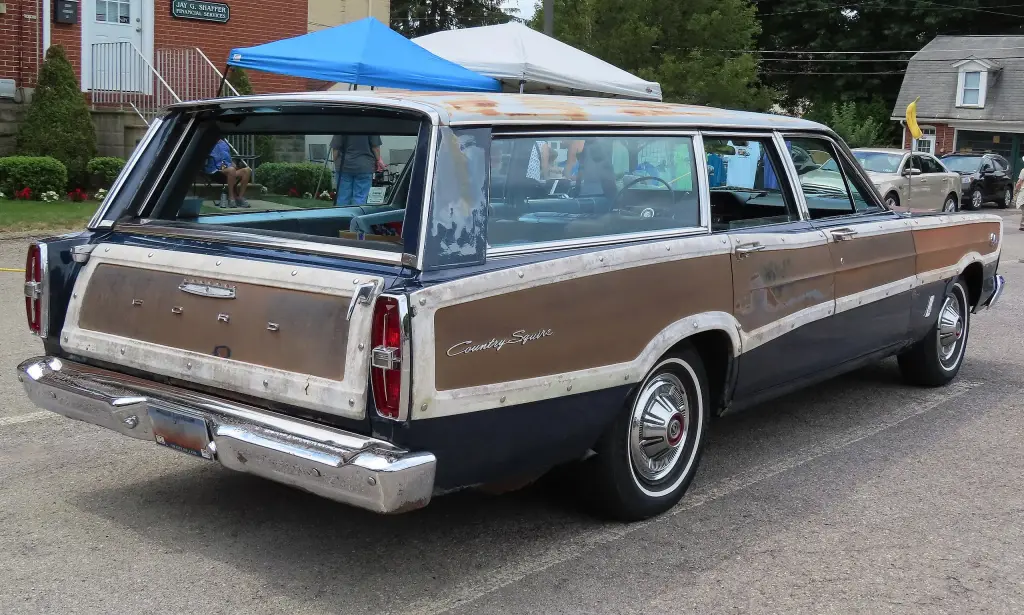
The Ford Country Squire is a series of full-size station wagons built by Ford. It was the top-level station wagon of the Ford division and was distinguished by woodgrain bodyside trim. Eight generations were produced from 1950 through the 1991 model year.
Ford Country Squire at a glance
| Maker | Ford, United States |
|---|---|
| Built | 1950 to 1991, eight generations |
| Position | top-level Ford station wagon |
| Trim | woodgrain bodyside |
| True wood | only in 1950–1951 |
| First generation price | US$2,119, 31,412 built (1949–1951 station wagon) |
| 1952 | all-steel bodies replace wood structure |
| Mercury twin | Mercury Colony Park |
| End | discontinued with the 1992 Crown Victoria |
| Replaced by | Ford Windstar for passenger duties |
| Run | third-longest Ford nameplate in North America |
English Wikipedia is the only source used here; we read only its opening sections, so later generations are described only in outline.
History of the Ford Country Squire
From the woodie to the woodgrain
For the 1949 model year Ford introduced its first post-war line, and its station wagon moved from commercial vehicle to premium family car. The 1949 wagon was designed by Eugene Gregorie and Ross Cousins and had a steel roof, rear fenders and tailgate frame, with wood kept for the side bodywork and tailgate (mahogany plywood trimmed with maple or birch). It cost US$2,119 and 31,412 were made. The Country Squire name arrived in early 1950 on the Custom Deluxe wagon, with heavier rear suspension, wider tyres and a larger fuel tank. The genuine wood panels came from Ford’s Iron Mountain plant in Michigan’s Upper Peninsula, from lumber owned by Ford.
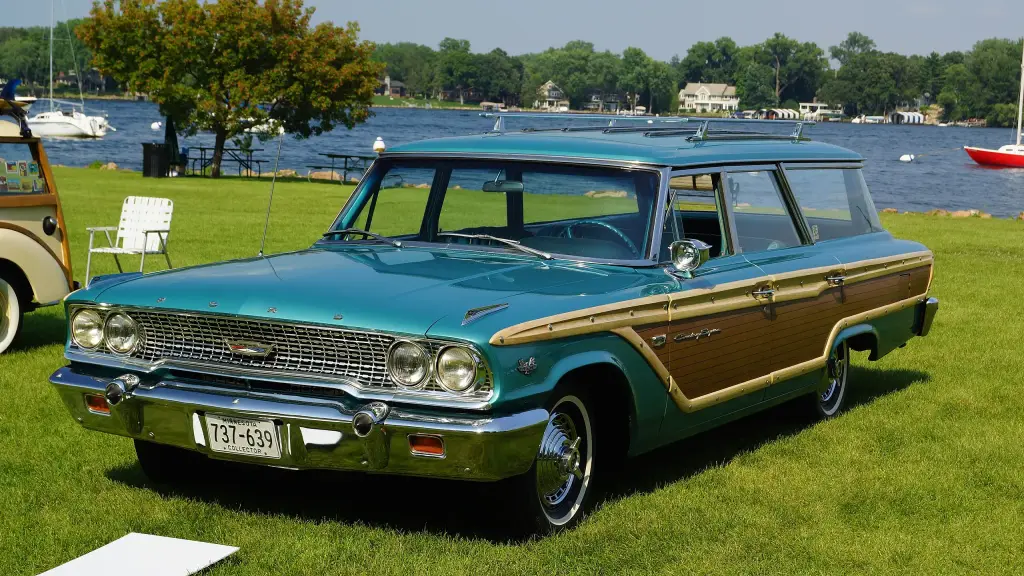
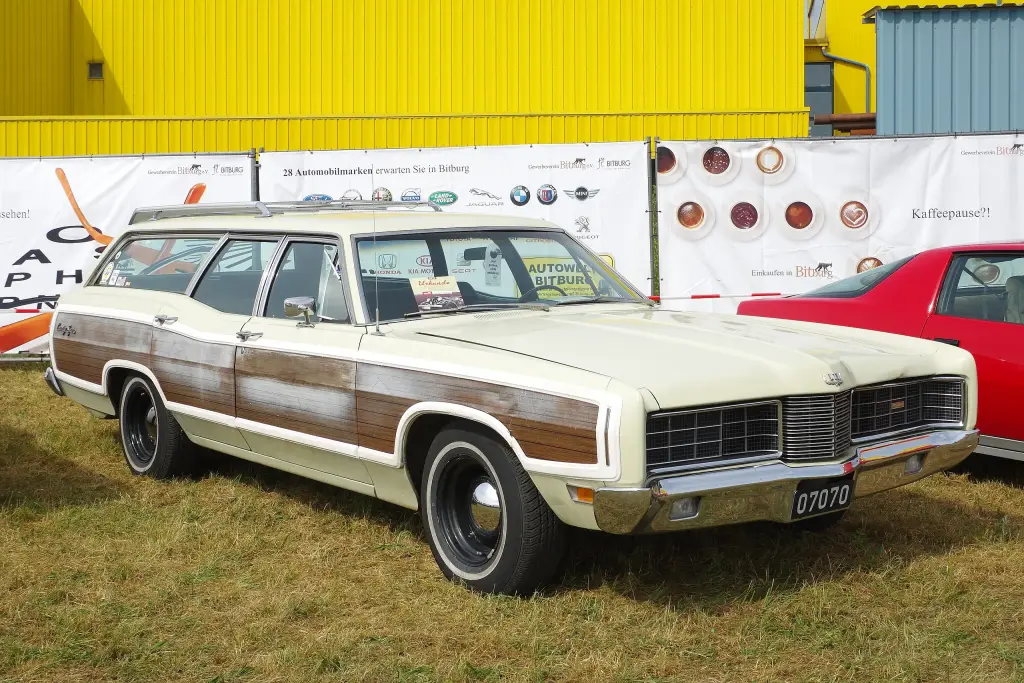
For 1952 all-steel bodies replaced the wooden structures to reduce production costs, and from then on the wood look came from simulated woodgrain. In the first two generations the Country Squire was based on the Ford Custom Deluxe and then the Crestline, alongside the more modest Country Sedan; its next three generations were a distinct model range, at first sharing trim with the Fairlane and later with the Galaxie, and the last two were counterparts of the LTD and the LTD Crown Victoria.
The name on other cars
In the 1960s, 1970s and early 1980s Ford also used the Squire name on intermediate, mid-size, compact and subcompact wagons with woodgrain trim, among them the Falcon, Fairlane, Torino, Pinto, Granada, Gran Torino, LTD II, Fairmont, Escort and the mid-size LTD. After the Edsel Bermuda was dropped, Mercury sold the Colony Park as its counterpart. The Country Squire was discontinued with the development of the 1992 Crown Victoria, and the Ford Windstar took over passenger duties.
Design and features
- Woodgrain: every Country Squire had it, only the 1950–1951 cars had real wood.
- Name: a British word for a village leader or lord of the manor.
- Run: 41 years, the third-longest Ford nameplate in North America after the Thunderbird and Mustang.
Ford Country Squire versions
- First generation (1950–1951): true woodie.
- Later generations (1952–1991): simulated woodgrain.
- Squire name on smaller cars: Falcon, Fairlane, Torino, Pinto, Granada and others.
More Ford cars are in our Ford collection. The plainer wagons of the same range are the Country Sedan and the Ranch Wagon.
Sources
- Ford Country Squire, English Wikipedia: generations, trim, history