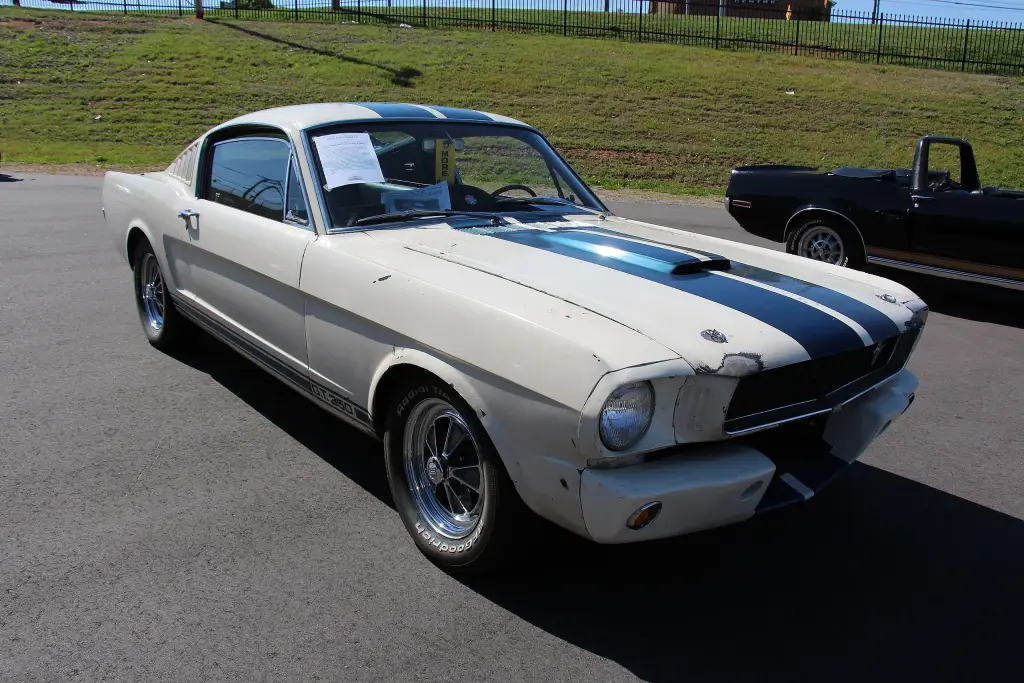
The Shelby GT350 made its debut in 1965 in the ‘sportsroof’ fastback body of the first-generation Ford Mustang. It was the first Shelby Mustang, and for its first two years it was built at Shelby American rather than by Ford.
Shelby GT350 at a glance
| Maker | Shelby American, on the Ford Mustang fastback |
|---|---|
| Years | 1965–1966 |
| Engine | 4.7 L (289 cu in) Windsor HiPo V8 |
| Power | 306 hp at 6,000 rpm |
| Torque | 446 N·m (329 lb·ft) at 4,200 rpm |
| Carburettor | four-barrel Holley, 725 CFM |
| Gearbox | four-speed Borg-Warner T10 manual |
| 1965 production | 562 |
| 1966 production | 2,378 |
| Race version | 34 GT350R cars |
| 1965 colour | Wimbledon White with Guardsman Blue stripes |
| Seats | two in 1965, rear seat optional in 1966 |
Based on one source, the English Wikipedia article on the Shelby Mustang, which covers the GT350 in a dedicated section.
History of the Shelby GT350
1965: a road car built for the track
The GT350 began as a stock Mustang fastback with a four-speed manual gearbox and a 9-inch live rear axle. The cars were shipped to Shelby American, where they received a high-rise intake manifold, Tri-Y exhaust headers, larger Ford Galaxie rear drum brakes with metallic linings and Kelsey-Hayes front disc brakes. The 289 HiPo engine, fed by a 725 CFM Holley carburettor, produced 306 hp at 6,000 rpm and 446 N·m at 4,200 rpm. Marketing called it the ‘Cobra hi-riser’ after its intake manifold.
1965 specification
Every 1965 GT350 was painted Wimbledon White with Guardsman Blue rocker stripes; about 28 per cent were delivered with the optional Le Mans stripes running the length of the car. Early cars had the battery moved to the boot, over-rider traction bars and relocated A-arms. The only gearbox was the four-speed Borg-Warner T10, and the exhausts exited at the sides through glasspack mufflers. The car rode on Goodyear ‘Blue Dot’ tyres rated to 130 mph, on steel wheels or optional Cragar Shelby rims. A full-size spare tyre was mounted where the rear seat would be, making the car a two-seater to qualify as a sports car under SCCA rules. Production for 1965 was 562 cars, and 34 race-specification GT350R cars were built; the model was SCCA B-Production champion for three straight years.
1966: more comfort
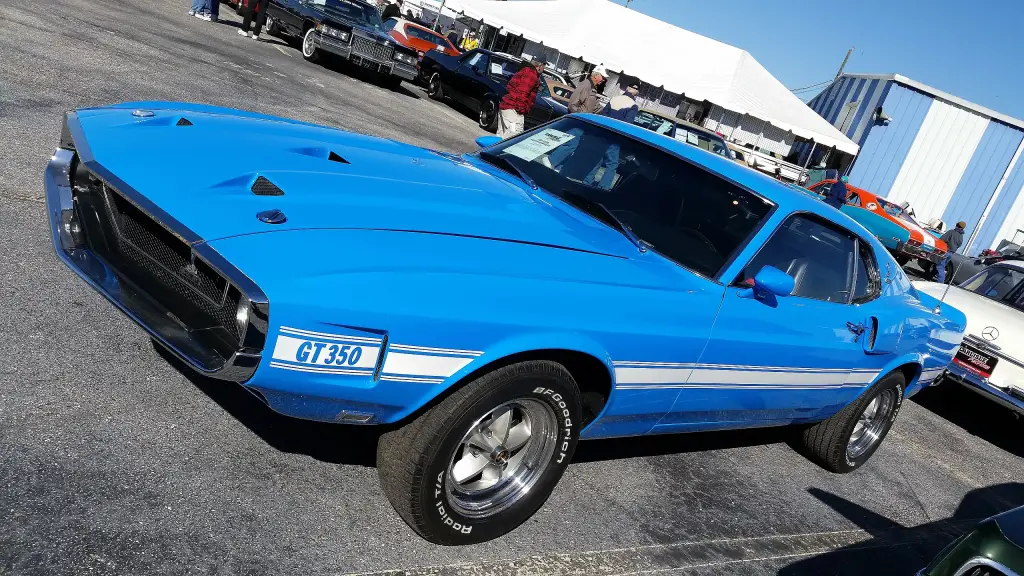
For 1966 the car dropped the Mustang name and was marketed simply as the Shelby GT350. New colours were offered alongside white, and the changes included rear quarter windows in place of the factory extractor vents, functional brake scoops on each side, an optional three-speed automatic and an optional Paxton supercharger, which raised the rating to 440 hp. The battery returned to its normal place and the traction bars were dropped. The first 252 cars of 1966 were built on 1965 Mustang bodies specially ordered by Shelby. Ford also persuaded Hertz to buy 1,003 fastbacks for rental, and four experimental convertibles were built for testing. Total production for 1966 was 2,378 cars.
Design and features
- Cobra hi-riser engine: a modified 289 with a high-rise manifold and Holley carburettor.
- Track-ready brakes: Galaxie drums at the rear and Kelsey-Hayes discs at the front.
- Two-seat layout: the spare tyre replaced the rear seat in 1965.
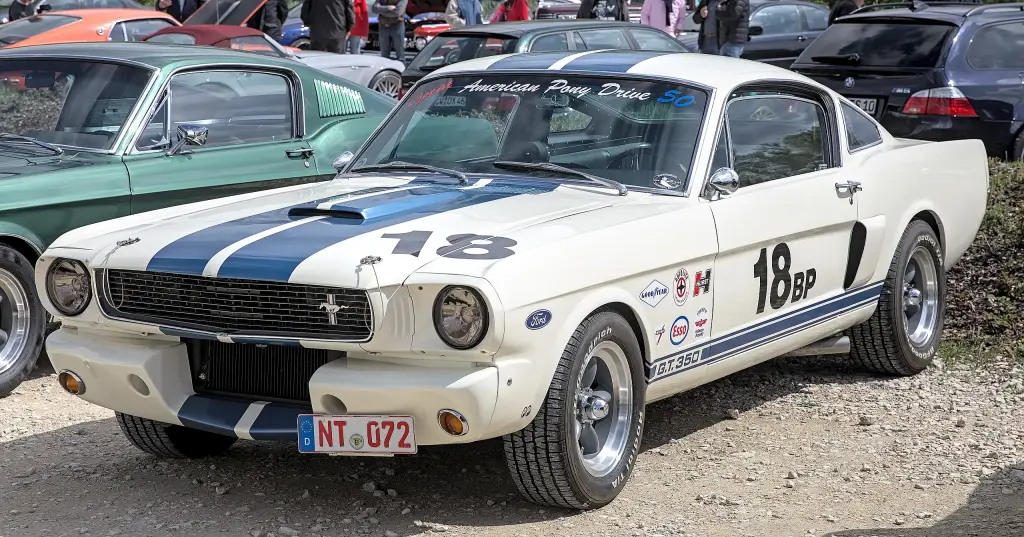
- GT350R: 34 competition cars that won the SCCA B-Production title three years in a row.
Shelby GT350 versions
- 1965 GT350: 562 cars, white with blue stripes.
- 1965 GT350R: 34 race cars for SCCA competition.
- 1966 GT350: more colours, optional automatic and supercharger.
- 1966 GT350H: the Hertz Rent-A-Racer cars.
The GT350 is the first chapter of the Shelby Mustang story, and its big-block sister is the Shelby GT500. The car that inspired the Cobra badges is in the Shelby Cobra article, and the rest of the range is in the Shelby collection.
Sources
- Shelby Mustang, English Wikipedia: GT350 1965-1966 history, specification, production