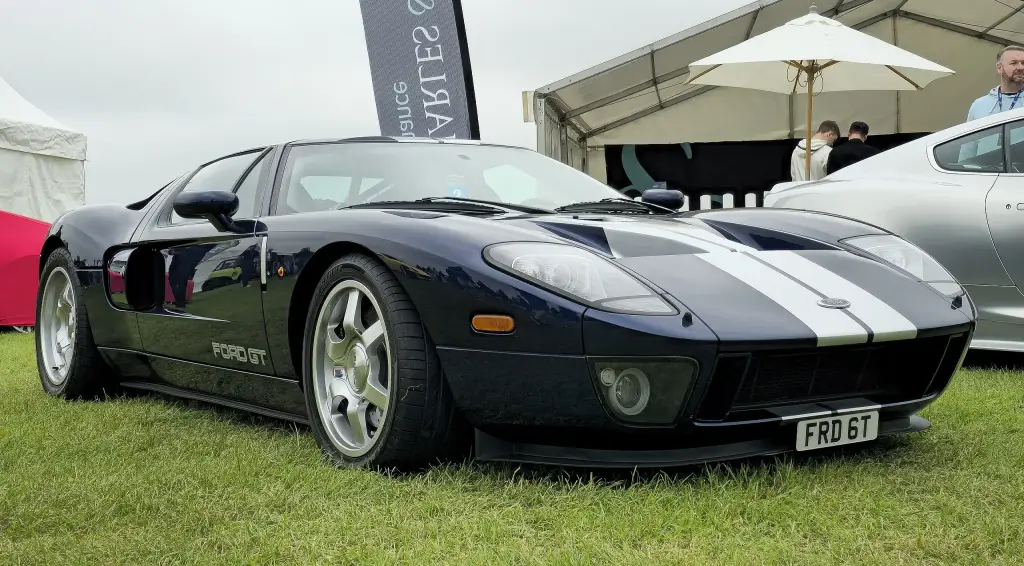
The Ford GT is a mid-engine two-seater sports car built by Ford for the 2005 model year as part of the company’s centenary, with a second generation available from 2017. It is a modern tribute to the GT40, the car that won the 24 Hours of Le Mans four times in a row from 1966 to 1969.
Ford GT at a glance
| Maker | Ford Motor Company |
|---|---|
| First generation | 2005–2006 |
| Second generation | from the 2017 model year |
| Layout | mid-engine, two seats |
| Concept shown | North American International Auto Show, 2002 |
| Chief designer | Camilo Pardo, under J Mays |
| Project name | Petunia |
| Development help | Carroll Shelby |
| Height | 4 in (100 mm) taller than the GT40 |
| Delivery began | autumn 2004 |
| Inspiration | GT40, four-time Le Mans winner, 1966–1969 |
This page is based on English Wikipedia only.
History of the Ford GT
A centenary concept
The GT began as a concept car designed in anticipation of Ford’s centennial year and as part of a drive to revive heritage names such as Mustang and Thunderbird. At the 2002 North American International Auto Show Ford unveiled a new GT40 concept, with Camilo Pardo, then head of Ford’s Living Legends studio, credited as chief designer under J Mays. Carroll Shelby, the original designer of the Shelby GT500, was brought in to help develop the car, including performance testing of the prototype, and the project was called Petunia while it was under way. Three pre-production cars were shown in 2003 during the centenary celebrations, and deliveries of the production car, now simply called the Ford GT, began in the autumn of 2004.
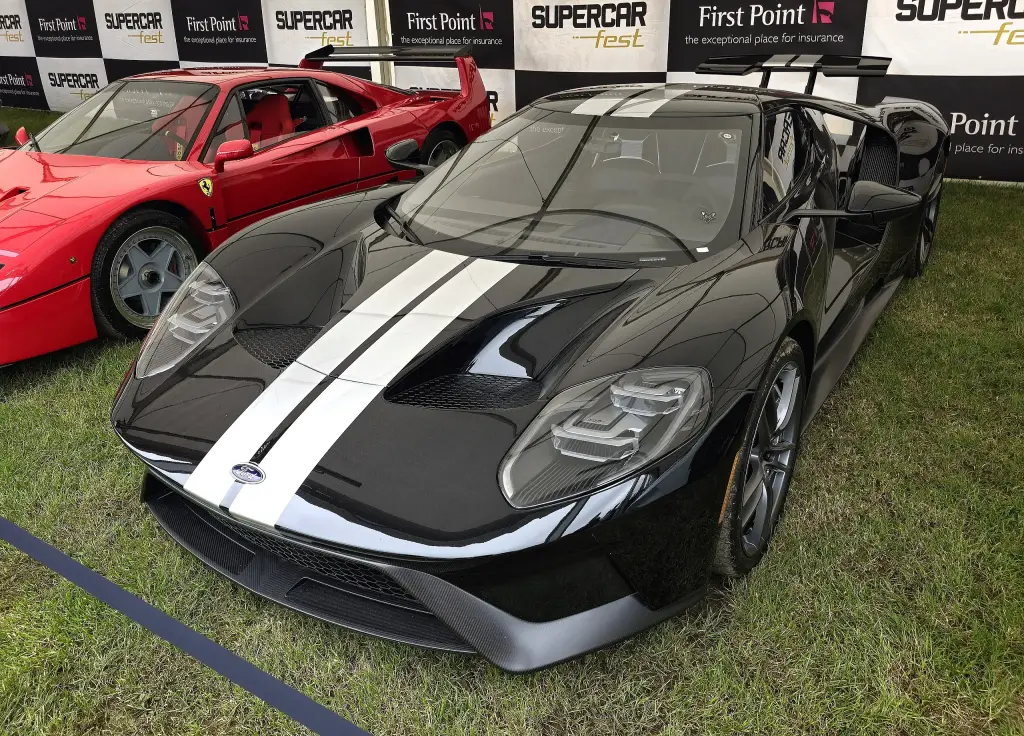
Like the GT40, but not the same
The GT looks like the original GT40 but is bigger, wider and, most importantly, four inches (100 mm) taller than the 40-inch original, which is why GT44 was once considered as a name. Underneath, the modern car has no structural similarity to the 1960s racer that inspired it. Built as part of Ford’s hundredth anniversary, the left headlight cluster was designed to read “100”. The second generation became available for the 2017 model year and continued the same mid-engine two-seat idea.
The name that had to change
Safir Engineering, a British company that built continuation GT40 cars in the 1980s, owned the GT40 trademark; when it stopped, it sold the spare parts, tooling, design and trademark to Safir GT40 Spares of Ohio. That company licensed the name to Ford for the 2002 show car, but when Ford decided to put the car into production the negotiations failed over the US$40 million the owners demanded, so the production cars are called simply GT.
Design and features
- Mid-engine layout: a two-seat supercar built as a tribute to the GT40.
- Centenary detail: the left headlight was shaped to read “100”.
- Shelby involvement: Carroll Shelby helped develop and test the prototype.
- Bigger than the original: four inches taller than the GT40’s 40-inch height.
Ford GT versions
- GT40 concept (2002): the show car that started the project.
- Ford GT (2005–2006): the first production generation.
- Second generation (2017): the later mid-engine car.
- GT40 (1964–1969): the racing car that won Le Mans four times.
The GT looks back to the GT40 and, with the Mustang and the Thunderbird, was part of Ford’s revival of heritage names. More Ford vehicles are in the Ford collection.
Sources
- Ford GT, English Wikipedia: development, design, naming