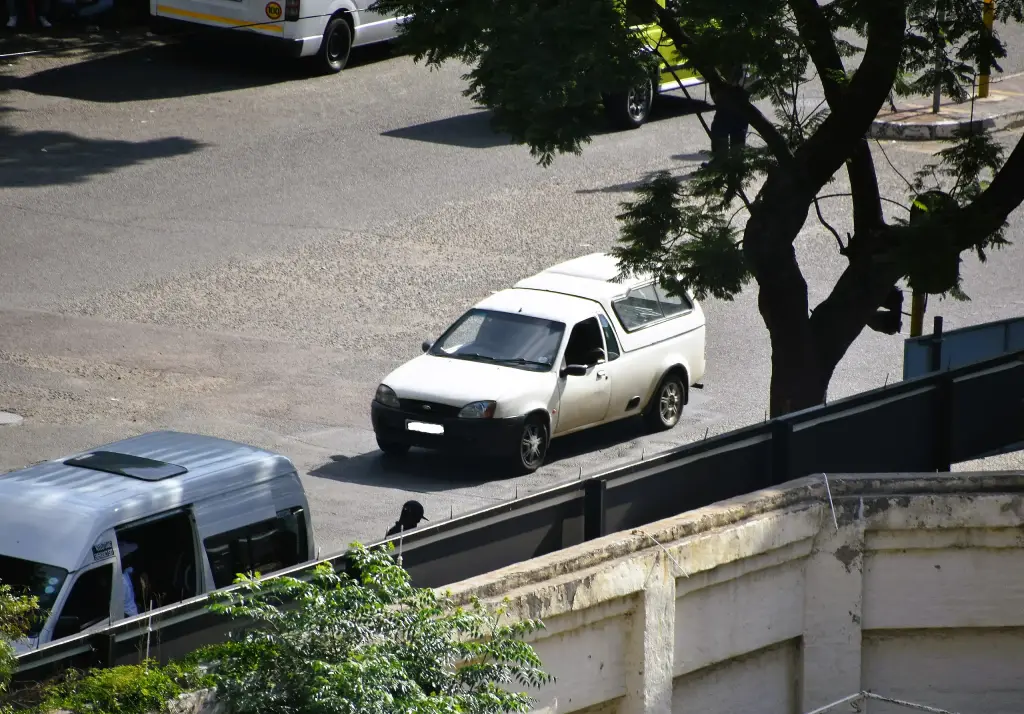
The Ford Bantam was a compact pickup, or “bakkie”, built and sold in South Africa from 1983 to 2011. Each of its three generations was derived from a small passenger car, and the last one left production without a direct replacement.
Ford Bantam at a glance
| Maker | Ford South Africa |
|---|---|
| Production | 1983–2011 |
| Class | half-ton coupe utility |
| First generation | 1983–1990, based on the Escort Mk III |
| Second generation | 1990–2001, based on the Mazda 323 |
| Third generation | 2002–2011, based on the Fiesta Mk V |
| First plant | Struandale, Port Elizabeth |
| Later plant | Samcor, Silverton, Pretoria |
| Also sold as | Mazda Rustler and Mazda Drifter |
| Name origin | a small, defiant breed of fowl |
This page is based on English Wikipedia only.
History of the Ford Bantam
An Escort with a load box
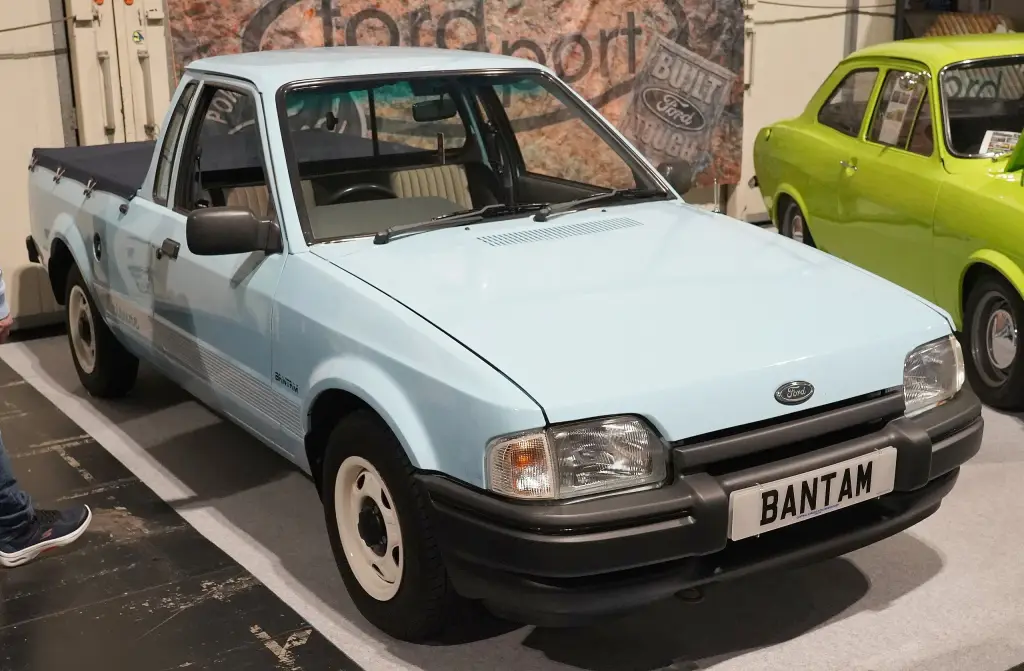
The first Bantam arrived in South Africa in 1983 to take on the Nissan B140 1400 Bakkie and the new Volkswagen Caddy. It was named after a small, pugnacious breed of chicken and based on the Escort Mk III, with a South African-developed load box, tailgate, rear lights, rear quarter windows and leaf-sprung dead-axle rear suspension. It came with 1,296 cc and 1,598 cc versions of Ford’s CVH engine, but criticism of noise, vibration and fuel consumption led Ford South Africa to fit crossflow versions of the older Kent engine instead. Cars were built at Struandale in Port Elizabeth until Ford’s divestment from South Africa, after which production moved to the Samcor plant in Silverton, Pretoria.
A Mazda underneath
The second Bantam of 1990 was based on the Mazda 323, keeping a modified version of the old load box to save development money, with restyling done by Samcor’s own studio. It was the first South African-built vehicle to undergo computer-modelled finite-element stress analysis and was also durability-tested with the University of Pretoria. Buyers could choose 1,323 cc and 1,597 cc carburettor engines or a fuel-injected 1,597 cc unit, and the Mazda version was badged Drifter.
The Fiesta years and the end
The third generation of 2002 used the fifth-generation Fiesta as its base, again with a modified version of the original Bantam load box and rear suspension, and was built at Silverton with 1,297 cc and 1,597 cc Rocam petrol engines or a 1,755 cc Endura-D diesel. Trim levels ran from a basic fleet version through XL and XLT. Production ended in 2011 without an immediate replacement: compact half-tonners had lost ground to larger one-ton pickups such as the Ranger.
Design and features
- Half-tonner layout: a monocoque body rather than a ladder frame, shared with a small car.
- Three car bases: Escort, Mazda 323 and Fiesta through the model’s life.
- South African work: local load box, tailgate and rear suspension.
- Mazda twin: sold as the Rustler and later the Drifter.
Ford Bantam versions
- First generation (1983–1990): Escort Mk III-based, CVH then Kent engines.
- Second generation (1990–2001): Mazda 323-based, also sold as the Mazda Rustler.
- Third generation (2002–2011): Fiesta-based, with Rocam petrol and Endura-D diesel engines.
- XL and XLT trims: the better-equipped versions of the last generation.
The Bantam used the platforms of the Escort and the Fiesta. More Ford vehicles are in the Ford collection.
Sources
- Ford Bantam, English Wikipedia: generations, engines, plants