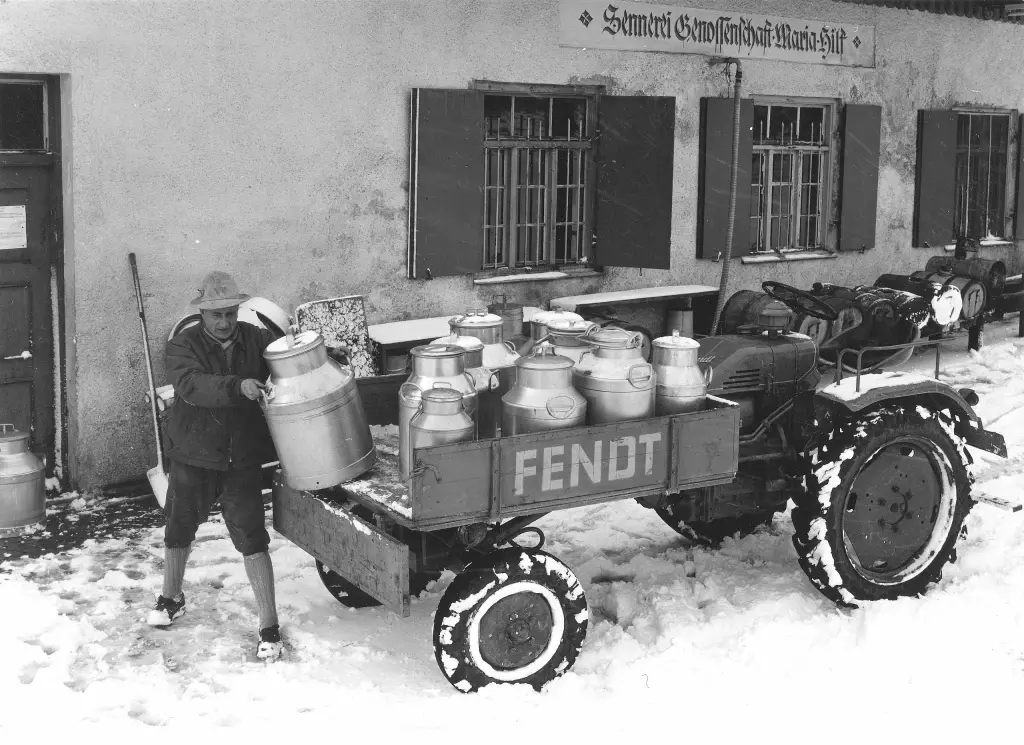
The Fendt GT was a tool carrier (Geräteträger) built by Fendt in Marktoberdorf from 1957 to 2004. Over almost five decades it grew from a small single-operator machine into a range of models with cabs, four-wheel drive and electronic hydraulics, and it ended its life as one of the last tool carriers on the market.
Fendt GT at a glance
| Maker | Fendt, Marktoberdorf, Germany |
|---|---|
| Production | 1957–2004 |
| Type | tool carrier (Geräteträger) |
| First presented | 1953, as the F12 GT |
| Frame | one beam of square-section steel with a central pivot |
| Engine position | ahead of the steering column; under the driver’s stand from the F 250 GT |
| Gearbox | from 1984 a 21/6 overdrive fully synchronised gearbox |
| Drive | rear-wheel drive; four-wheel drive in the municipal 275 GT |
| Notable models | 231 GT, F 250 GT, 255 GT, 275 GT, GT/GTA 300, GTA 390/395, 370 GT |
| Prize | DLG award in 1959 for the Einmannsystem |
| End of production | 2004, with the 370 GT |
The GT is described only on German Wikipedia; this page is based on that article alone.
History of the Fendt GT
From the F12 GT to the 231 GT
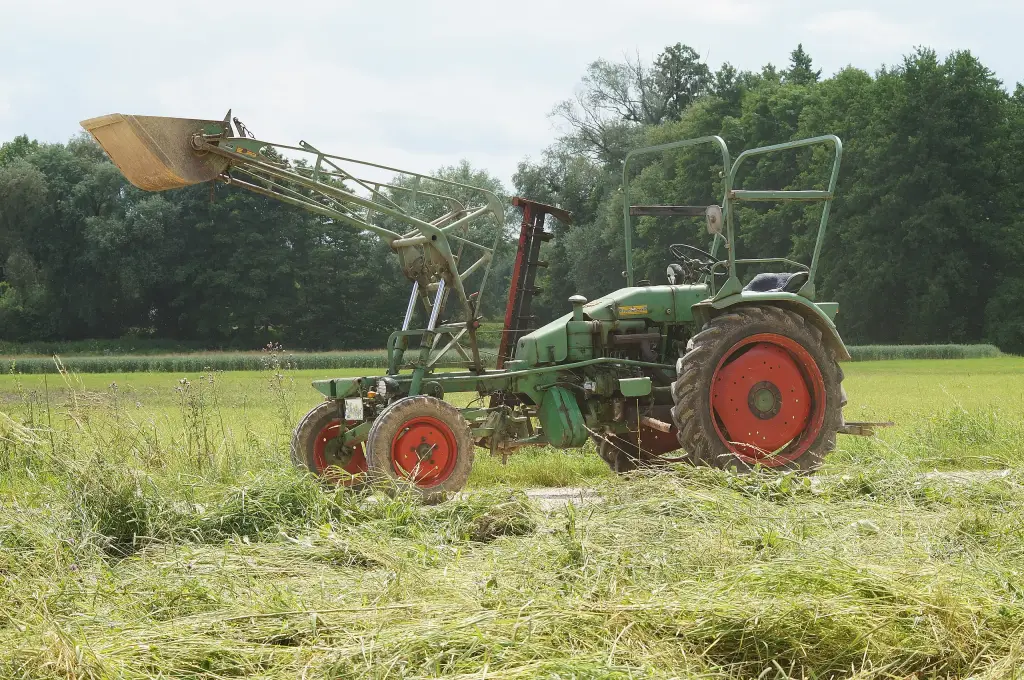
Fendt presented its first tool carrier in 1953, the F12 GT, and began production in 1957. In 1959 the company received the DLG prize for the Fendt “Einmannsystem”, the single-operator concept in which one driver could mount, operate and transport implements without help. At the end of the 1960s came the 231 GT, the first of the line with a fast gear giving up to 30 km/h.
The 1970s: F 250 GT, 255 GT and 275 GT
In the 1970s Fendt brought out a revised version, the F 250 GT. Its now more powerful engine lay under the driver’s stand and disappeared completely from view, and the gearbox was synchronised and could be reduced in two stages through a torque converter. Because the tool carriers of the time had no cab, which no longer met expectations, the 255 GT and 275 GT arrived in the middle of the 1970s with a fixed cab and even a sprung front axle. They were offered as the GT with a long beam and as the GTF (Grünland GT) with a shortened beam. At the end of the 1970s the 275 GT also became available as a municipal version with four-wheel drive.
GT/GTA 300 and the end of the line
In 1984 a new series was presented, the GT/GTA 300 with models such as the 345, 360 and 380 GT/GTA. They used three- and four-cylinder Deutz engines and a new 21/6 overdrive fully synchronised gearbox with 21 forward and six reverse gears, a unit that proved very sensitive and wore quickly if handled badly. At the end of the 1980s the range was extended by the six-cylinder GTA 390 and 395, which came as standard with a large cab and EHR electronic rear-hitch control. In 1993 Fendt presented the Xylon, a machine similar to the Schlüter Eurotrac; it was too expensive and not manoeuvrable enough for most farmers and was used mainly by municipalities. In 1998 the GTA 380 was revised: its 80 hp Deutz four-cylinder received a turbocharger and produced 95 hp, and the cab was restyled after the Favorit 500 C. It was then built together with the 370 GT until production ended in 2004.
Why the tool carrier disappeared
Changes in agriculture led to ever larger farms and a demand for ever larger machines. The Einmannsystem was well thought out, but its engines were too small for large farms, and sales had been falling since the 1970s. The engines could not meet the stricter emission standards either. A smaller version of the Fendt GT, the GT 150, was built from 2000 by Tünnissen Spezialgeräte.
Construction
Where most other makers gave their tool carriers a frame of two tubes, Fendt used a single beam of square-section steel. That frame had a central pivot instead of a pendulum axle, so the front section carrying the implements was guided in side inclination by the front axle and adapted particularly well to the ground. The engine sat ahead of the steering column and, in later models, under the driver’s stand, which gave the operator more room. The platforms of the larger tool carriers from the 250 GT upwards did not fit the small ones, and front loaders and other implements of the two-wheel-drive machines did not fit the four-wheel-drive versions because of the different beam; the four-wheel-drive GT also lost its between-axle mounting space to the propeller shaft and the short wheelbase, so only the municipal GTA could still take a dozer blade.
Design and features
- Einmannsystem: one operator could mount, use and transport implements without assistance, a concept honoured with the DLG prize in 1959.
- Single square beam: a frame with a central pivot instead of two tubes and a pendulum axle, giving good ground adaptation.
- Engine under the driver: from the F 250 GT the engine moved below the stand and out of sight, freeing space for the operator.
- Cab and comfort: the 255 and 275 GT of the mid-1970s brought a fixed cab and a sprung front axle.
- Electronic hydraulics: the six-cylinder GTA 390 and 395 of the late 1980s had EHR hitch control as standard.
Fendt GT versions
- F12 GT (from 1957): the first production tool carrier, presented in 1953.
- 231 GT (late 1960s): the first with a fast gear up to 30 km/h.
- F 250 GT (1970s): engine under the driver’s stand and a synchronised gearbox with a two-stage converter.
- 255 GT and 275 GT (mid-1970s): fixed cab and sprung front axle, as GT with a long beam or GTF with a short one.
- GT/GTA 300 (1984): 345, 360 and 380 with Deutz engines and the 21/6 overdrive gearbox.
- GTA 390 and 395 (late 1980s): six-cylinder models with a large cab and EHR.
- 370 GT (to 2004): the last model, built alongside the revised 95 hp GTA 380.
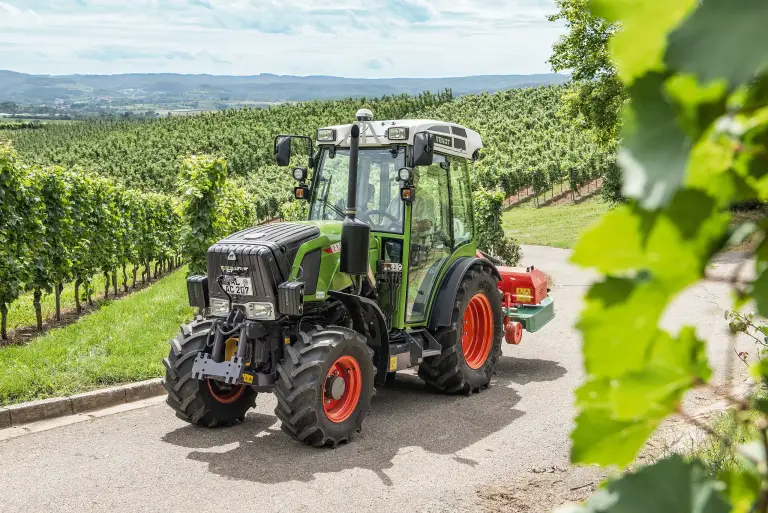
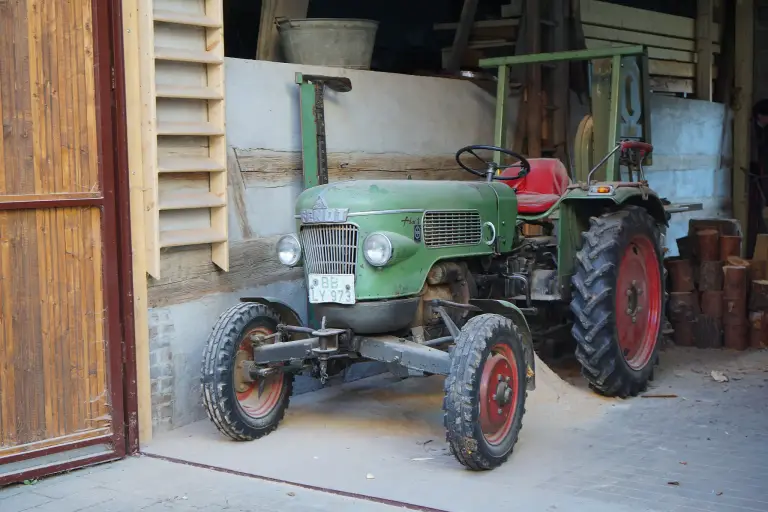
The GT was the alternative to Fendt’s conventional tractors such as the Fix 2, and the modern compact line is the Fendt 200 Vario. More Fendt machines are in the Fendt collection.
Video: Fendt Werbefilm 2014 – Das stärkste Pferd im Stall – Der Fendt GT-231
Video on YouTube.
Sources
- Fendt GT, German Wikipedia: history, models, construction, end of production