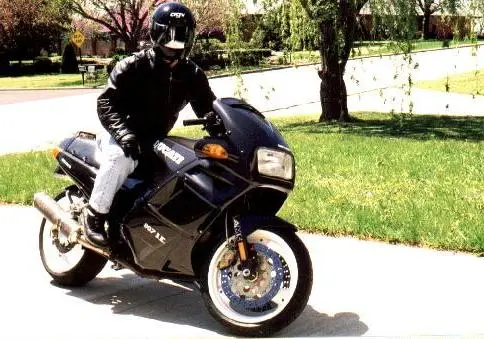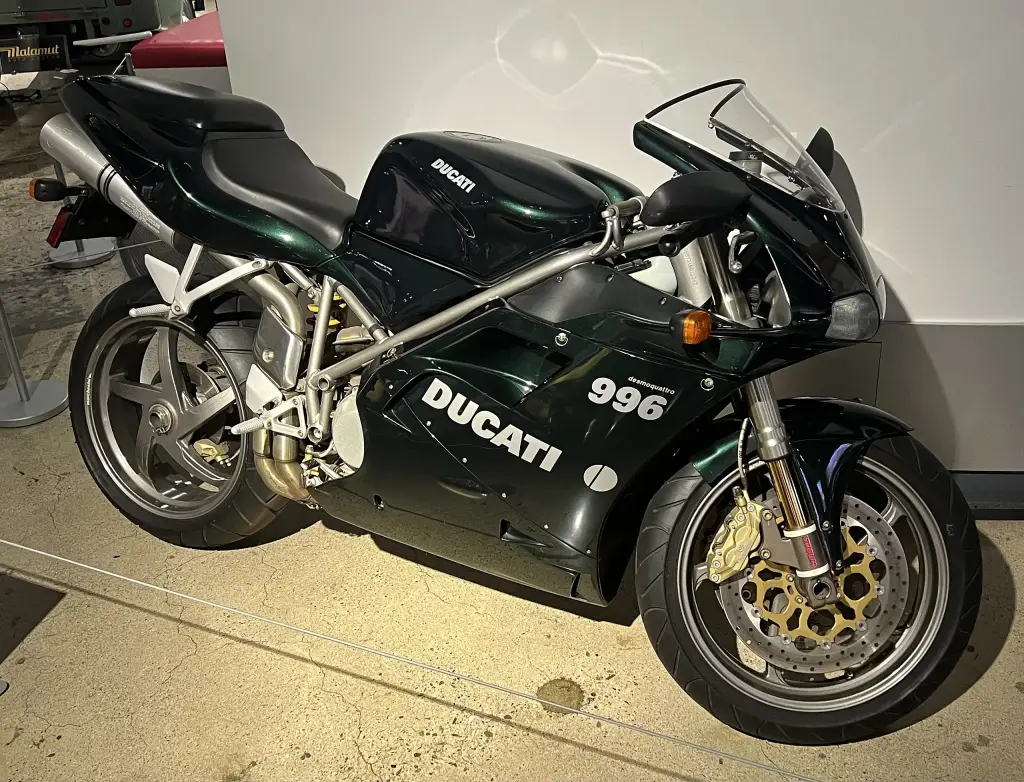
The Ducati 996 is a Ducati sport bike made from 1999 to 2002, based on the earlier 916. It kept the Tamburini shape but brought a larger engine, a new air intake and airbox, and a distinctive underseat exhaust.
Ducati 996 at a glance
| Maker | Ducati, Borgo Panigale |
|---|---|
| Production | 1999–2002 |
| Predecessor | Ducati 916 |
| Engine | 996 cc desmodromic V-twin, two injectors per cylinder |
| Pistons | 98 mm |
| Models | 996 Biposto, 996S, 996SPS, 996R |
| 996S | Öhlins suspension |
| 996SPS | 92.4 kW (123.9 hp), titanium and carbon parts |
| 996R | 998 cc Testastretta, 136 bhp, 500 built |
| Successor | Ducati 998 |
History of the Ducati 996
Three models from 1999
From 1999 there were three versions of the 996: the base or Biposto, the 996S with Öhlins suspension, and the 996SPS, sold in Europe only, with a more powerful engine and less weight thanks to titanium and carbon-fibre parts. From 2001 the 996R replaced the 996SPS with the new 998 cc Testastretta engine. The 748 remained the smaller, less powerful sister.
Engine and chassis changes
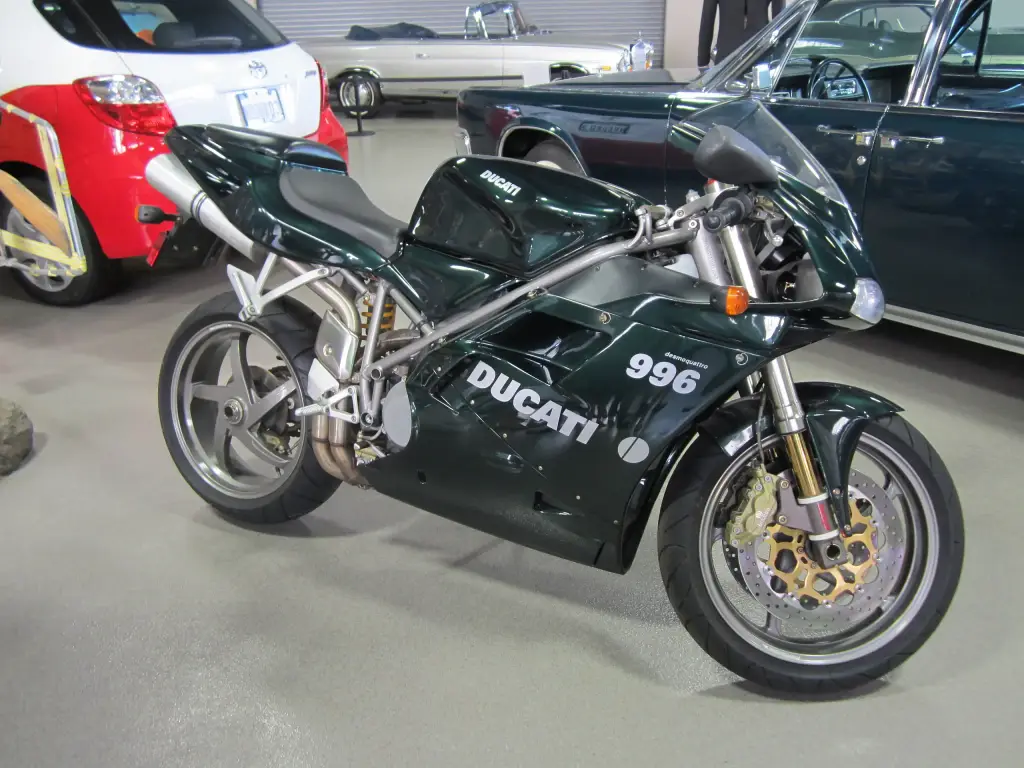
The 996 had larger 98 mm pistons, larger valves, a stronger crankshaft and crankcases ported from the 916 SPS. Because the 916 camshafts gave a softer, less peaky delivery and less top-end power, 83.5 kW against the SPS’s 92.4 kW, the 996 was built with a new air intake system using two fuel injectors per cylinder. A new airbox, the underseat exhaust and a modified chassis went with it. Lighter wheels and improved calipers, discs and pads were fitted, while the suspension stayed Showa but fully adjustable for damping and preload.
Updates year by year
For 2000 the wheels changed to new Marchesini five-spoke items, replacing the three-spoke rims of the 916, and the front forks were titanium nitrided to reduce stiction. In 2001 the rear shock absorber changed from Showa to Öhlins. In 2002 the 996 was superseded by the 998.
The SPS
The 996SPS suffix stood for Sport Production Special. Its engine was the same as the 916SPS unit but the weight was cut considerably, and it produced around 92.4 kW, more than the standard 996. Ducati designed a much higher-specification chassis for the SPS, with five-spoke wheels lighter than the three-spoke rims of the 916 and early 996. In 1999 the rear shocks were Öhlins with Showa front forks; in 2000 Öhlins forks were added. The adjustable steering head allowed geometry changes to the steel trellis frame.
The 996R
In 2001 Ducati introduced the limited-production 996R, 500 built, with the R standing for Racing. It had Öhlins suspension front and rear, carbon-fibre bodywork, a more streamlined fairing and, most importantly, the new Testastretta engine displacing 998 cc. The narrower 25° valve angle was designed by Ing. Marchetti, who came from Ferrari’s Formula One programme. It had more aggressive camshafts, titanium conrods and a shorter stroke with a wider bore, and produced 98.5 kW (136 bhp) at 10,200 rpm with 105 Nm at 8,000 rpm. The chassis followed the 996SPS but used a new Brembo system with thinner discs and four-pad calipers with 34 mm pistons. A Ducati 996 also appeared in The Matrix Reloaded.
Design and features
- Bigger engine: 98 mm pistons, larger valves and a stronger crankshaft from the 916 SPS.
- Two injectors per cylinder: a new intake, airbox and underseat exhaust.
- SPS chassis: lighter five-spoke wheels and an adjustable steering head.
- Testastretta debut: the 2001 996R’s 25° valve angle and 136 bhp.
Ducati 996 versions
- 996 Biposto (1999–2002): the standard two-seat model.
- 996S: the version with Öhlins suspension.
- 996SPS (1999–2000, Europe): Sport Production Special, 92.4 kW and less weight.
- 996R (2001): 500 built with the 998 cc Testastretta engine.
The 996 developed the Ducati 916 and was replaced by the Ducati 998. Its engine ideas led to the 999. More Ducatis are in the Ducati collection.
Sources
- Ducati 996, English Wikipedia: models, engine, updates, SPS and R