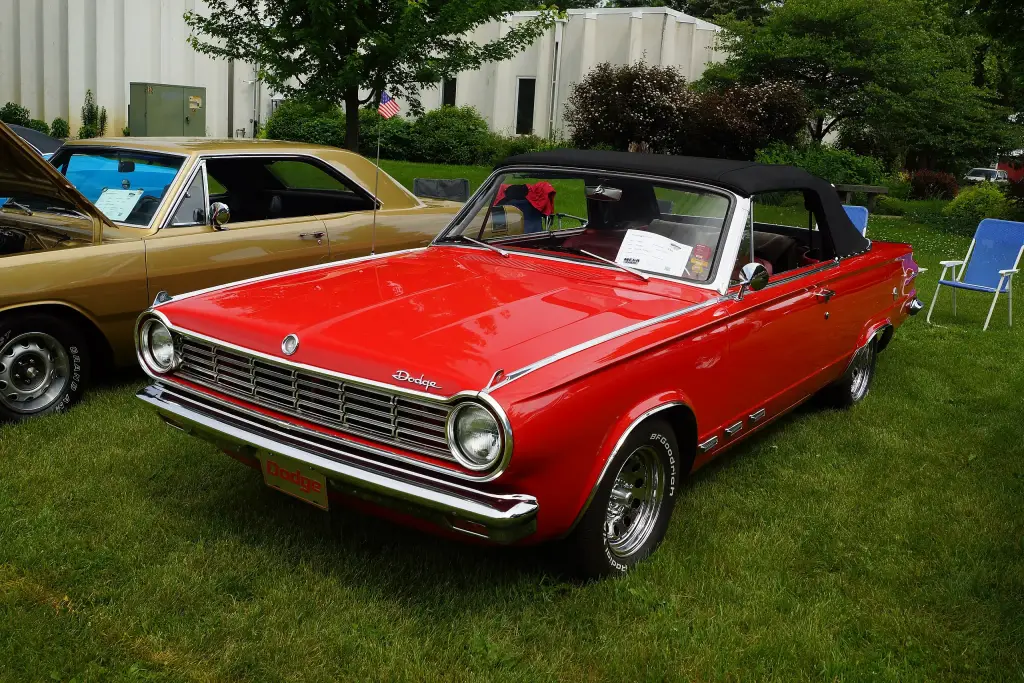
The Dodge Dart is a line of passenger cars that Dodge produced from the 1959 to 1976 model years in North America, with production continuing later in other markets. It arrived as a lower-priced full-size model, spent one year as a mid-size car and then became a compact for two generations until 1976.
Dodge Dart at a glance
| Production | 1959-1976 model years (North America) |
|---|---|
| Class | full-size (1960-1961), mid-size (1962), compact (1963-1976) |
| First wheelbase | 118 in sedans and coupes; 122 in wagons |
| 1960 trims | Seneca, Pioneer, Phoenix |
| Standard engine | 225 cu in slant-six |
| Optional engines | 318 and 361 cu in V8s; 383 from 1961 |
| Brakes | 11-inch drums |
| 1960 Dodge production | 367,804 cars, 87 per cent Darts |
| Revival | 2012 compact based on a Fiat design |
Based on one source: the English Wikipedia article on the Dodge Dart.
History of the Dodge Dart
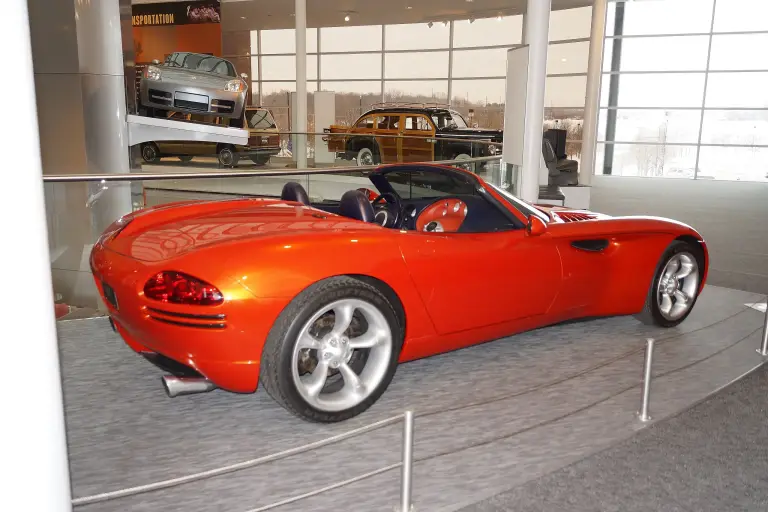
The Dart name first appeared on a 1956 Chrysler show car with a streamlined body by the Italian coachbuilder Carozzeria Ghia, later modified and renamed the Dart Diablo; for 1957 Ghia built a second, visually similar show car, the Chrysler Ghia Super Dart 400. The production Dart followed for the 1960 model year as a downsized large car, developed to replace Plymouths in the standard low-priced segment for Dodge dealers who had sold Plymouths since 1930. Project planners proposed the name Dart, but Chrysler executives demanded an expensive research programme that produced the name Zipp, which was promptly rejected in favour of Dart. With the DeSoto brand cancelled, upper Dodge products moved upmarket, while lower Dodge products used Plymouth models with more equipment.
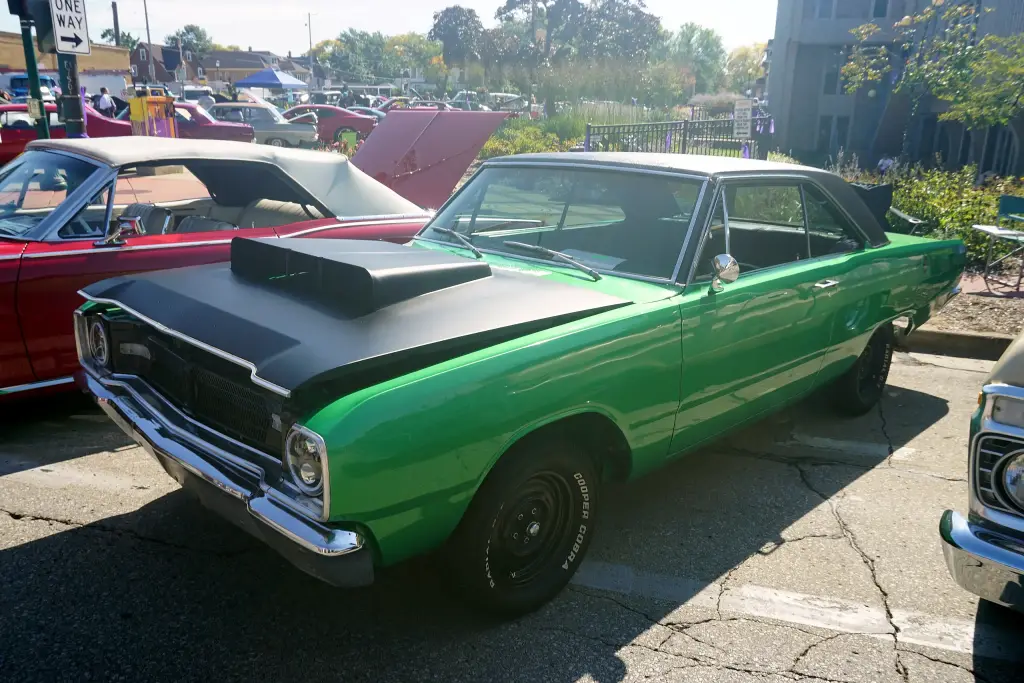
The Dart sedans and coupes were based on the unibody Plymouth platform with a 118-inch wheelbase, shorter than the standard Dodge line, but Dart station wagons used the same 122-inch wheelbase as the upmarket Polara wagons. The range came in three trim levels: the basic Seneca, mid-range Pioneer and premium Phoenix. The new Dart came standard with the 225 cu in slant-six, while the 318 and 361 cu in V8s were optional with two- or four-barrel carburettors and single or dual exhaust, and the 383 cu in V8 was added in 1961. Brakes were 11-inch drums.
Sales of the new Dart were greater than those of the full-size Dodge Matador and Dodge Polara, which created an in-house competitor for Plymouth. Advertising compared the Dart with the “C” car (Chevrolet), the “F” car (Ford) and the “P” car (Plymouth). After the downturn of 1958-59, Dodge production for 1960 rebounded to 367,804 cars, the division’s best result to date and sixth place in the market, but 87 per cent of that volume was the low-profit Dart line while only 41,000 upmarket Matadors and Polaros were sold. Dart sales were so strong that production of the medium-priced lines was cut, and the mid-priced Matador was dropped after 1960 as buyers chose the smaller but better-equipped and cheaper Dart Phoenix.
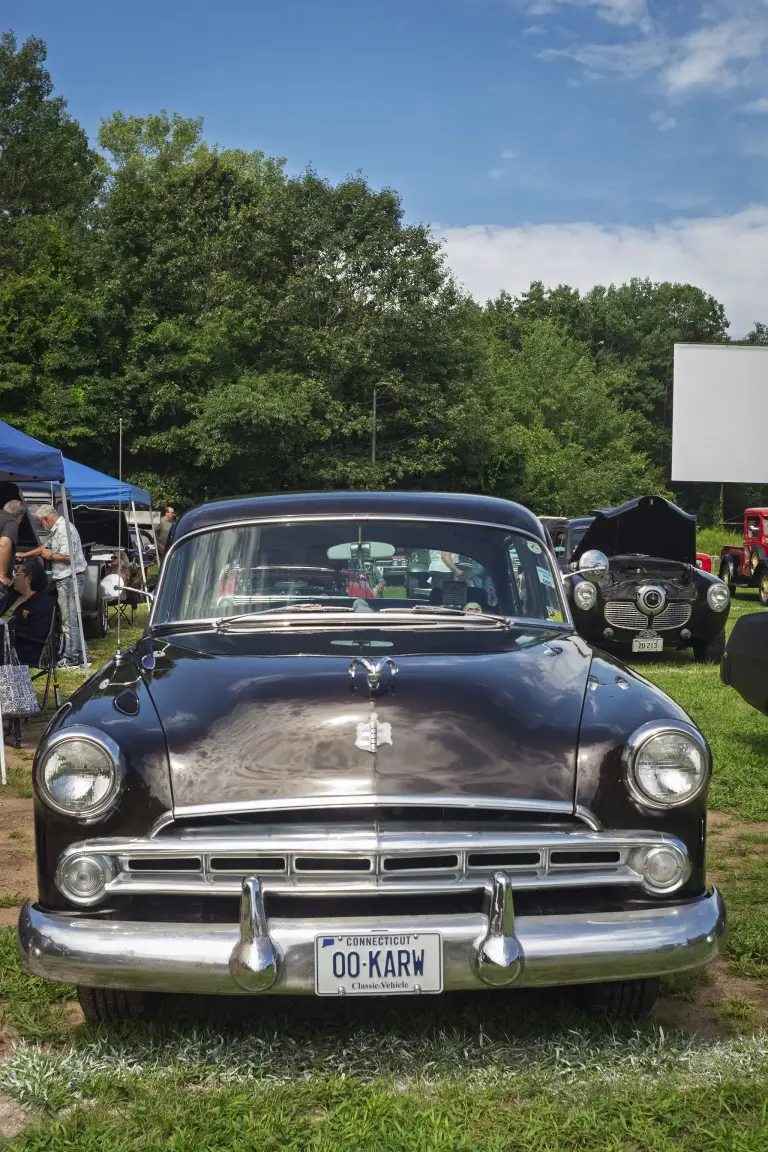
For 1961 the Dart remained the smallest full-size Dodge on the same 118-inch wheelbase and was restyled to resemble the larger Polara, with the same Phoenix, Pioneer and Seneca trims and the same 122-inch wheelbase for wagons. Engines were the 225 slant-six and the 318 and 361 V8s, and from mid-year some 225 cars used a die-cast aluminium block. All series had a three-speed column-shifted manual as standard with Chrysler’s pushbutton TorqueFlite automatic as an extra, and Canadian-built 1961 Darts used Plymouth interior trim and displays. Virgil Exner’s 1961 styling, with reverse fins, rear fender scalloping and a concave grille, was highly unpopular, and the low, small tail lights were criticised by following drivers; Dodge made auxiliary tail lights available mid-year through its dealers. Dodge production fell to 269,367 cars in 1961, of which 142,708 were Darts, and almost half of those were the Seneca line.
The Dart then became a mid-size car for 1962 and a compact for two generations from 1963 to 1976, the period in which it became one of Dodge’s most familiar models. The name was brought back in 2012 for a compact car derived from a Fiat design.
Design and features
- Three sizes in one name: full-size in 1960-1961, mid-size in 1962 and compact from 1963.
- Slant-six: the 225 cu in engine that was standard from the start.
- Three trims: Seneca, Pioneer and Phoenix, with V8 engines optional.
- Plymouth base: the Dart used unibody Plymouth underpinnings with Dodge equipment.
Dodge Dart versions
- Dart Seneca: the basic trim, the most popular in 1961.
- Dart Pioneer: the mid-range version with more equipment.
- Dart Phoenix: the premium trim, with V8 power in convertibles.
- Dart wagon: the estate on the longer Polara wheelbase.
The Dart became the compact Dodge that the Dodge Aspen later replaced, and it sat below the Dodge Polara in the early 1960s. More Dodge models are in the Dodge collection.
Sources
- Dodge Dart, English Wikipedia: origins, 1960-1961 models, trims, engines, sales