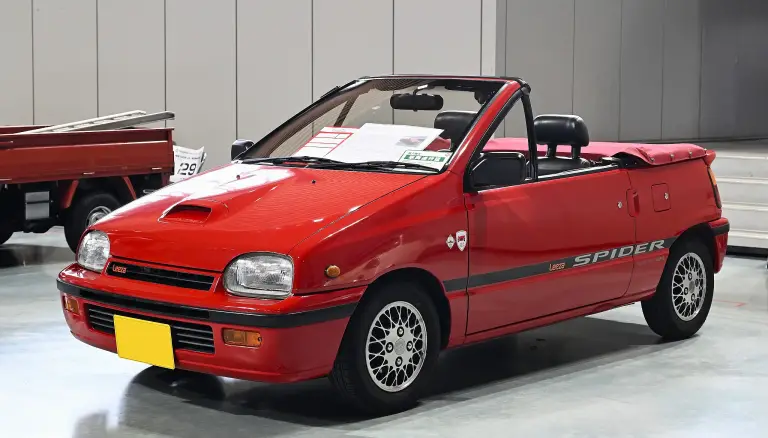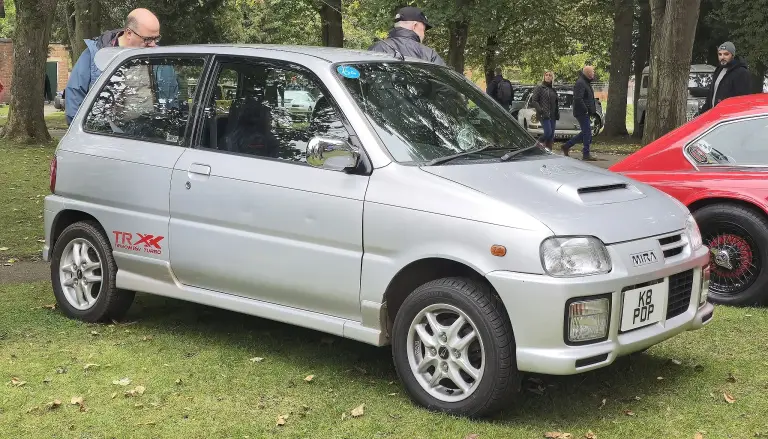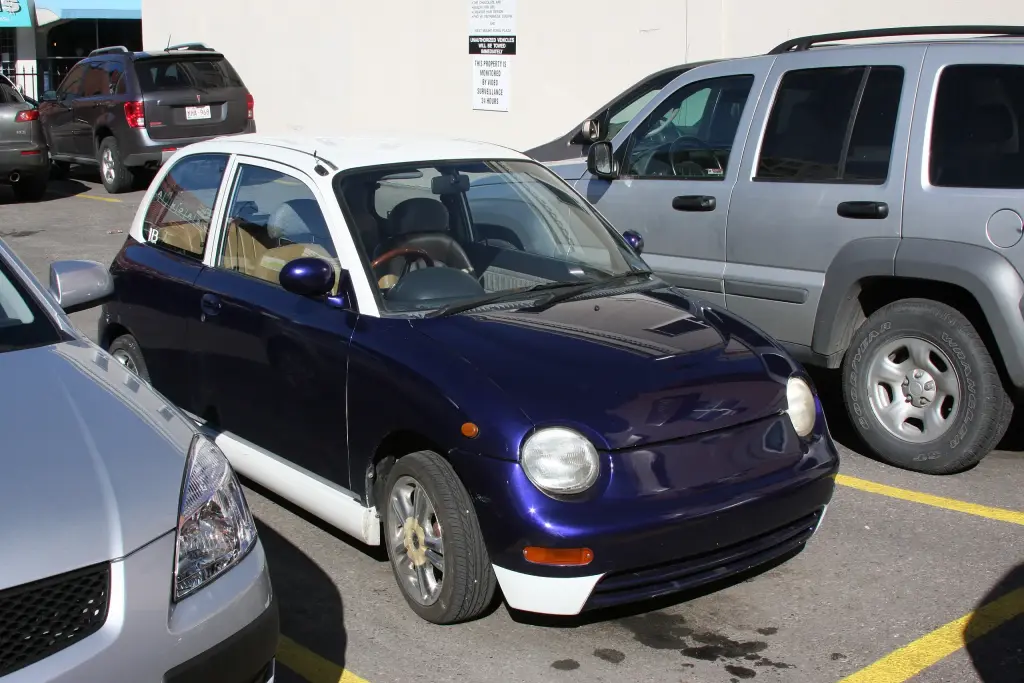
The Daihatsu Opti was a kei car produced from 1992 to 2002. It replaced the Leeza and was marketed as a more upmarket variant of the Mira, with a 658 cc engine and front- or four-wheel drive. The name referred to both “optimistic” and “optimum”.
Daihatsu Opti at a glance
| Maker | Daihatsu, Japan |
|---|---|
| Production | 1992–2002 |
| Class | kei car |
| Engine | 658 cc three-cylinder |
| Drive | front- or four-wheel drive |
| First generation | L300, from January 1992 |
| Second generation | L800, from November 1998 |
| Predecessor | Daihatsu Leeza |
| Based on | Daihatsu Mira chassis |
| Notable versions | canvas top, Club Sport, Classic |
Based on one source.
History of the Daihatsu Opti
A more luxurious Mira
The first-generation Opti was launched in Japan in January 1992, after being previewed at the 1991 Tokyo Motor Show as the X-409. It was built on the L200 series Mira chassis. The round appearance was conceived around an “ultra lovely” theme and aimed at female buyers, and the specifications were higher than usual for the class, with ample sound insulation and additional rust protection.
All models originally used the EF-EL engine, a fuel-injected single-cam 12-valve three-cylinder of 55 PS. The car came as a three-door hatchback, and a version with an electrically operated canvas top was also available. A four-wheel-drive model called the Aℓ-4, model code L310, was offered as well. In September 1992 the Ox, Ax and Aℓ-4 trim levels were joined by the low-priced Ad, a sportier Ad-S and the luxurious Ad-I with a driver’s airbag; the Ad used a two-valve EF-KL engine of 42 PS.
Sport and style
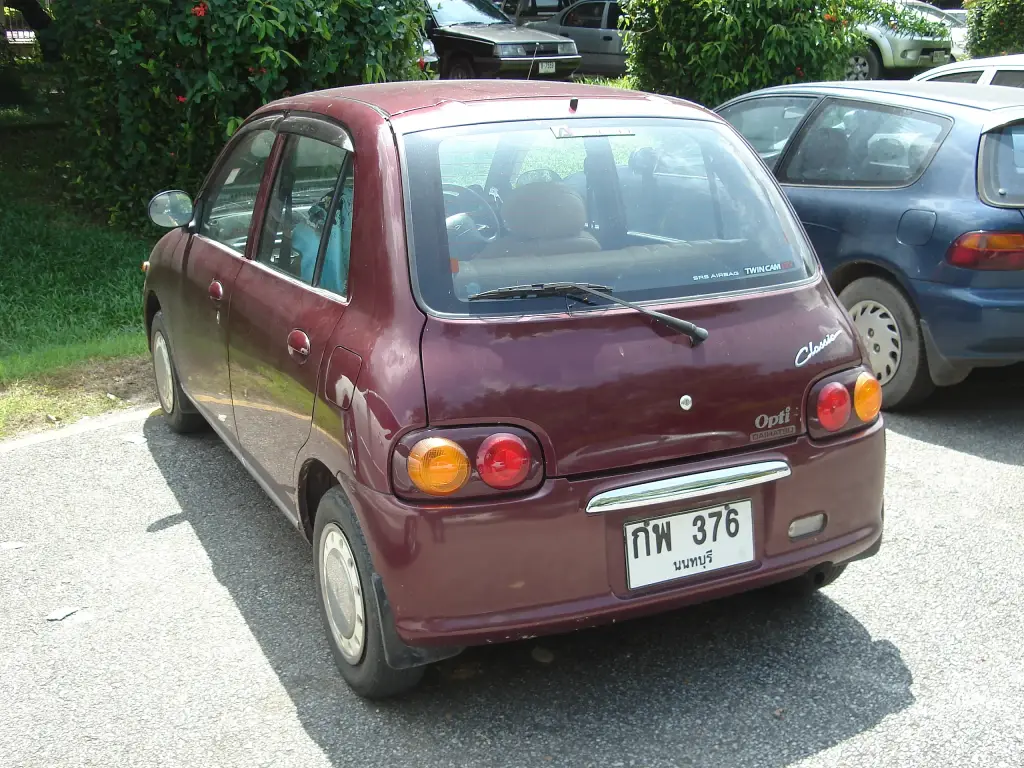
In December 1992 the Opti Club Sport arrived with 13-inch aluminium wheels, sports suspension and a Momo steering wheel, in metallic black only. A five-door variant and the lower-priced Pico came in August 1993, and the Pico S of May 1994 combined Pico specifications with the Club Sport’s sporting additions; at the same time the three-speed automatic was replaced by a four-speed. In February 1995 the bonnet sticker gave way to a central shield logo and a Parco special edition with a roof spoiler appeared. In October 1995 the EF-EL engine was replaced by a DOHC EF-ZL, and the canvas top was discontinued. The retro Opti Classic of May 1996 brought a chrome grille, leather-trimmed interior and, from then on, a standard driver’s airbag across the range. In May 1997 the front bumper and tail lights changed, and in August the Club Sport returned as a permanent model based on the Classic.
Second generation and the Ami
The second-generation Opti arrived in November 1998, when kei car regulations changed. It was based on a modified L500 series Mira chassis and sold as a four-door hardtop sedan in two styles, Opti and Opti Classic, with a high-performance Opti Aerodown Beex also available. Production ended in 2002.
A separate curiosity was the Ami, built by YM Mobilemates, a branch of Yamaha Motor, as a micro coupé with Ferrari F40-inspired design. It was a variant of the Opti with a dummy mid-engine body and the same 55 PS engine. Six hundred units were planned, but only three were reportedly ordered, and the car was sold only in the Tokyo area through an event ticket supplier.
Design and features
- Upmarket kei: more insulation and rust protection than the Mira.
- Canvas top: an electrically operated soft top on the first generation.
- Special editions: Club Sport, Parco and the retro Classic.
- Four-wheel drive: the Aℓ-4 version of the first generation.
Daihatsu Opti versions
- Opti L300 (1992–1998): the original three-door, later with a five-door.
- Club Sport (1992): sports suspension and a Momo wheel.
- Ad and Ad-I (1992): low-priced and luxurious trims.
- Opti Classic (1996): chrome grille and leather trim.
- Opti L800 (1998–2002): four-door hardtop second generation.
- YM Mobilemates Ami: an F40-inspired micro coupé based on the Opti.
The Opti replaced the Leeza and was the upmarket relative of the Mira. More cars are in the Daihatsu collection.
Sources
- Daihatsu Opti, English Wikipedia: generations, engines, editions, the Ami