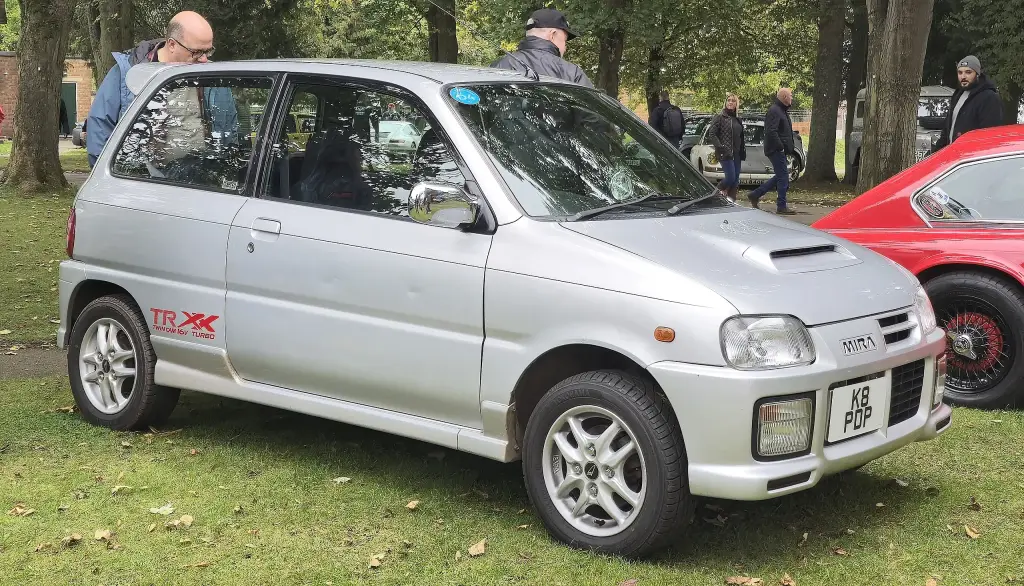
The Daihatsu Mira is a kei class city car launched in 1980 and still in production in various forms. Outside Japan it has been sold as the Cuore, the Domino and, more recently, the Charade. The Mira was originally the commercial version of the Cuore, and for most generations two engines were offered: a small one to suit Japanese kei rules and a larger one for export.
Daihatsu Mira at a glance
| Maker | Daihatsu, Japan |
|---|---|
| Launched | June 1980 |
| Class | kei car and city car |
| Other names | Cuore, Domino, Charade in some markets |
| First generation | L55/L60, 1980 |
| Second generation | L70/L80, from August 1985 |
| Kei engines | 547 cc two-cylinder, later 660 cc |
| Export engines | 617, 847 and 1000 cc |
| Body styles | three- and five-door, van versions |
| Four-wheel drive | available from the first generation |
| Related | Mira Gino based on the Mira |
| Successor to | Daihatsu Max Cuore |
Based on one source. The Mira has also been sold as the Cuore and the Domino, and cars sold under those names are covered here.
History of the Daihatsu Mira
A car with several names
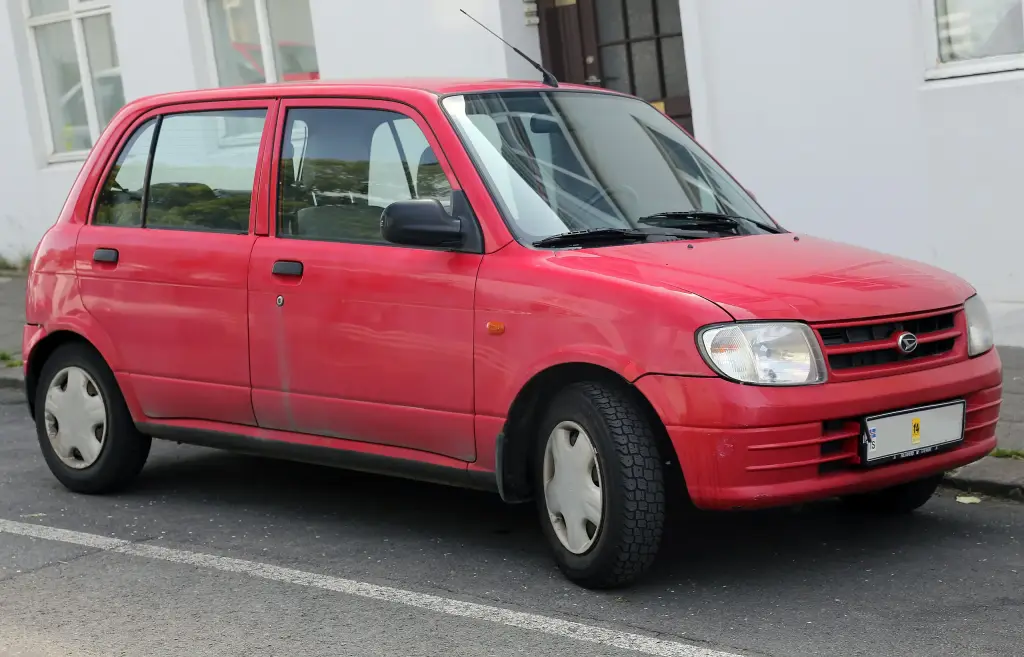
The Mira and Cuore replaced the Daihatsu Max Cuore in July 1980. The Mira was originally marketed as the Mira Cuore, and the two names have been used together ever since: Mira in Japan, Cuore in Europe. In Australia the two-seater version was sold as the Daihatsu Handivan and later the Handi. Outside Japan the car was also offered with larger 850 or 1000 cc engines instead of the kei class units.
The first generation
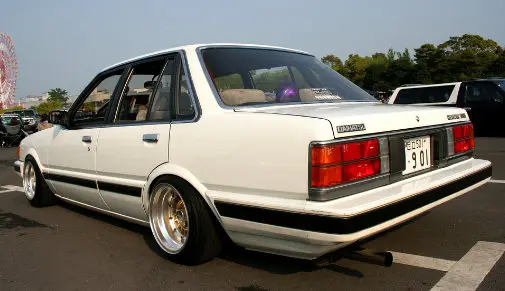
The L55 series, usually considered the second generation of the Cuore, arrived in June 1980. It was facelifted in May 1982, when the Mira dropped the Cuore part of its name. The facelift also brought a sporty three-door MGX with a five-speed gearbox and radial tyres, and the Daimatic clutchless transmission was replaced by a fully automatic two-speed unit. In October 1983 turbocharged and four-wheel-drive versions of the Mira van were made available.
Two engines were used: the two-cylinder AB10 of 547 cc for Japanese cars and a larger 617 cc AD unit in the export-only L60 Cuore. Both had twin balance shafts, which gave smoothness close to a four-cylinder engine, and tests praised the larger car for its refinement and lively performance against two-cylinder European rivals such as the Fiat Panda 30 and Citroën Visa Club. The main problem was cost, since the balance-shaft engine was said to cost as much to build as a conventional four-cylinder. The 30 PS version reached 120 km/h.
The bigger engine came in the second half of 1982 as part of Daihatsu’s push into European exports. In Belgium the two versions were sold as the Cuore 550 and Cuore 623/625, depending on the bodywork. In October 1983 the Mira Turbo appeared, using a carburetted turbocharged version of the two-cylinder engine for 41 PS and a top speed of 130 km/h. In February 1985 the first Mira Parco special edition arrived, with alloy wheels, front disc brakes, air conditioning and a special interior, sold through eleven Parco clothing stores. Giovanni Michelotti used the Cuore as the basis for the Michelotti PAC prototype shown at Geneva in 1985.
The second generation
The L70 series was released in August 1985 with a longer wheelbase and a new family of three-cylinder engines replacing the two-cylinder units, still of 547 cc. Export cars used the 847 cc ED-10 three-cylinder, and a 796 cc version with a narrower bore was made for Switzerland in September 1986 to suit local tax classes. In Japan, commercial versions were sold as the Mira alongside passenger versions called the Cuore; the commercial cars had temporary rear seats that folded completely flat and are recognised by luggage rails in the rear side windows. Engines were carburetted, naturally aspirated or turbocharged with an intercooler, giving 38 and 52 PS. The turbo was at first available only on the three-door Mira commercial. Transmissions were four- or five-speed manuals or a two-speed automatic on non-turbo cars, and a five-door van joined the range in January 1986.
Design and features
- Many names: Mira in Japan, Cuore in Europe, Domino in some markets.
- Small and large engines: kei units at home, 850 and 1000 cc units for export.
- Early turbo and four-wheel drive: both offered from the first generation.
- Commercial versions: van and commercial cars with folding rear seats.
Daihatsu Mira versions
- Mira 550 (1980–1985): two-cylinder car, sold as the Cuore 550 in Belgium.
- Cuore 617: the export L60 with the larger two-cylinder engine.
- Mira Turbo (1983): 41 PS two-cylinder turbo.
- Mira Parco (1985): special edition sold through Parco stores.
- L70 (1985): three-cylinder generation with a longer wheelbase.
- Cuore 796: Swiss-market version for local tax classes.
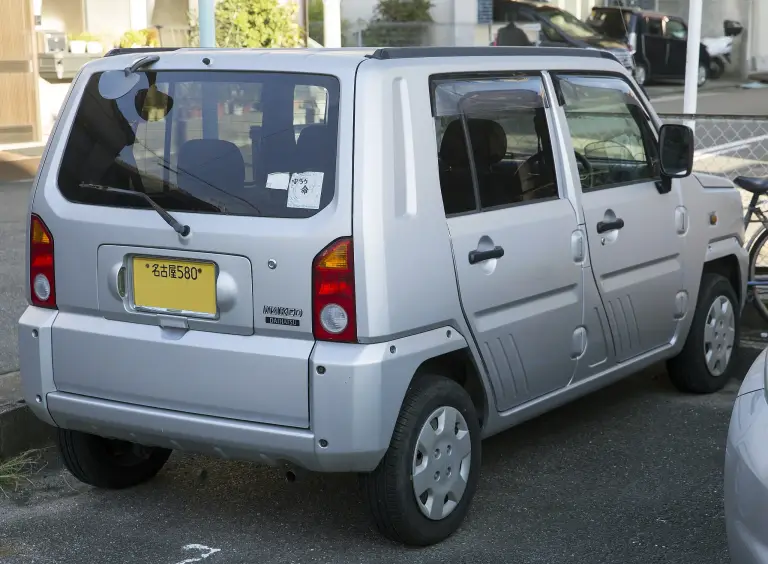
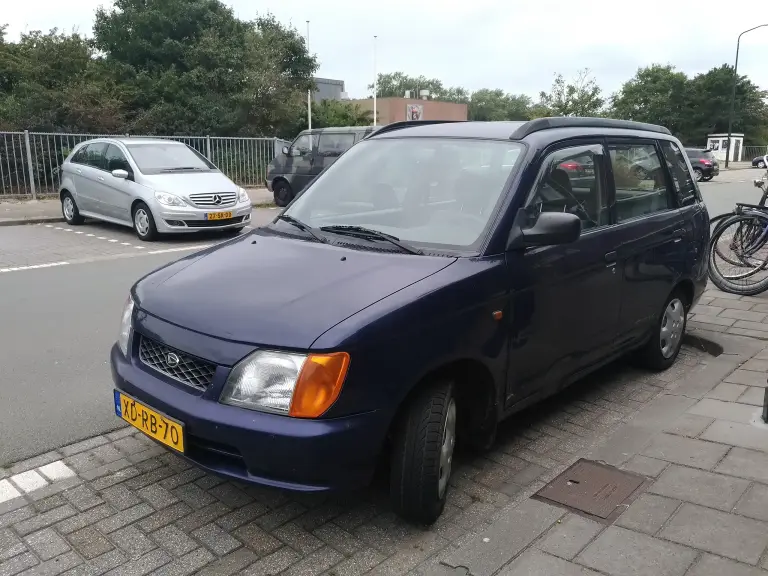
The Mira is the base for the retro-styled Mira Gino and shares its kei class with the Move and the Opti. More cars are in the Daihatsu collection.
Sources
- Daihatsu Mira, English Wikipedia: history, engines, export names, special editions