The Daihatsu Move is a kei car built between 1995 and 2023 and reintroduced in 2025. It was Daihatsu’s answer to the Suzuki Wagon R, which had appeared two years earlier, and it used the chassis of the Mira with a taller body. The first generation was designed by the Italian studio I.DE.A of Turin.
Daihatsu Move at a glance
| Maker | Daihatsu, Japan |
|---|---|
| Production | 1995–2023, again from 2025 |
| Class | kei car, tall body |
| Chassis | Daihatsu Mira |
| Designer | I.DE.A Institute, Turin |
| First generation | L600, 1995 |
| Japanese engine | 659 cc three-cylinder |
| Export engine | 847 cc ED-20 |
| Turbo | 659 cc JB-JL four-cylinder, 64 PS |
| Second generation | L900, from October 1998 |
| Third generation | L150, from October 2002 |
| Fourth generation | L175, from October 2006 |
Based on one source.
History of the Daihatsu Move
The first generation
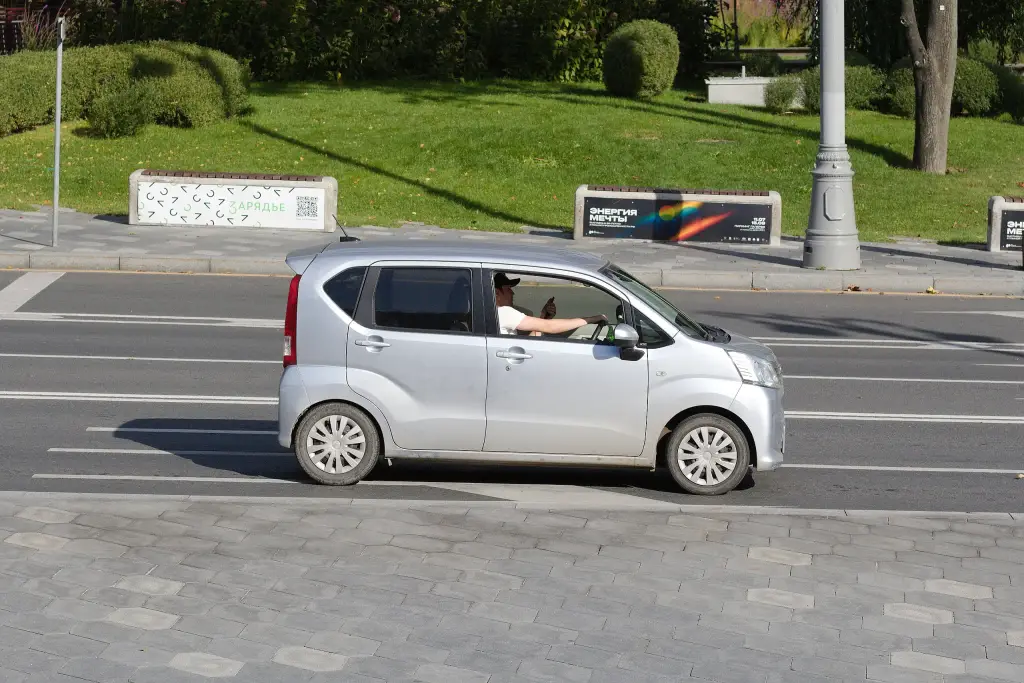
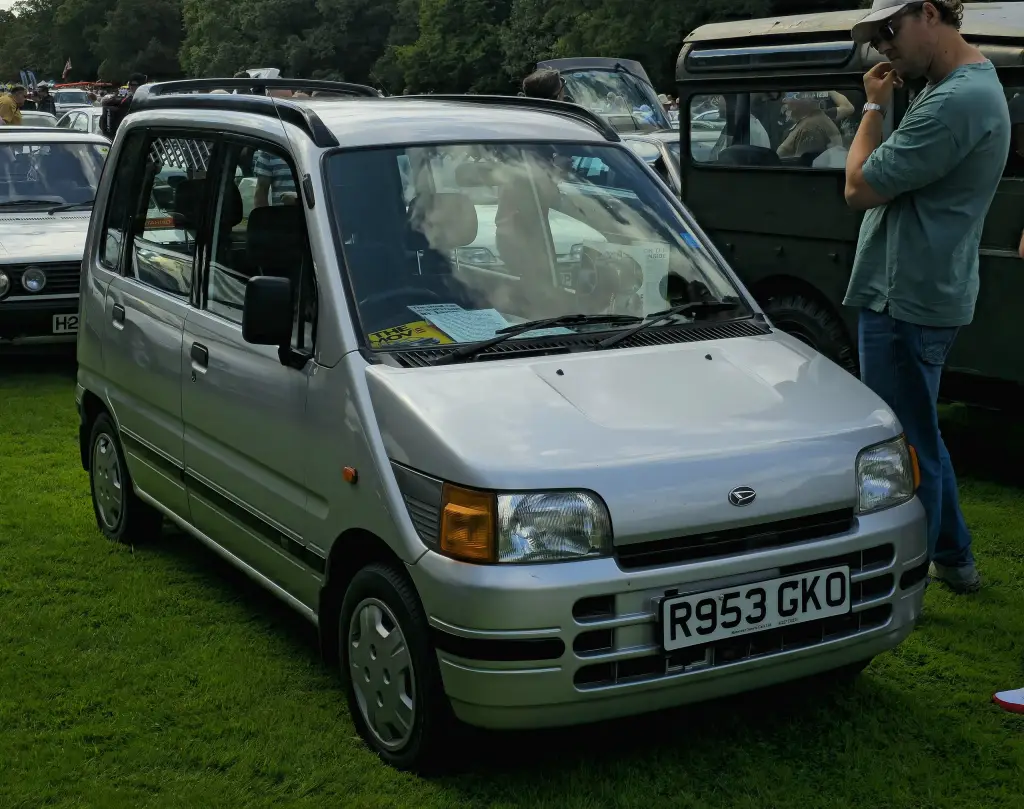
The first Move was designed by I.DE.A in Turin and launched in 1995. Japanese cars used a 659 cc three-cylinder engine, export cars an 847 cc ED-20 unit, and the Japanese models were designated L600, L610 with four-wheel drive and L601 for export. A turbocharged 659 cc JB-JL four-cylinder of 64 PS was sold as the L602 with front- or four-wheel drive; this four-cylinder car was at first the only Move available with a four-speed automatic, which reached the turbocharged three-cylinder in May 1996 and then spread down the range. The export ED-20 produced 44 PS and more torque than the naturally aspirated Japanese engines thanks to its larger size; the turbo was not offered in Europe because of its emissions. Export cars reached 130 km/h, or 125 km/h with the automatic.
In late 1997 a Move Custom variant appeared with larger headlights and revised front styling, and the name was used in later generations too. Daihatsu built more than half a million L600 and L610 cars, mostly in Japan, and exported the Move to Europe, including Britain.
Second generation
The second generation arrived in October 1998. Japanese engines produced 45 PS for the basic EF-SE, 58 PS for the 12-valve EF-VE and 64 PS for the turbocharged EF-DET and JB-DET. In May 1999 a Hello Kitty special edition based on the CL model added emblems, decals, seat covers, gauges and a front bench seat. A CVT option was added to the Move CX and Z4 at the same time. A facelift in October 2000 split the range into a base Casual and a sportier Custom, with a collision-safe “TAF” body, dual airbags on all models and, on the two-wheel-drive Aero Down Custom, optional stability control combining ABS, traction control and yaw control. In Malaysia the same car was marketed with small changes as the Perodua Kenari.
Third and fourth generations
The third generation of October 2002 brought a rounded derivative called the Move Latte, and kept the side-opening rear gate while offering a top-hinged door as an option. Model codes were L150, L160 for four-wheel drive and L152 for the four-cylinder engine. The sportier Move Custom had twin headlights with semi-circular cutouts in the bumper, and the range ran from L and X to the turbocharged R, with the Custom RS and RS Limited on sports suspension at the top; only front-wheel-drive RS cars used the all-aluminium JB-JL four-cylinder. A facelift in December 2004 redesigned the grille, bumpers and tail lights and replaced the R with a cheaper L-Turbo. The third generation was replaced in October 2006 after more than 650,000 cars had been built.
The fourth generation, the L175, arrived in October 2006 with a design that broke from the boxy look of its predecessors. It offered a KF-VE non-turbo engine and a CVT, with a turbo still available on the Move Custom, and had a derivative called the Move Conte. A facelift in December 2008 brought new grilles, headlights and tail lights, a revised interior, and an adjustable package of seat height, tilt steering wheel and shoulder belt height as standard across the range.
Design and features
- Tall body on Mira chassis: more interior space than a conventional kei hatchback.
- Italian design: the first generation was styled by I.DE.A of Turin.
- Move Custom: a sportier version with its own front styling.
- Turbo and CVT: turbocharged engines and, later, continuously variable transmissions.
Daihatsu Move versions
- Move L600 (1995–1998): the original car, with 659 cc and 847 cc engines.
- Move Custom (1997): larger headlights and a revised front.
- Move Hello Kitty (1999): special edition with a front bench seat.
- Move Latte: a rounded derivative of the third generation.
- Move Conte: a derivative of the fourth generation.
The Move uses the chassis of the Mira and was joined in the range by the smaller Naked. More cars are in the Daihatsu collection.
Sources
- Daihatsu Move, English Wikipedia: generations, engines, versions, production