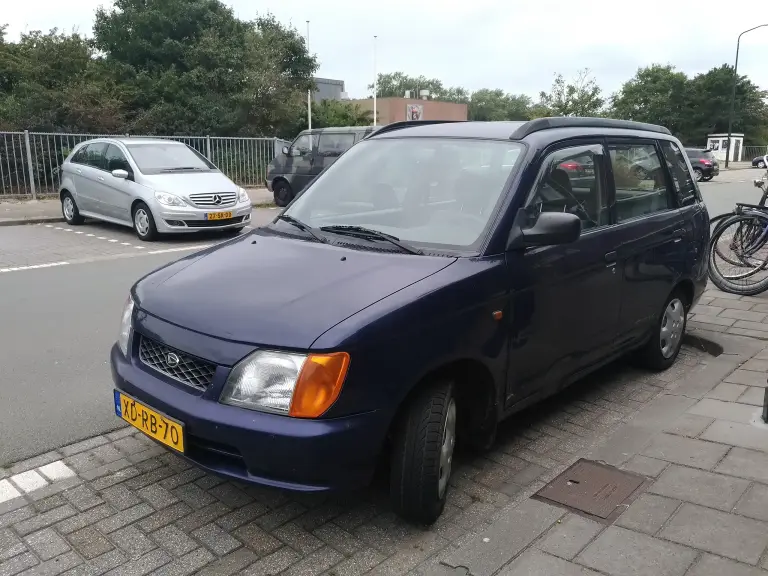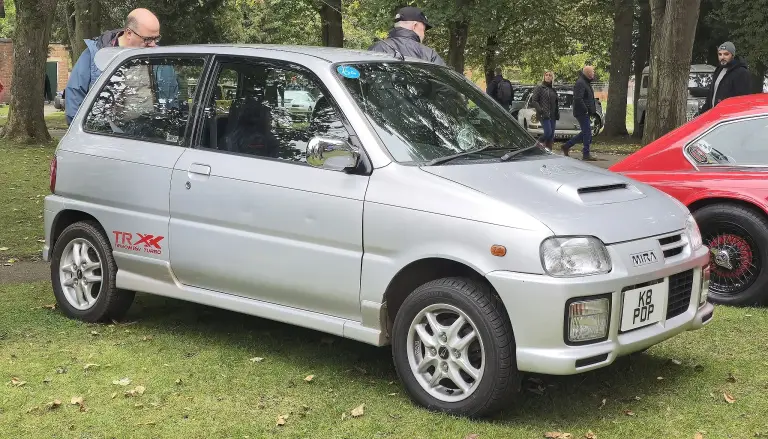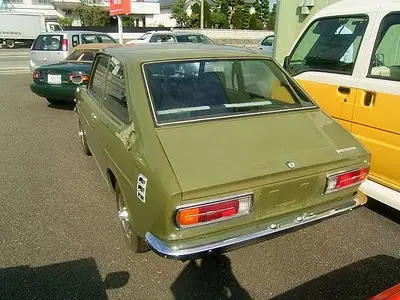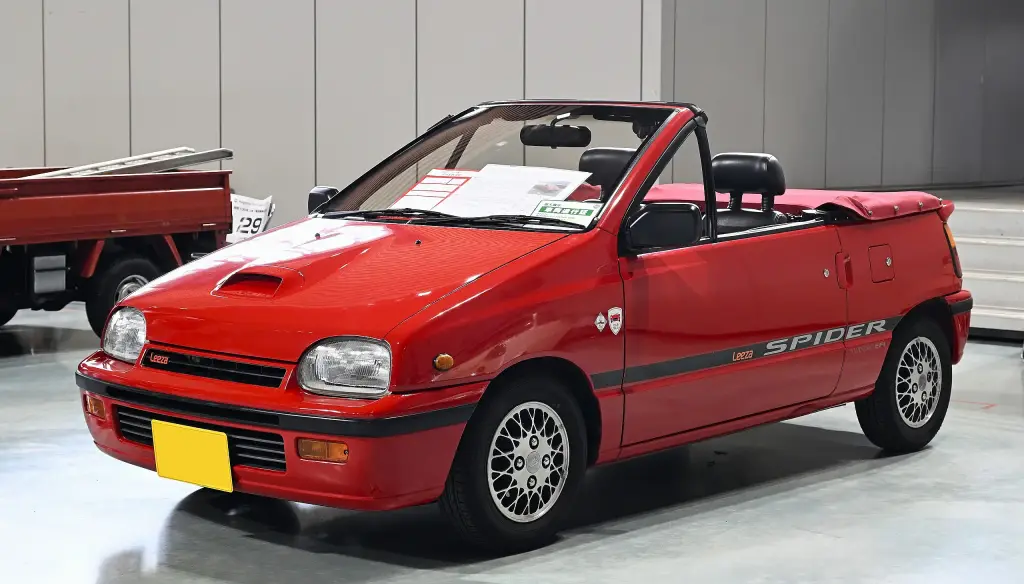
The Daihatsu Leeza was a kei car with semi-coupé styling, launched in Japan in December 1986 and built until August 1993. Although it looked like a coupé, most examples sold in Japan were registered as commercial vehicles, with strapping points and temporary rear seats, to take advantage of tax breaks. A two-seat roadster, the Leeza Spider, joined the range at the end of its life.
Daihatsu Leeza at a glance
| Maker | Daihatsu, Japan |
|---|---|
| Production | December 1986 – August 1993 |
| Class | kei car, semi-coupé |
| 550 cc model | L100 |
| 660 cc model | L111, from August 1990 |
| Engines | 547 cc and 658 cc three-cylinders |
| Power | 33 to 64 PS |
| Body styles | three-door coupé, later five-door |
| Roadster | Leeza Spider, from November 1991 |
| Replaced by | Daihatsu Opti |
Based on one source.
History of the Daihatsu Leeza
The 550 cc car
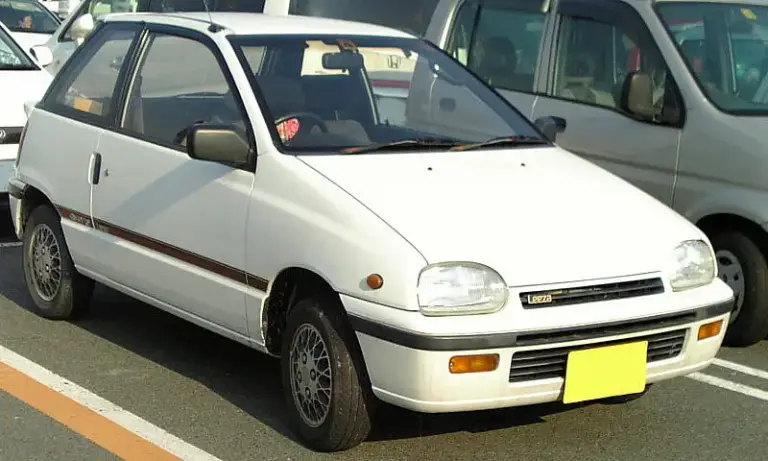
The Leeza went on sale in December 1986 with carburetted 547 cc EB-series three-cylinder engines, either naturally aspirated with 33 PS or turbocharged with 50 PS. In late 1987 a limited edition called Cha Cha appeared, aimed at women around the age of thirty and sold only in black with discreet red pinstripes and standard air conditioning. A fuel-injected TR-ZZ version of 64 PS followed in January 1989, and a Club Sports edition with lowered suspension and body kits came in October. A two-seat Leeza Spider prototype was shown at the 1989 Tokyo Motor Show.
Contemporary reviewers liked the clean, modern design and the airy interior, but the sloping rear glass made the back seat cramped: four adults would not have been comfortable in any seat. A British road test of the 33 PS car with a five-speed manual recorded 0–60 mph in 21.3 seconds and a top speed of 121 km/h, with fuel consumption of 41.3 mpg when driven hard. The Leeza was designed for city use and was not well suited to motorway work.
The 660 cc car
When kei car regulations changed in March 1990, Daihatsu updated the Leeza rather than replacing it. The 660 cc L111 arrived in August 1990, a little later than the more popular Mira, in R, Cha Cha and OXY trim lines, with the Cha Cha now a regular model. The standard engine was a carburetted single-cam unit with four valves per cylinder and 50 PS. The larger engine and slightly bigger body made a more usable car and allowed more safety equipment, but the tax advantage of “false” commercial vehicles had shrunk to the point of irrelevance, so the updated Leeza was sold only as a passenger car, which limited its market.
Five months later the turbocharged OXY-R arrived with the maximum 64 PS allowed for kei cars and a prominent bonnet vent for the intercooler. Production of the two-seat Spider roadster, chassis code L111SK, began in November 1991 with the turbocharged engine and a standard leather interior, and lasted until the end of production. The Leeza was discontinued in August 1993, a year after its successor, the Opti, had been launched.
Design and features
- Semi-coupé styling: a sloping roofline on a kei car body.
- Commercial registration: temporary rear seats and strapping points for tax breaks.
- Turbo engines: up to the 64 PS kei class maximum.
- Leeza Spider: a two-seat roadster with a leather interior.
Daihatsu Leeza versions
- Leeza 550 (1986–1990): 33 PS and 50 PS three-cylinder cars.
- Cha Cha (1987): black limited edition with red pinstripes.
- TR-ZZ (1989): fuel-injected 64 PS version.
- Club Sports (1989): lowered suspension and body kits.
- Leeza 660 (1990–1993): R, Cha Cha and OXY models.
- Leeza Spider (1991–1993): the two-seat turbo roadster.
The Leeza was replaced by the Opti and sat alongside the Mira in the kei range. More cars are in the Daihatsu collection.
Sources
- Daihatsu Leeza, English Wikipedia: engines, versions, road test, Spider