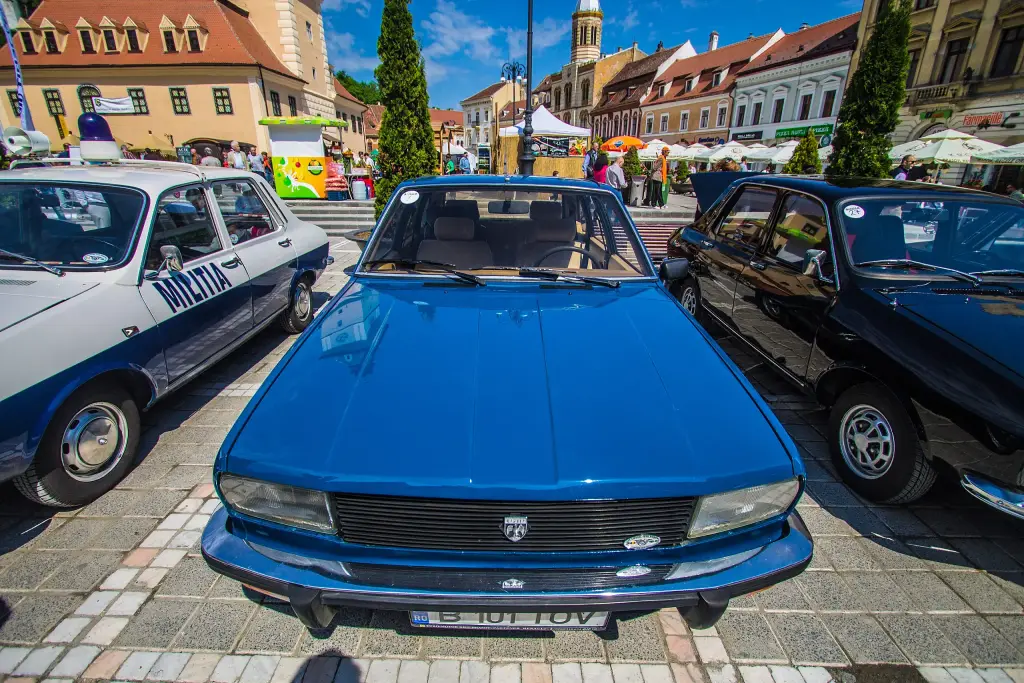
The Dacia 2000 was a Renault 20 assembled in Romania in the early 1980s for the elite of the Communist Party. It was not built at the Dacia plants but at the workshops in Ștefănești, in very small numbers, and was available only in black or dark blue.
Dacia 2000 at a glance
| Based on | Renault 20, CKD kits |
|---|---|
| Assembled | Ștefănești workshops, 1979–1982 |
| Built | very few |
| Colours | black or dark blue only |
| Engine 1 | 1,647 cc, 90 hp, four-speed gearbox |
| Engine 2 | 1,995 cc, 110 hp, five-speed gearbox |
| Engine 3 | 2,165 cc, 115 hp, automatic gearbox |
| Fuel system | carburettor on the 1.6 and 2.0, Bosch injection on the 2.2 |
| Tyres | 175/70 SR13 on 13-inch wheels, 185/70 HR14 on the others |
| Equipment | electric windows, cruise control, air conditioning, power steering, audio, trip computer |
| Survivors | two restored cars |
The English Wikipedia has no article on the Dacia 2000; this page uses the Romanian article and the English article on the Renault 20 it was based on.
History of the Dacia 2000
The Dacia 2000 was assembled from Renault CKD kits between 1979 and 1982, and it was reserved for the elite of the Romanian Communist Party. For Romania of the time its equipment was extraordinary: electric windows, a cruise control, an illuminated ashtray, air conditioning, power steering, an audio system and an on-board computer, with Bosch fuel injection on the largest engine. It is possible that the model stood at the base of the later Dacia 1320 and Dacia Liberta of 1988 and 1990.
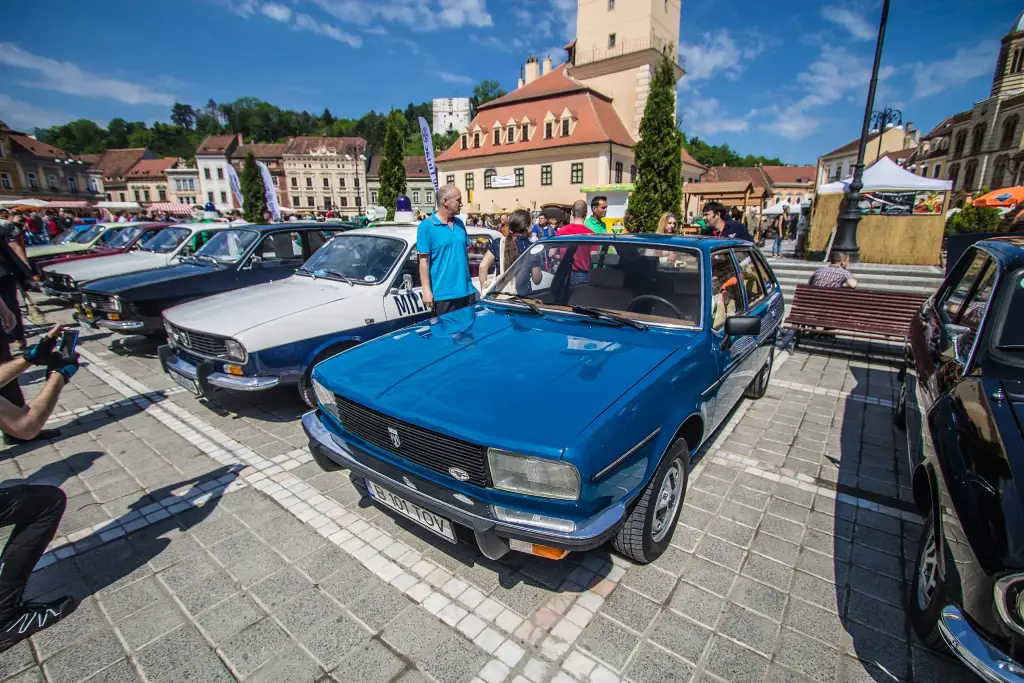
Three engines were fitted. The smallest was the 1,647 cc four of 90 hp with a four-speed gearbox, on 175/70 SR13 tyres and 13-inch wheels with three bolts. The 1,995 cc unit of 110 hp came with a five-speed gearbox, and the 2,165 cc unit of 115 hp with an automatic; both used 185/70 HR14 tyres on four-bolt wheels, the same 14-inch rims as the Renault 30 V6. The first two had carburettors, the largest Bosch fuel injection. The cars were close to the early Renault 20, and the 14-inch wheels were shared with the Renault 30 V6.
The model caused serious problems for the service teams of the day: maintenance was expensive and access to consumables, good oils and spare parts was very limited. For the first time in the Romanian car industry there was also computer diagnostics, with which Romanian mechanics were not familiar. After the fall of the communist regime the cars were offered for sale to the public, but interest was relatively low; today only two restored examples are known.
Design and features
- Renault 20 body: a five-door hatchback with the Renault 20’s two rectangular headlights.
- Elite equipment: air conditioning, power steering, cruise control, electric windows and a trip computer.
- Three engines: from a 90 hp 1.6 with a four-speed gearbox to a 115 hp 2.2 with an automatic.
- Computer diagnostics: a first for the Romanian car industry, and unfamiliar to local mechanics.
Dacia 2000 versions
- 1.6 (90 hp): four-speed gearbox, 13-inch wheels, carburettor.
- 2.0 (110 hp): five-speed gearbox, 14-inch wheels, carburettor.
- 2.2 (115 hp): automatic gearbox and Bosch fuel injection.
The Dacia 2000 shared its platform thinking with the later Dacia Nova, and the company’s mainstream cars of the time are described in the Dacia 1310 article. More in the Dacia collection.
Video: Dacia 2000 a lui Nicolae Ceauşescu în Piaţa Sfatului
Video on YouTube.
Sources
- Dacia 2000, Romanian Wikipedia: assembly, engines, equipment, survivors
- Renault 20/30, English Wikipedia: the Renault 20 the car was based on