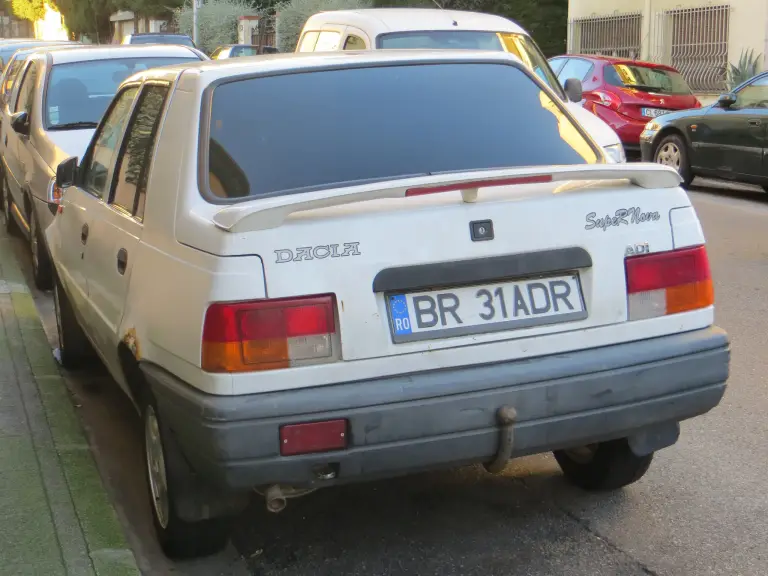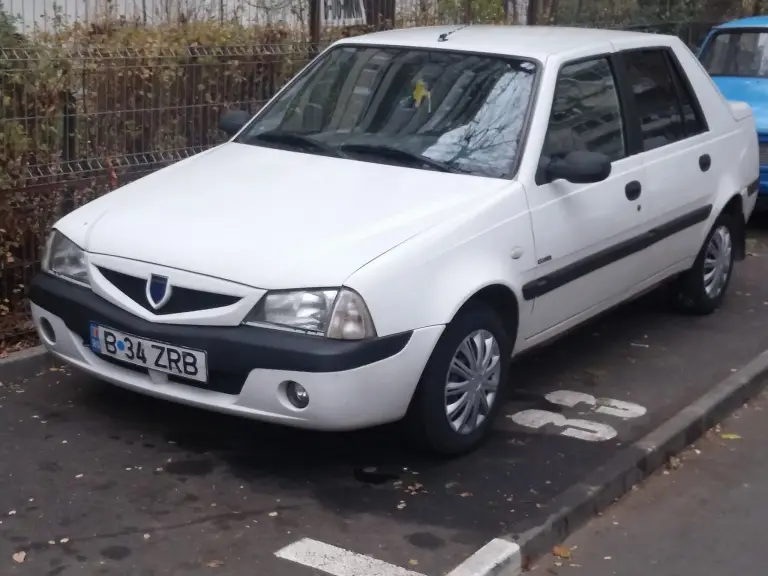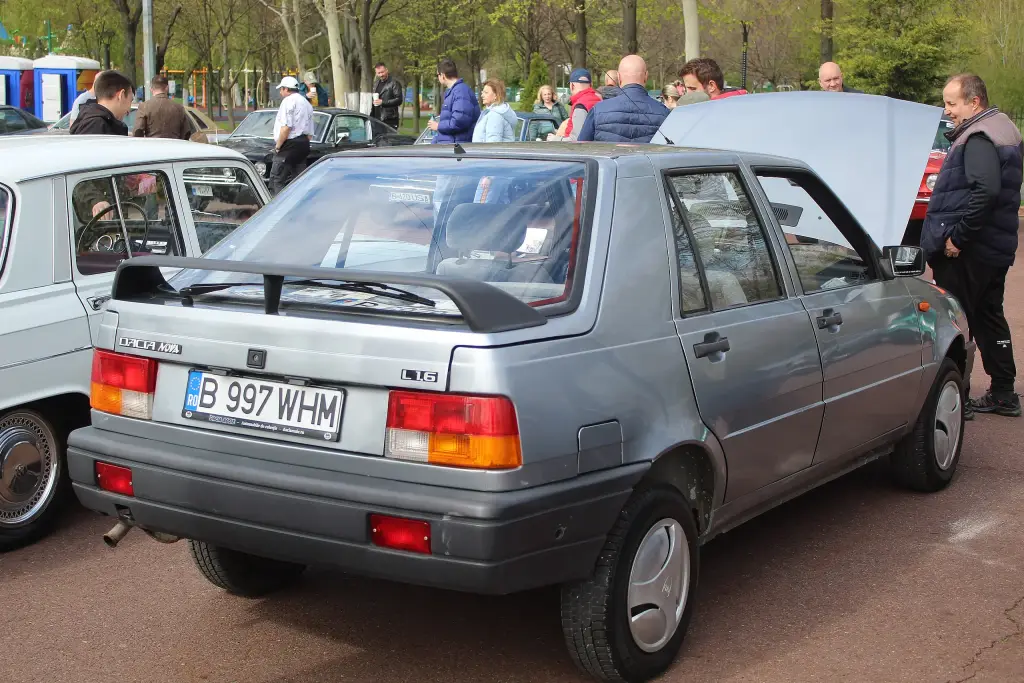
The Dacia Nova was a supermini built by Dacia from 1995 to 2000. It was the first Dacia designed entirely in-house, a five-door liftback with a transverse front engine and front-wheel drive, and it was replaced by the SupeRNova.
Dacia Nova at a glance
| Production | 1995–2000 |
|---|---|
| Body | five-door liftback, five seats |
| Layout | transverse front engine, front-wheel drive |
| First generation | R523, 1995–1997 |
| Second generation | R524, 1997–2000 |
| Engines | 1.4 GLi and 1.6 GT / GTi |
| GT carburettor | Carfil double-barrel, from the Oltcit |
| Injection | Bosch MonoMotronic on the 1.6 from 1998 |
| Project started | 1985 (R523/R524 studies) |
| Replaced by | Dacia SupeRNova, 2000 |
History of the Dacia Nova
The Nova was the first in-house developed Dacia. It was meant to complement the Renault 12-based Berlina and Break range with a small liftback or fastback, and work on it had started in the 1980s, which is why the car looked outdated when it left the factory in 1995. The body housed a transversely mounted front engine and front-wheel drive in a five-door, five-seat layout. The engine was the old Cléon-based unit from the rest of the range, although the 1.6 GT was fuel injected with a Bosch MonoMotronic system in 1998, hence the GTi name. The GT used a double-barrelled Carfil carburettor sourced from the Oltcit supermini, which gave good performance at the cost of high fuel consumption.
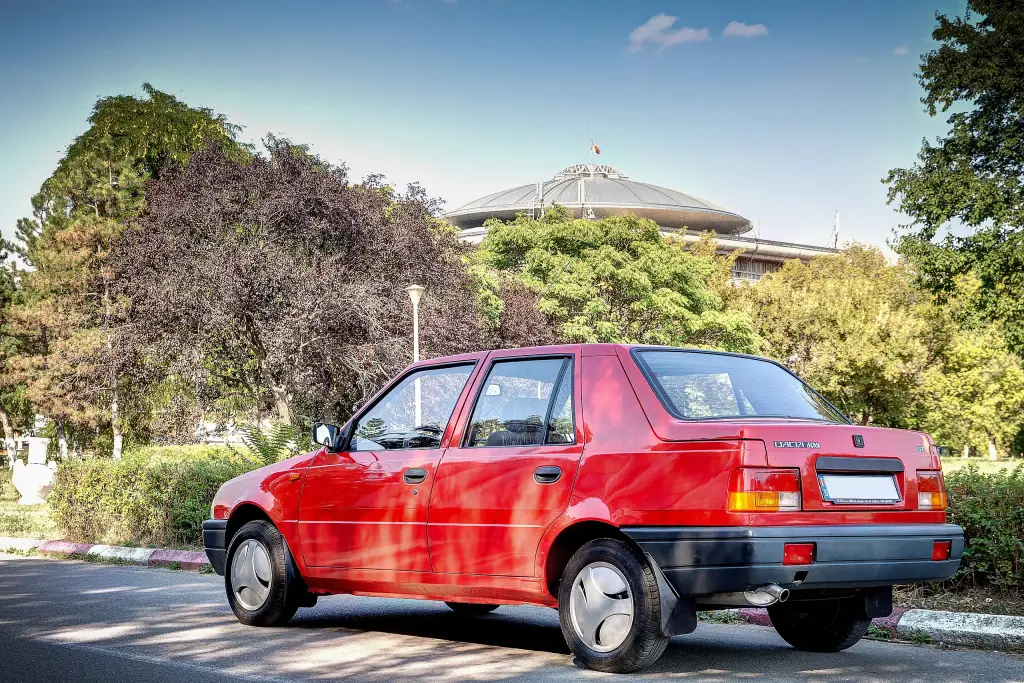
The first marks of the R523 and R524 prototypes date from 1985. The car was designed on drawing boards, without computer tools; the project was stopped in 1989 and taken up again in 1991. Other bodies were studied as well: an R527 saloon with a rear stretched by 10–15 cm, dropped in 1996; a 1997 facelift that took the headlights and tail lights of the Hyundai Accent; a break of the early 1990s that was never produced; and a three-door coupé with longer doors on the driver’s side. In the early 1990s drawing boards gave way to graphical workstations bought by CESAR, Dacia’s design institute, and resin models were made for aerodynamic testing.
A significant improvement came in 1997 with the restyling and two models on the same body, the R523 with a panoramic rear window and the R524 with a flat one. In 1998 the 1.6 injection engine entered production, new door handles appeared, the R523 was dropped, and a new dashboard was fitted that lasted until the SupeRNova. The car then gained a Euro 2 catalytic converter, optional air conditioning and central locking, and better assembly and materials. At the end of 1998 the 1.4-litre 61 hp injection engine known from the 1310 was added as the GLi. Although more modern than the classic range, the Nova had worse bodywork quality, less boot space and a higher price, so it never became a bestseller and few examples survive. It was replaced by the SupeRNova in 2000.
Design and features
- First in-house design: the Nova was drawn by Dacia’s own engineers, without Renault help.
- Liftback body: five doors and five seats, with a transversely mounted front engine.
- Carfil carburettor: the GT used a double-barrel unit from the Oltcit for better performance.
- Bosch injection: the 1.6 GTi of 1998 was the first injected Nova.
Dacia Nova versions
- R523 (1995–1997): the first generation, with a panoramic rear window.
- R524 (1997–2000): the restyled car with a flat rear window.
- 1.4 GLi: the 61 hp injection engine from the 1310, added at the end of 1998.
- 1.6 GT / GTi: carburettor first, Bosch injection from 1998.
- Nova VAN (1998): a prototype that never reached production.
The Nova was replaced by the Dacia SupeRNova and then the Dacia Solenza. Its predecessor in the range was the Dacia 1310. More in the Dacia collection.
Sources
- Dacia Nova, English Wikipedia: production, engines, quality
- Dacia Nova, Romanian Wikipedia: prototypes, restyling, engines, export