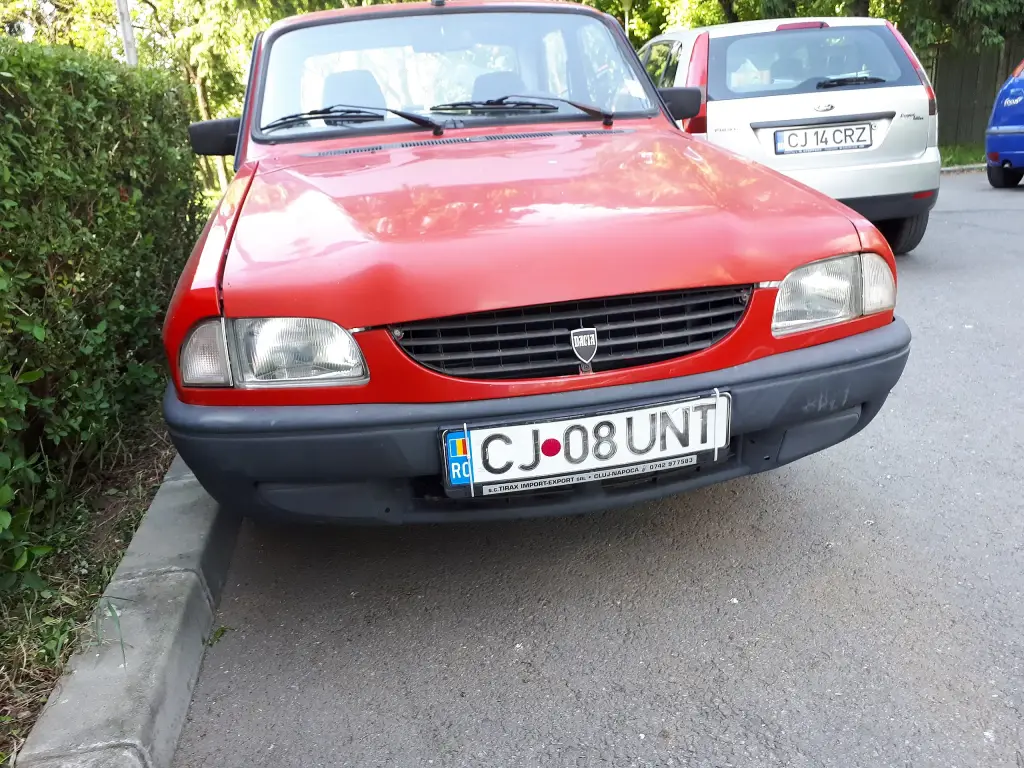
The Dacia 1310 was the revised Dacia 1300 presented at the 1979 Bucharest show and renamed 1310 in 1982. It stayed in production until 2004, when the Logan replaced it, and was sold as a saloon, an estate, a liftback and a coupé.
Dacia 1310 at a glance
| Maker | Dacia, Mioveni (Pitești) |
|---|---|
| Presented | 1979, Bucharest motor show |
| Named 1310 | 1982 |
| Production | 1979–2004 (saloon and estate); 2006 for the pick-up range |
| Built with the 1300 | 2,278,691 cars |
| Engine at launch | 1,289 cc, 56 hp at 5,250 rpm, 94 N·m |
| Bodies | saloon, estate, 1320 liftback, 1410 Sport coupé |
| Facelifts | 1983–84, 1989, 1993, 1999 |
| Last version | “Berlina” and “Break”, Euro 2 |
| Price in 2004 | €4,100 saloon, €4,250 estate |
| Replaced by | Dacia Logan, 2004 |
Based on one source, the English Wikipedia article on the Dacia 1310.
History of the Dacia 1310
Pre-facelift (1979)
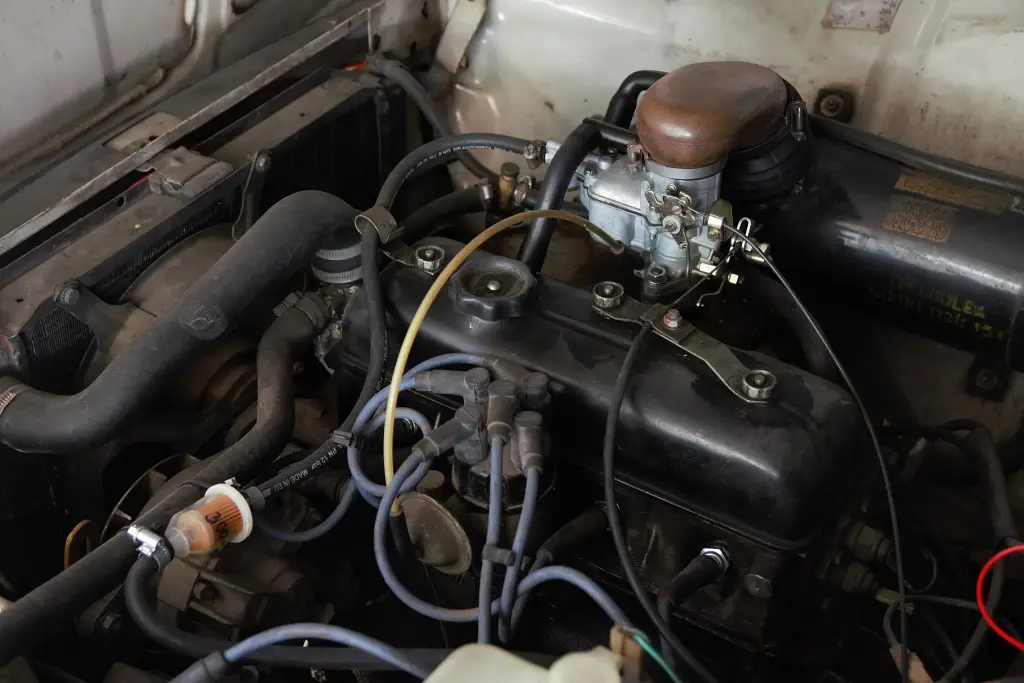
After the licence to build the 1300 expired in 1978, Dacia restyled the car and renamed it 1310. The new model was shown in the autumn of 1979 at the EREN exhibition in Bucharest as the 1980 model. The front was completely redesigned, with a new fascia, four round headlights and higher bumpers that incorporated the turn signals; at the rear the lamps were combined in a single block. Inside there was a radio, a rear-view mirror, an electric windscreen washer, dual-circuit brakes, headrests and 8 cm more space for rear passengers. The compression ratio went from 8.5:1 to 9:1, and the 1,289 cc engine produced 56 hp at 5,250 rpm with 94 N·m of torque. The company counted over 56 improvements.
Facelifts of 1983 and 1989
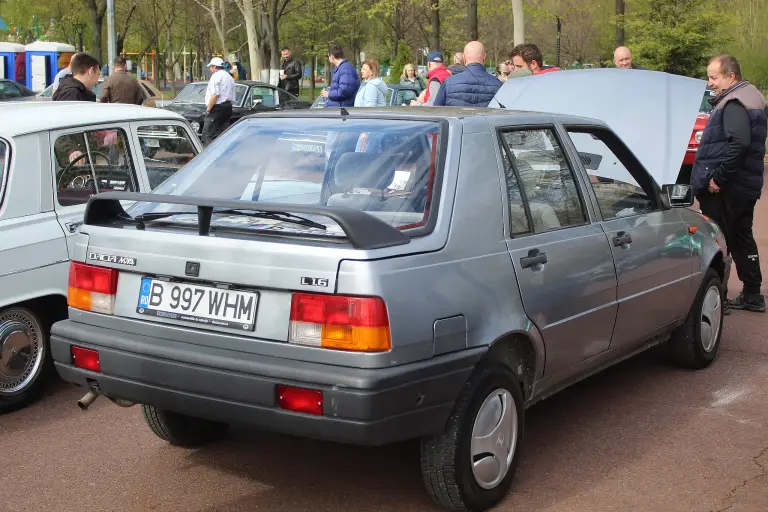
In 1983 the whole range was facelifted for the 1984 model year, and the 1410 Sport coupé went on sale after being shown in 1979 and built from 1981. It was made at the Dacia service centre in Brașov, first exhibited as the Brașovia, with a wheelbase and length about 200 mm shorter and a roof 135 mm lower. Its 1,397 cc engine, with a wider bore, 9.8:1 compression and a new carburettor, gave 65 hp at 5,250 rpm; the car reached about 152 km/h and 100 km/h in 16.2 seconds. In 1987 the 1320 liftback was added, and in 1989 a new generation of the 1310 appeared in saloon and estate form, a light modification with new headlights.
1990s and the end
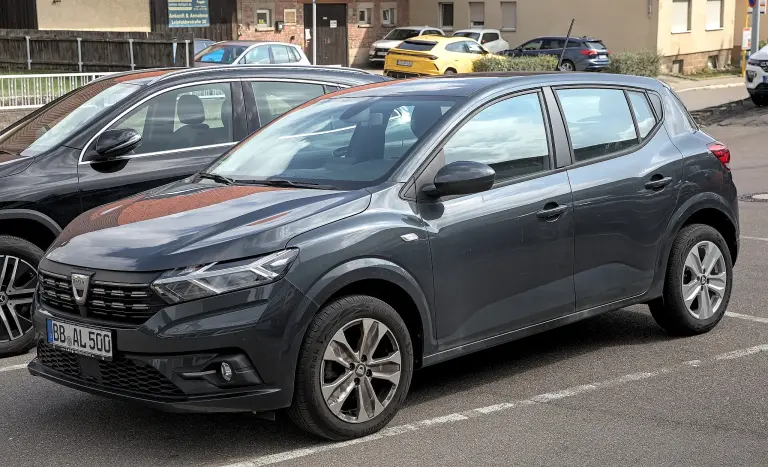
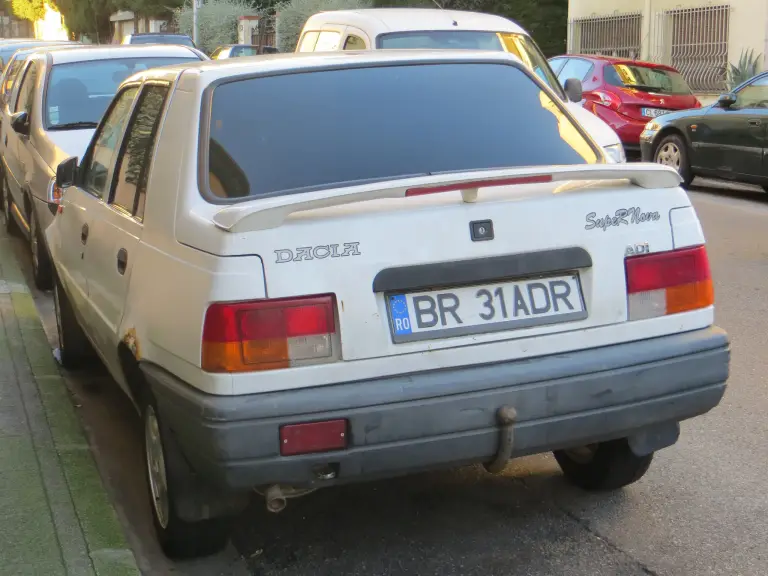
The 1325 Liberta liftback followed in 1990, together with a van, and the fully facelifted 13xx range came in 1993. The Nova was meant to replace the 1310 but never did: it was more expensive, smaller inside and offered only as a liftback, so Dacia facelifted the 1310 again in 1999. The last cars were simply called Berlina and Break, with fuel injection and a catalytic converter meeting Euro 2. By then the car that had started life as a mid-size saloon was a compact one. The Berlina and Break cost €4,100 and €4,250 in 2004, and production of the saloon ended on 21 July 2004; the Logan took over in the same year.
Design and features
- Four round headlights: the 1979 restyling gave the car a completely new front with higher bumpers carrying the indicators.
- Better equipment: radio, electric washer, dual-circuit brakes, headrests and a larger rear compartment.
- Higher compression: 9:1 instead of 8.5:1, for more power and lower fuel consumption.
- Long life: four facelifts and 25 years of production, with a Euro 2 version at the end.
Dacia 1310 versions
- 1310 Berlina: the four-door saloon, the main version.
- 1310 Break: the estate.
- 1320 (1987): a liftback on the same platform.
- 1325 Liberta (1990–1996): a second liftback version.
- 1410 Sport: the two-door coupé with a 1,397 cc engine, built largely by hand in small numbers.
- 1310 van (1990): a commercial version of the estate.
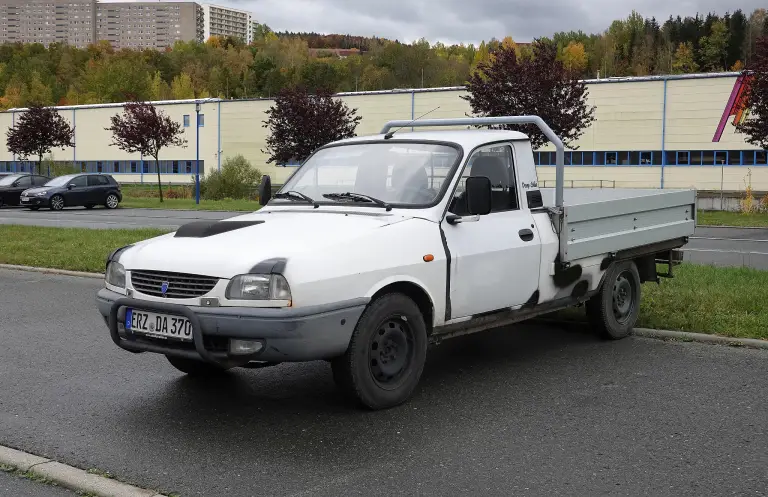
The 1310 was preceded by the Dacia 1100 and replaced by the Dacia Logan. The Dacia Pick-Up used the same platform. More in the Dacia collection.
Video: Dacia 1310 – Prezentare Interior, Exterior, Motor
Video on YouTube.
Sources
- Dacia 1310, English Wikipedia: restyling, engines, versions, end of production