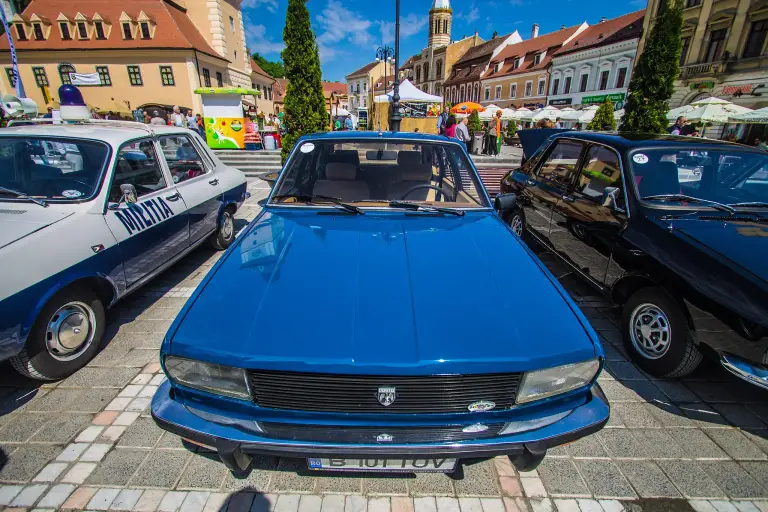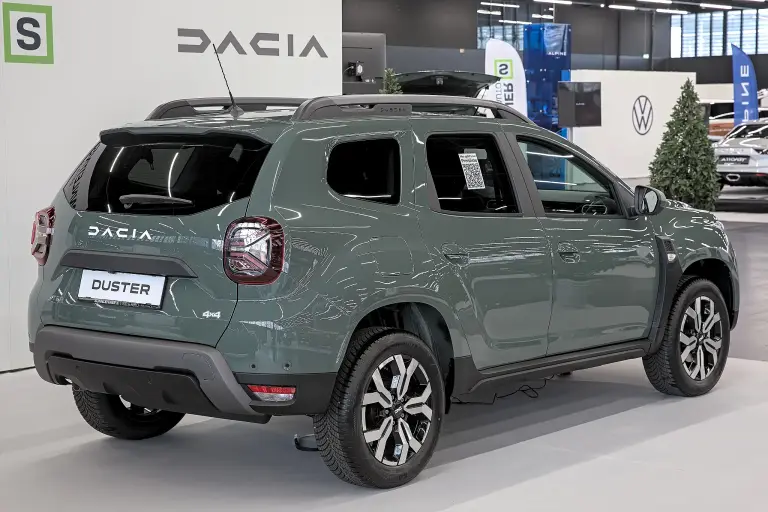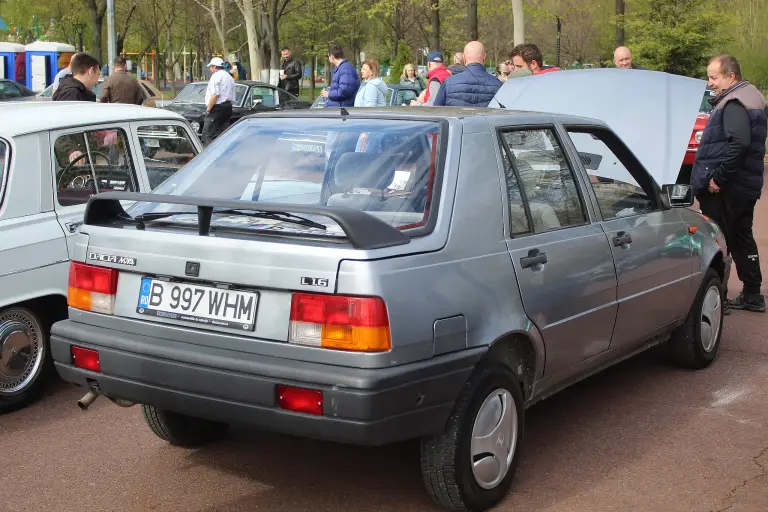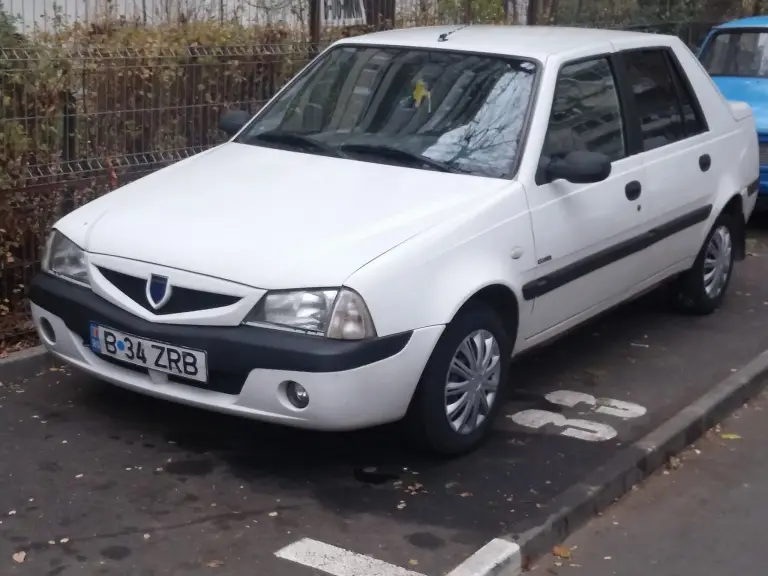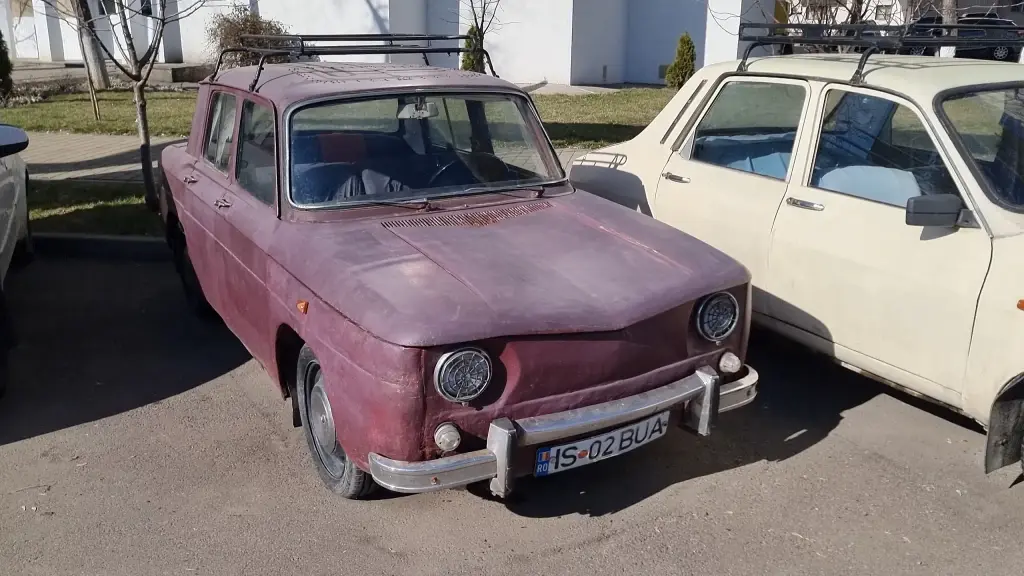
The Dacia 1100 was the first passenger car produced by the Romanian manufacturer Dacia. It was a knock-down kit assembly of the French Renault 8, built from 1968 to 1971, and 37,546 cars left the new factory at Pitești.
Dacia 1100 at a glance
| Maker | Automobile Dacia, Pitești |
|---|---|
| Production | 1968–1971 |
| Built | 37,546 |
| Based on | Renault 8 (CKD kits) |
| Engine | 1,108 cc Renault Cléon-Fonte, 46 hp at 4,600 rpm |
| Layout | rear engine, rear-wheel drive |
| Top speed | 132 km/h |
| Gearbox | floor-mounted lever |
| Suspension | independent on all four wheels |
| Brakes | discs on both axles |
| Price at launch | about 55,000 lei |
| Sports version | 1100S, 65 hp, fewer than 100 built |
History of the Dacia 1100
In 1965 Nicolae Ceaușescu decided that the foreign currency spent on imported cars had to be reduced. With no modern domestic industry able to develop a new car quickly, the party launched a tender for a mid-range car with a 1,000–1,300 cc engine and an annual production of 40,000–50,000 units. Alfa Romeo, Fiat, Morris, Peugeot and Renault all entered. On 6 September 1966 the Romanian state signed a framework contract with Régie Nationale des Usines Renault in Bucharest: the French company would launch its new model in Romania at the same time as in France, and until that car, the Renault 12, was ready, another model from its range would be built.
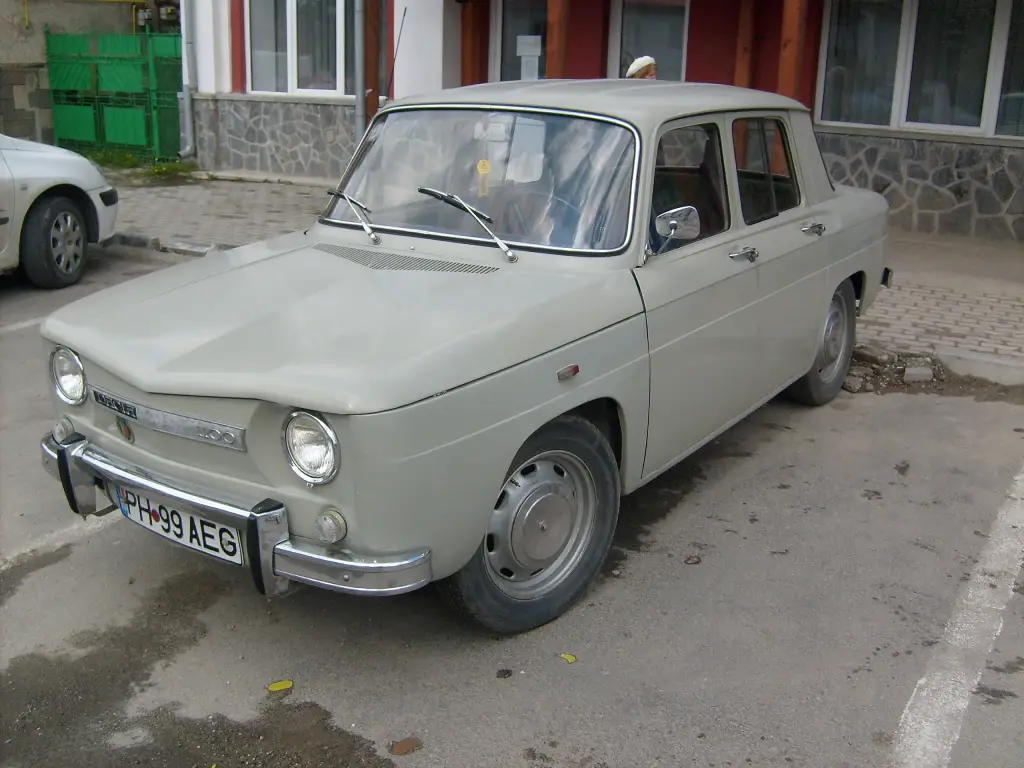
The Renault 16 was at first preferred by the Romanian side, but the final decision went to the Renault 8 Major, whose price was more accessible to Romanian buyers. The new brand was named Dacia, after the Roman name of the country, and the model 1100, after its 1,108 cc engine. The factory was built opposite the Colibași auto parts plant, using hangars put up in 1943 for aviation; construction began in early 1967 with Renault’s help. Idle tests at the 217 workstations started on 1 July 1968 and the first pre-series cars were built on 3 August 1968.
The car was based on the Renault 8, a rear-engined, rear-wheel-drive saloon, and was offered in five colours: turquoise green, garnet red, cream, light grey and blue. At first it was identical to the Renault 8 apart from the badge: large parts came from France and from Valladolid in Spain and were assembled in Romania, while engines and gearboxes arrived complete. From 1969 tyres, the radiator, glass, electrical equipment, upholstery and seats were made in Romania, which kept the cost low and production steady. Sales remained good even after the 1300 was launched in 1969, and the 1100 was built alongside it for two more years.
Design and features
- Renault Cléon-Fonte engine: 1,108 cc, water-cooled and mounted longitudinally in the rear, 46 hp at 4,600 rpm.
- Four-wheel independent suspension: as on the Renault 8, with disc brakes on both axles.
- Low price: about 55,000 lei at launch, when the average net salary in 1968 was 1,139 lei.
- 1100S: a sports version of 1971 with the same engine tuned to 65 hp and four round headlights, used by the national rally team.
Dacia 1100 versions
- 1100 (1968–1971): the standard saloon in five colours.
- 1100S (1971): 65 hp, fewer than 100 built, sold for competitions and to the ministry of the interior.
- Police cars: some cars were delivered to the police with blue lights and sirens.
- Presidential car: the first car out of the factory was given to Nicolae Ceaușescu; it carries plate 1-B-2645 and is kept by the Romanian Automobile Club.
The 1100 was followed by the Dacia 1310, which carried the same Renault 12 platform into the 2000s. More models are in the Dacia collection.
Video: Dacia 1100 reborn
Video on YouTube.
Sources
- Dacia 1100, English Wikipedia: licensing agreement, production, equipment
- Dacia 1100, Romanian Wikipedia: the 1100S, localisation, the first car