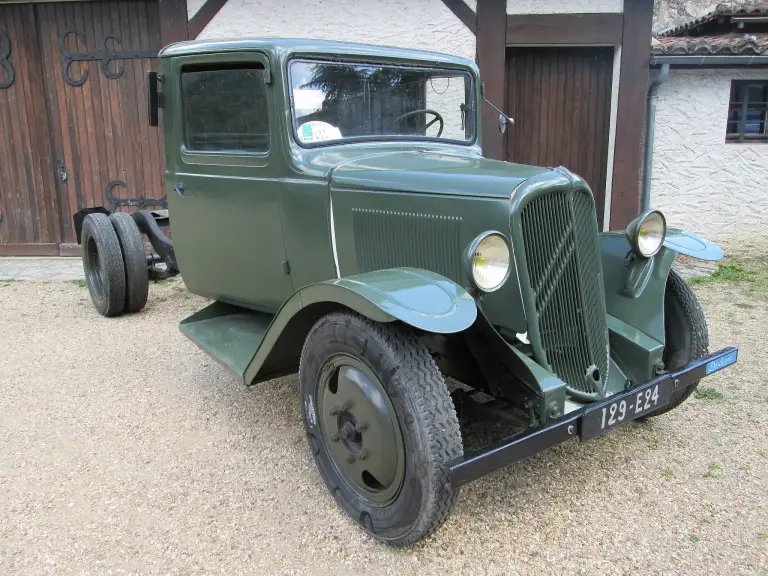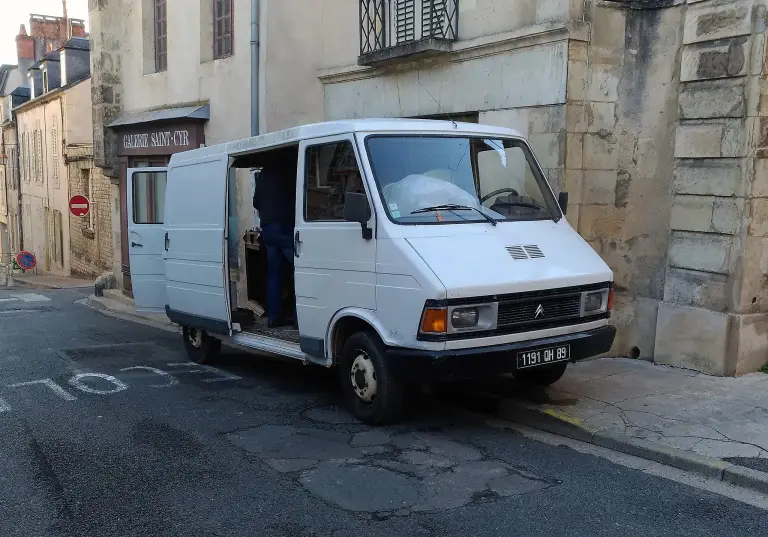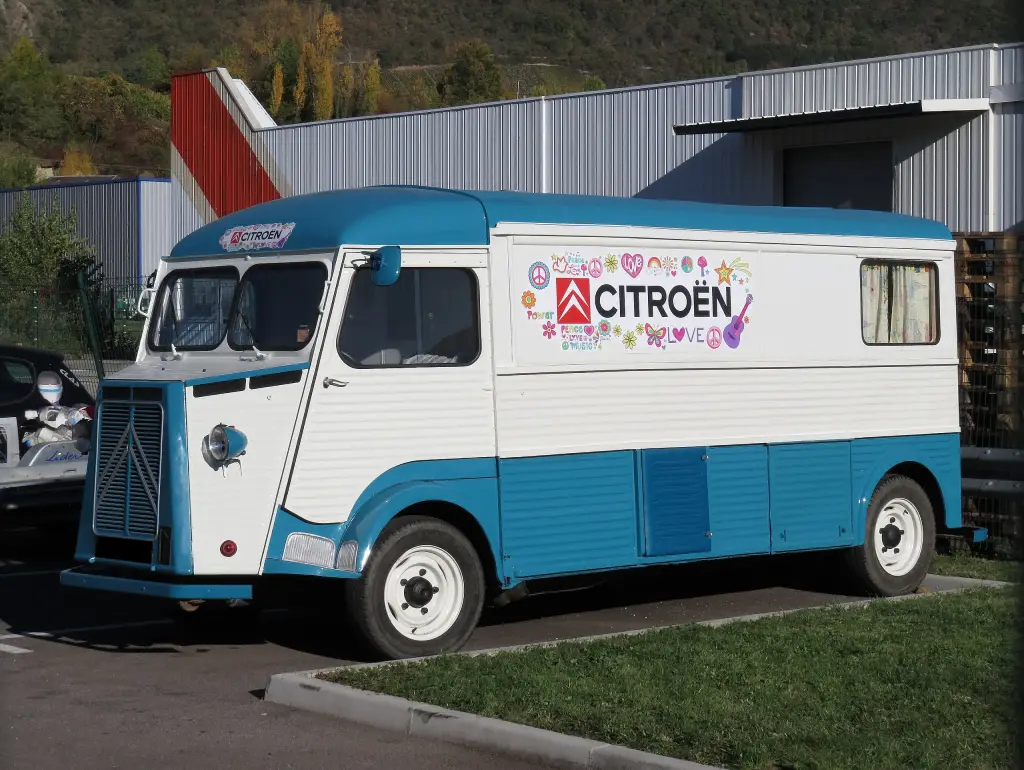
The Citroën H-Type vans, most often called the HY, were a series of panel vans and light trucks built for 34 years, from 1947 through 1981. They are known for their industrial design, with many corrugated metal outer panels used to save material, weight and cost.
Citroën H Van at a glance
| Maker | Citroën, France and Belgium |
|---|---|
| Production | 1947–1981 |
| Built | 473,289 |
| Types | H, then HW–HZ, the majority HY; HP was the pickup |
| Body | unitary, frameless, corrugated steel panels |
| Layout | front-wheel drive, independent front suspension |
| Loading height | flat floor close to the ground, standing height of about 180 cm |
| Length | 4.26 m standard, 5.24 m long wheelbase |
| Engine | 1.9-litre four of 35 hp at first, type 72 of 45 hp from 1963 |
| Diesel | Perkins from 1961, Indenor from 1964 |
| Top speed | just under 100 km/h |
Based on one source (English Wikipedia).
History of the Citroën H Van
1947: a van built like a Junkers
The H-types were developed after the Second World War as simple, low-cost, front-wheel-drive vans using the design philosophy of the 2CV but with a frameless unitary body. Like the 1934 Traction Avant, the H had no separate frame, independent front suspension and front-wheel drive, a combination that gave a commercial vehicle a flat floor very close to the ground and a standing height of about 180 cm. Loading was through an upward-hinged tailgate with lower double half-doors at the rear, and optionally a sliding side door. There were short and long wheelbases and a choice of rear overhang. Early vans were simply Type H, but they were soon distinguished by the last four letters of the alphabet, HW through HZ, with the majority built as HY and HP used for flat-bed pickups.
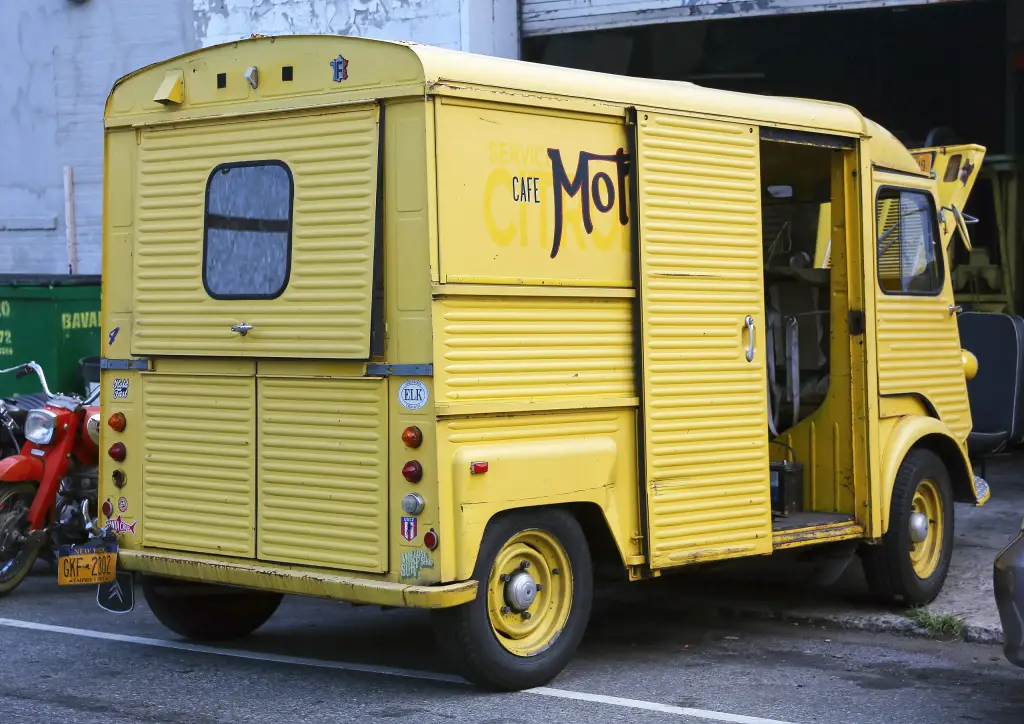
Corrugated panels
The corrugated bodywork used throughout production was inspired by the German aircraft maker Junkers, which had used the technique from the First World War until the 1930s, the three-engined Ju 52 being the last to do so; Henry Ford adopted the same construction for the Ford Tri-Motor. The ribs added strength without weight and needed only simple, low-cost press tools, and the flat panels were braced inside by top-hat box sections set at right angles to the ribs. The welded floor was strong enough to support a horse.
Mechanics
The engine, gearbox and many smaller parts were shared with other Citroëns: the engine and gearbox were nearly identical to those of the Traction Avant and later the DS, mounted with the engine ahead of the gearbox. Headlights came from the 2CV and speedometers from the Traction Avant and later the Ami 6. The derated Traction four and three-speed gearbox, unsynchronised on first, gave a top speed of just under 100 km/h, but the low-slung chassis with little overhang and fully independent suspension made it handle well for a van, especially the short-wheelbase version. The 1.9-litre 11D engine of 35 hp offered more usable power than the 1.2-litre unit of the 1950 Volkswagen Type 2; in late 1963 it was replaced by a smaller-bore type 72 with an alloy crossflow head, 45 hp and 15–20% better economy, and the 1.9 returned in late 1966 for the HY 78 and HZ 78 with 58 hp. Perkins diesels were offered from 1961 and Indenor units from March 1964.
Little changed, widely used
The design changed very little from 1947 to 1981. Vans left the factory in only three forms: the enclosed van, a pickup and a stripped body for outside coachbuilders, which became cattle trucks and other conversions. In September 1963 the narrow vertical rear window became a square one, and the bonnet gained two rectangular air intakes; in early 1964 the split windscreen was replaced by a single one, and later that year the narrow chevrons gave way to the pointed style. Most vans were sold in France, Belgium and the Netherlands, a very small number of right-hand-drive versions were assembled at Slough, and after 1964 the Chicken tax kept the H Van out of the United States.
Design and features
- Corrugated steel: Junkers-inspired ribs that stiffened the body without adding weight.
- Front-wheel drive: with independent front suspension and a low, flat floor.
- Standing room: about 180 cm of height inside the load area.
- Unitary body: no separate frame, as on the Traction Avant.
- Engine family: the Traction Avant four, later the type 72 and 1.9-litre units with up to 58 hp.
Citroën H Van versions
- HY: the standard van and the most numerous type.
- HW to HZ: the later lettered variants, with engines and equipment changes.
- HP: the flat-bed pickup.
- Long wheelbase: 5.24 m overall, against 4.26 m for the standard van.
- Coachbuilt bodies: cattle trucks and other conversions on the stripped body.
The H Van came before the C35 in Citroën’s van range, and it used engines from the Traction Avant. More vehicles are in the Citroën collection.
Video: Citroen H Van conversion
Video by Tudor Catering Trailers (Tudor Trailers) on YouTube.
Sources
- Citroën H Van, English Wikipedia: design, corrugation, mechanics, engines, production