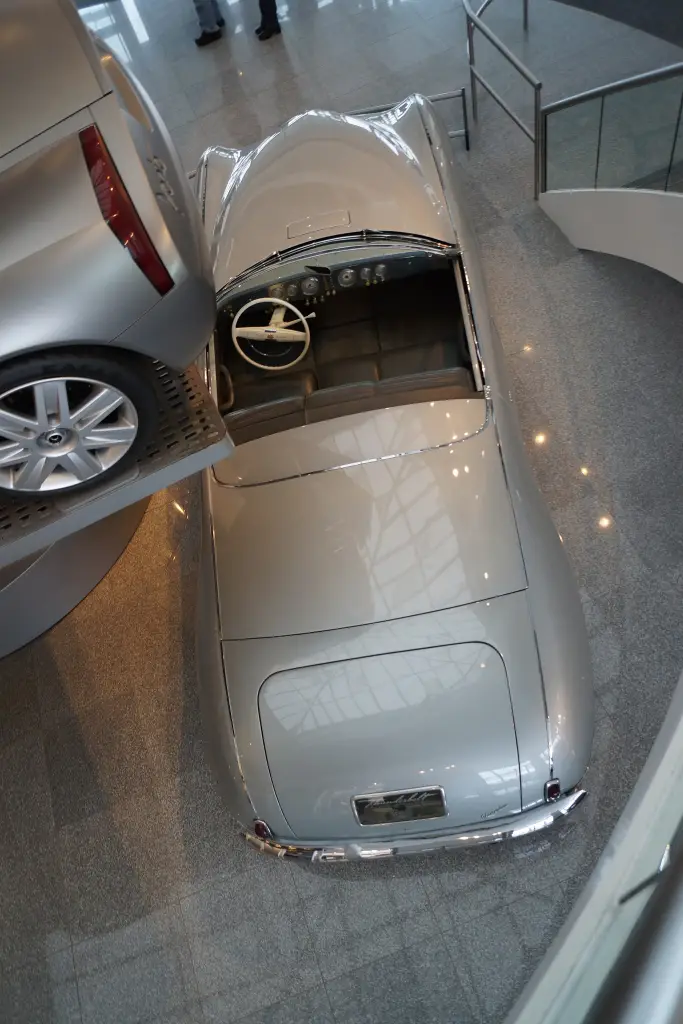
The Chrysler Thunderbolt was a 1941 show car, one of the last projects of the LeBaron coachworks for Chrysler. A sleek roadster with concealed headlights, a one-piece retractable metal roof and no conventional grille, it shared the Chrysler New Yorker’s chassis and mechanicals and only six were built.
Chrysler Thunderbolt at a glance
| Year | 1941 |
|---|---|
| Type | show roadster with retractable hardtop |
| Body by | LeBaron, a Briggs subsidiary |
| Built | six |
| Chassis | Chrysler New Yorker, 127 in (3,226 mm) wheelbase |
| Styling | Alex Tremulis |
| Headlights | concealed |
| Roof | one-piece retractable metal hardtop |
| Grille | none; air taken from below the bumper |
| Features | electro-hydraulic doors, electric windows |
| Related car | 1941 Newport Phaeton |
The Thunderbolt has no Wikipedia article of its own and is described within the article on the Chrysler Newport, the only source used here.
History of the Chrysler Thunderbolt
A LeBaron farewell
The Thunderbolt was one of the last projects LeBaron undertook for Chrysler before the coachbuilder’s identity faded into the company. LeBaron had supplied custom bodies for Chrysler’s Imperial line as well as for Duesenberg and Cadillac, and its final Chrysler work produced two show cars: the Newport Phaeton, a super-streamlined dual-cowl phaeton with an aluminium body, and the 1941 Thunderbolt, a sleek roadster with concealed headlights and a retractable metal hardtop styled by Alex Tremulis, who later styled part of the 1948 Tucker. Only six of each were made.
Engineering and style
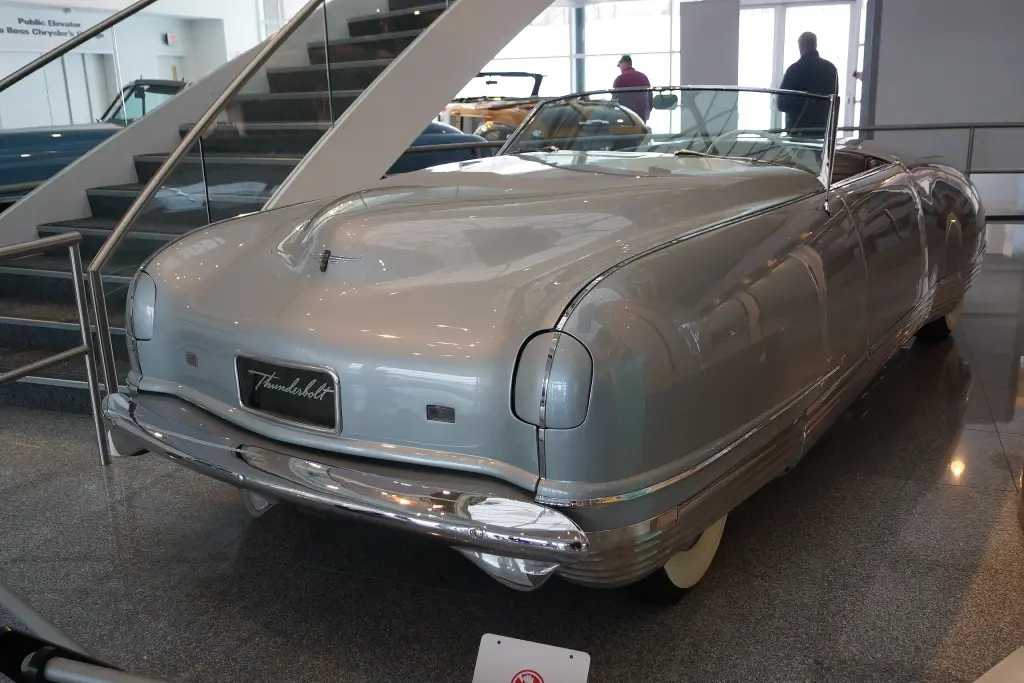
The Thunderbolt shared the 127-inch chassis and mechanicals of the Chrysler New Yorker, which was needed to store the one-piece retractable top in a rear compartment; the Newport Phaeton used the same chassis but a canvas top. The Thunderbolt had no traditional grille and instead drew air to the radiator from below the bumper, in a bottom-breather arrangement. Futuristic features shared with the Newport Phaeton included electro-hydraulic doors, electric windows and covered headlights, and the interior was especially plush, with leather upholstery and a bespoke aluminium dashboard. The roundness of both cars shows the influence of the “ponton” styling of the period.
Design and features
- Retractable metal roof: a one-piece top that folded into a compartment behind the seats.
- Concealed headlights: hidden behind body panels, as on the contemporary Cord.
- No conventional grille: the radiator breathed from below the bumper.
- Electro-hydraulic doors and electric windows: show-car technology for 1941.
- LeBaron coachwork: hand-built aluminium and leather by the coachbuilder Chrysler later bought.
Chrysler Thunderbolt versions
- Thunderbolt (1941): six cars built, sharing the New Yorker chassis with the Newport Phaeton.
The Thunderbolt was the sister show car of the Newport Phaeton, was bodied by the coachbuilder behind the LeBaron name and shared its chassis with the Chrysler New Yorker. More cars are in the Chrysler collection.
Video: 1941 Chrysler Thunderbolt concept
Video by kokuz0512 on YouTube.
Sources
- Chrysler Newport, English Wikipedia: Thunderbolt described with the Newport Phaeton
- Chrysler Thunderbolt, Wikimedia Commons: photographs