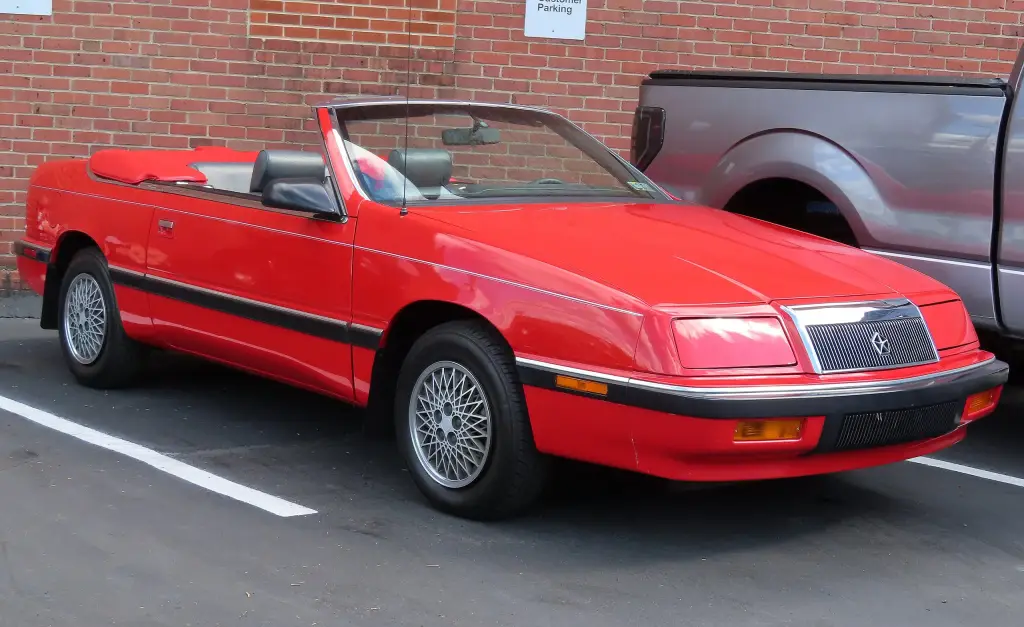
The Chrysler LeBaron was the name Chrysler used on five different cars between 1977 and 1995: sedans, coupés, wagons, a hatchback and a long-running convertible. The name came from the LeBaron coachbuilding house, whose bodies Chrysler had bought with Briggs Manufacturing, and the last LeBaron was built in 1995.
Chrysler LeBaron at a glance
| LeBaron name used | 1931–1941 and 1977–1995 |
|---|---|
| Imperial LeBaron | 1957–1975 |
| 1977–1981 | M-body sedan, coupe and wagon |
| 1982–1988 | K-body sedan, coupe, convertible and wagon |
| 1985–1989 | H-body LeBaron GTS hatchback |
| 1987–1995 | J-body personal luxury coupe and convertible |
| 1990–1994 | AA-body mid-size sedan |
| M-body wheelbase | 112.7 in (2,863 mm) |
| Builders | LeBaron of Bridgeport, later Briggs of Detroit |
| Replaced by | Cirrus and Sebring, 1995 |
History of the Chrysler LeBaron
A coachbuilder’s name
LeBaron was one of the prominent coachbuilders of the 1920s and 1930s, founded in Bridgeport, Connecticut, in 1920 by Thomas L. Hibbard and Raymond H. Dietrich and bought by Briggs Manufacturing of Detroit in 1926. It supplied custom bodies for Chrysler’s Imperial line as well as for Duesenberg and Cadillac, and its last projects for Chrysler were the Chrysler Newport Phaeton and the 1941 Chrysler Thunderbolt roadster with concealed headlights and a retractable metal roof, styled by Alex Tremulis; only six of each were made. When Chrysler bought Briggs in 1953 and spun Imperial off as a separate make in 1955, the LeBaron name became the top-of-the-line Imperial from 1957 to 1975.
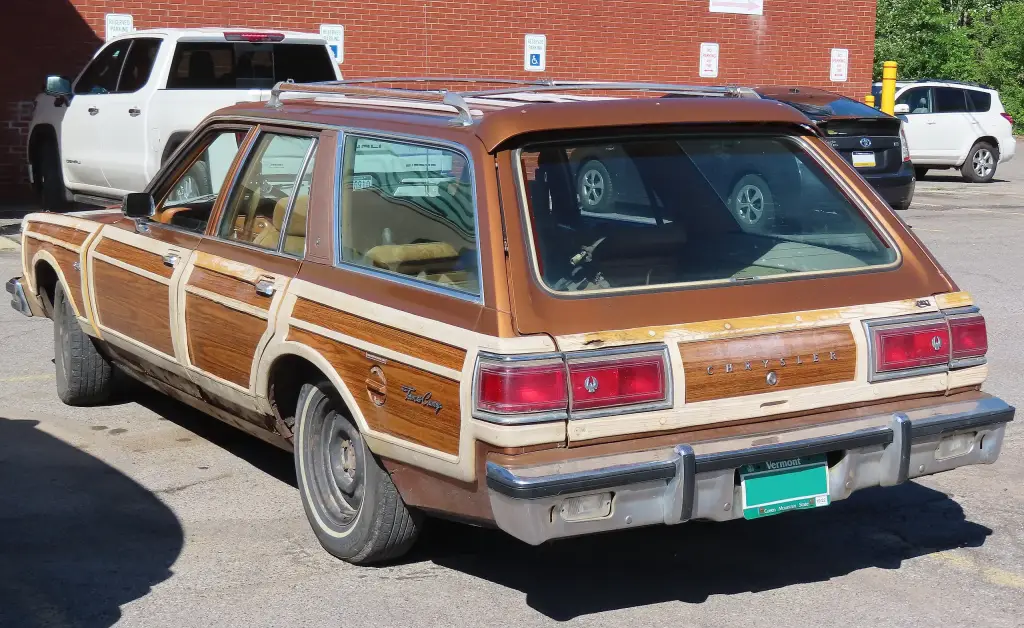
The 1977 LeBaron
The name returned in 1977 after a year’s break, on a car released in response to the Cadillac Seville and Lincoln Versailles and the smallest vehicle Chrysler had ever sold at that point. Where Cadillac and Lincoln offered their mid-size cars only as four-door sedans, Chrysler also sold a two-door LeBaron coupé, and a Town & Country station wagon joined for 1978. The car shared its body with the Dodge Diplomat and Plymouth Caravelle on the M platform with a 112.7-inch wheelbase, and its sedan and wagon shared much of their roofline with the Dodge Aspen and Plymouth Volaré.
Five cars in eighteen years
Chrysler applied the name across five different cars: the 1977–1981 M-body line; the 1982–1988 K-body sedan, coupé, convertible and wagon; the 1985–1989 H-body LeBaron GTS hatchback; the 1987–1995 J-body personal luxury coupé and convertible; and the 1990–1994 AA-body mid-size sedan. The J-body convertible in particular stayed in production long after the sedans had changed, which made the LeBaron one of Chrysler’s longest-running nameplates. The last LeBaron was built in 1995 and the name was replaced by the Cirrus and Sebring.
Design and features
- Coachbuilt heritage: the name came from the LeBaron bodyworks that supplied Chrysler’s Imperial line.
- Five different cars: M, K, H, J and AA platforms all carried the name.
- Smallest Chrysler: the 1977 LeBaron was the smallest car Chrysler had sold up to then.
- Convertible longevity: the J-body convertible remained on sale into 1995.
- Broad choice: sedans, coupés, wagons, a hatchback and convertibles.
Chrysler LeBaron versions
- M-body (1977–1981): sedan, coupe and Town & Country wagon, shared with the Dodge Diplomat.
- K-body (1982–1988): sedan, coupe, convertible and wagon.
- LeBaron GTS (1985–1989): the H-body five-door hatchback.
- J-body (1987–1995): personal luxury coupe and convertible.
- AA-body (1990–1994): the mid-size sedan.
The LeBaron replaced the Cordoba as Chrysler’s smaller luxury car, shared its era with the Laser and was itself replaced by the Cirrus and the Sebring. More cars are in the Chrysler collection.
Video: 1990 Chrysler LeBaron V6 convertible full tour and start up
Video by Cool Stuff in Weird Cars on YouTube.
Sources
- Chrysler LeBaron, English Wikipedia: coachbuilder history, platforms, models
- Chrysler LeBaron, Wikimedia Commons: photographs