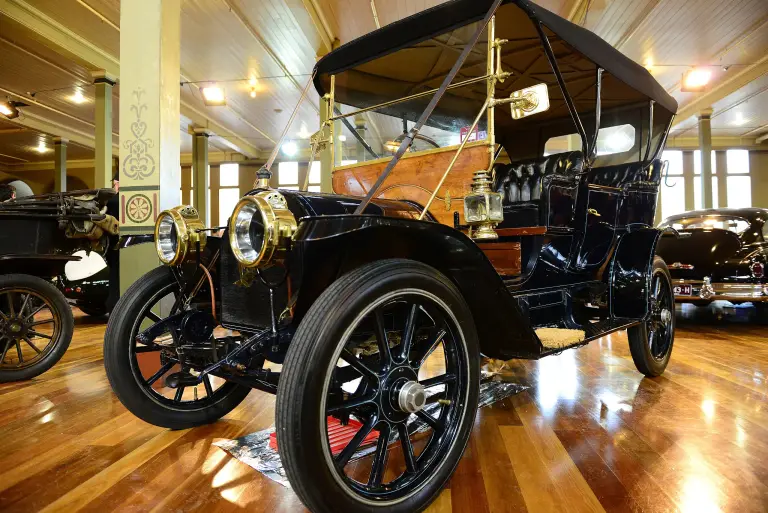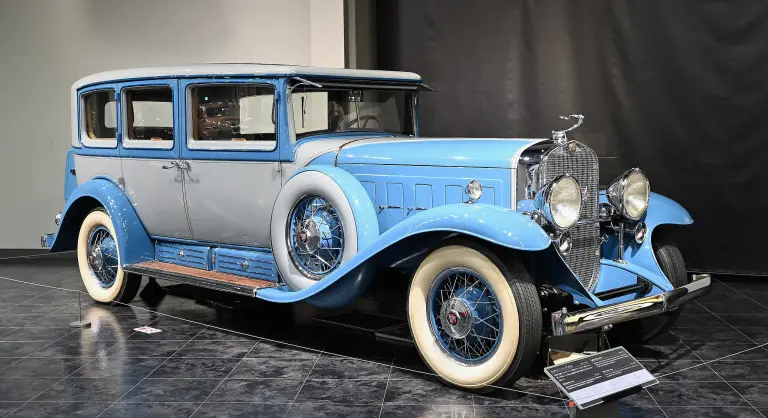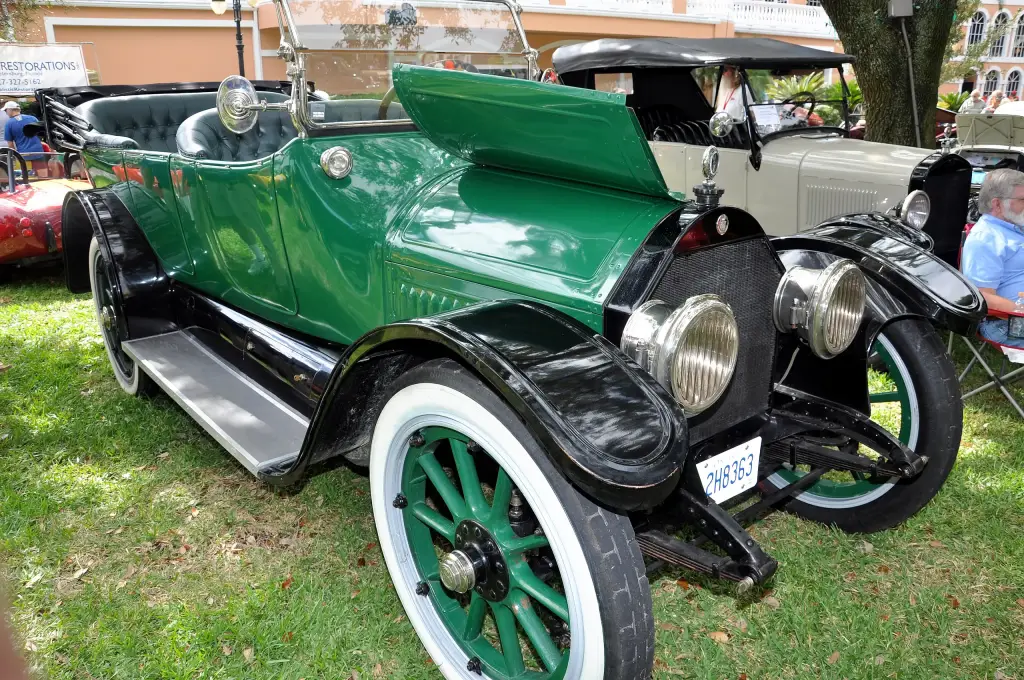
The Cadillac Type 51 was introduced in September 1914 as a 1915 model and was Cadillac’s first V8 automobile, replacing the four-cylinder Model 30. It used the new GM A platform and was the first left-hand-drive Cadillac, although right-hand drive remained available.
Cadillac Type 51 at a glance
| Maker | Cadillac, General Motors |
|---|---|
| Introduced | September 1914, as a 1915 model |
| Predecessor | Cadillac Model Thirty |
| Platform | GM A platform |
| Wheelbase | 122 in (3,099 mm); 145 in (3,683 mm) chassis for custom work |
| Engine | L-head V8, one of the first mass-produced V8s |
| Drive | left-hand drive, a Cadillac first |
| Bodies | by Fisher Body |
| Top price, 1915 | $3,600 for the Berline Limousine |
| Related types | 53 (1916), 55 (1917), 57 (1918-1919), 59 (1920-1921), 61 (1922-1923) |
| Replaced by | Cadillac V-63 in 1924 |
Based on one source: the English Wikipedia article on the Type 51 series.
History of the Cadillac Type 51
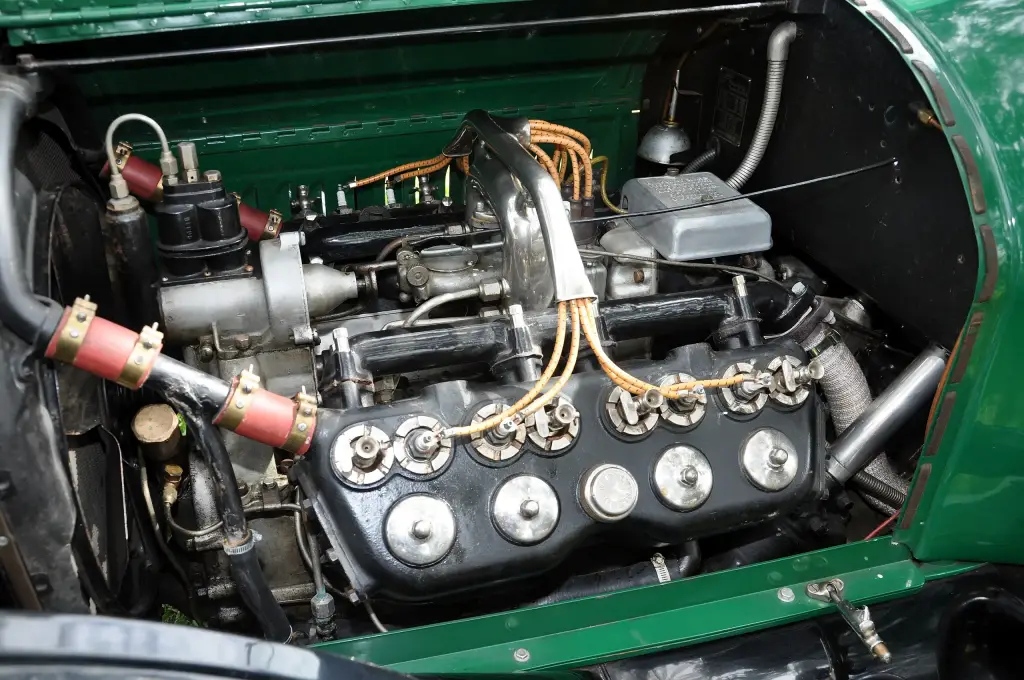
The Type 51 was Cadillac’s first V8 and one of the first V8 engines ever mass-produced, a substantial differentiator for the marque at a time when GM wanted Cadillac to compete with established luxury makes such as Packard and its Twin Six. It was built at the Cass Street and Amsterdam Avenue factory in Detroit with coachwork by Fisher Body, and the chassis could be bought separately and sent to the customer’s chosen coachbuilder. Wheelbases ran from 122 inches at the low end to 145 inches as the longest. The most expensive catalogue body for 1915 was the Berline Limousine at $3,600.
Type 53 and the modern layout
For 1916 the Type 53 introduced the control layout of the modern automobile: the gear lever and handbrake in the middle of the front seats, a key-started ignition, and three pedals for clutch, brake and throttle in the modern order. Its V8 produced 77 hp. Nine body styles were offered, and from 1916 to 1919 Cadillac also listed three commercial platforms: Police Patrol at $2,955, Ambulance at $3,455 and Hearse at $3,880. In May 1916 Erwin “Cannonball” Baker and William Sturm drove a Cadillac roadster from Los Angeles to New York in 7 days, 11 hours and 52 minutes.
Type 55 and the war
The 1917 Type 55 brought appearance changes and a cast aluminium body for the two-door four-passenger coupe, and the list of body styles grew to twelve. The Berline coachwork was renamed Imperial because Cadillac did not want its product names associated with Imperial Germany during the First World War. That July the United States Army chose the Type 55 Touring after tests on the Mexican border, and 2,350 cars were supplied to officers of the American Expeditionary Force in France. The Type 57 of 1918 added a seven-passenger Suburban on a 132-inch wheelbase and detachable cylinder heads, and the Types 59 and 61 carried the series through to 1923, when the V-63 replaced it.
Design and features
- First Cadillac V8: a mass-produced L-head V8 in a luxury car.
- Left-hand drive: the first Cadillac so built, with right-hand drive kept as an option.
- Modern controls: from the 1916 Type 53, with a key starter and three pedals in the modern order.
- Coachbuilt choice: rolling chassis sold separately for custom bodies.
Cadillac Type 51 versions
- Type 51 (1915): the first V8, on a 122-inch wheelbase.
- Type 53 (1916): the new control layout and commercial platforms.
- Type 55 (1917): the US Army staff car, 2,350 supplied.
- Type 57 (1918-1919): seven-passenger Suburban and detachable heads.
- Types 59 and 61 (1920-1923): the last of the series before the V-63.
The Type 51 replaced the Model Thirty and was replaced by the V-63; the later eight-cylinder cars are described in the V8 article. More Cadillacs are in the Cadillac collection.
Video: 1918 Cadillac Type 57 Victoria – Jay Leno’s Garage
Video by Jay Leno’s Garage on YouTube.
Sources
- Cadillac Type 51, English Wikipedia: types 51-61, engines, bodies, prices, army order