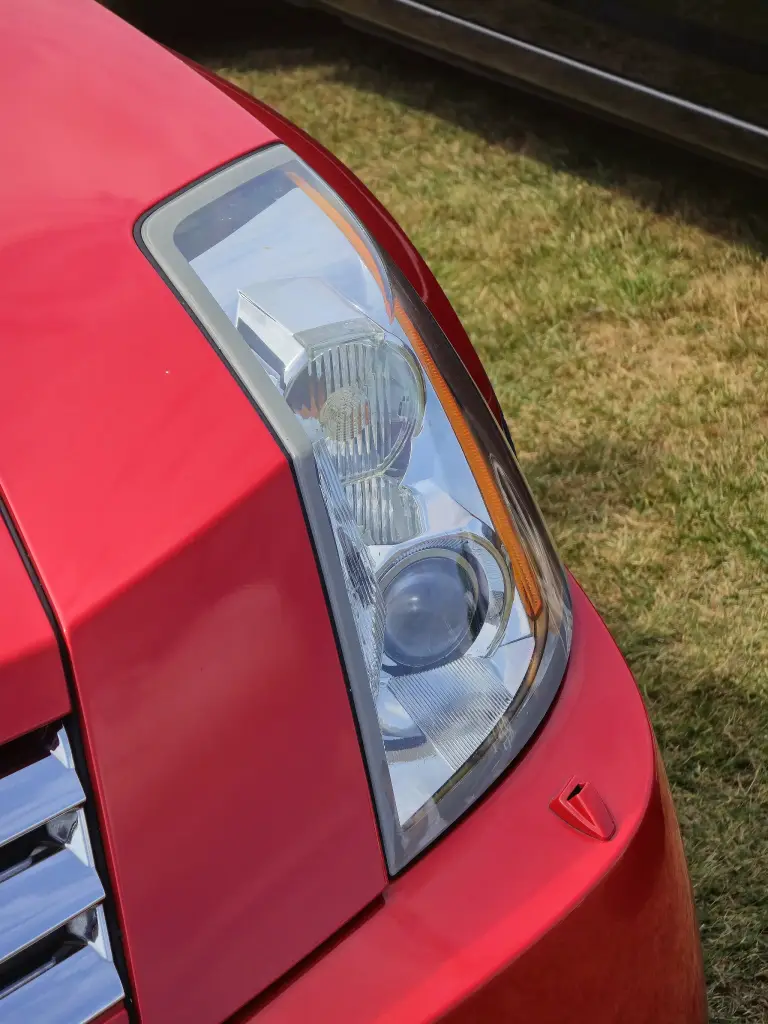
The Cadillac XLR was a two-seat luxury roadster with a power retractable hardtop, built from 2003 to 2009 over a single generation. It was introduced at the 2003 Detroit auto show as a halo model for Cadillac, with styling inspired by the 1999 Evoq concept.
Cadillac XLR at a glance
| Maker | Cadillac, General Motors |
|---|---|
| Production | 2004-2009 model years, to 31 March 2009 |
| Body | two-seat roadster with power folding hardtop |
| Platform | GM Y platform, shared with the C6 Corvette |
| Assembly | Bowling Green, Kentucky |
| Engine | 4.6 L Northstar V8, 320 hp (239 kW) |
| XLR-V engine | supercharged 4.4 L Northstar, 443 hp |
| Transmissions | five-speed 5L50, later six-speed 6L80 automatic |
| Roof operation | under 30 seconds, 2.1 m of clearance |
| Price at launch | $75,385 |
| Price, 2009 | $86,215 |
| XLR-V price at launch | $97,485 |
Based on one source: the English Wikipedia article on the XLR.
History of the Cadillac XLR
The XLR shared much of its construction with the C6 Chevrolet Corvette, which arrived a year later: the Y platform, hydroformed steel perimeter side rails, a folded steel backbone, tubular front and rear bulkheads, an aluminium windshield structure, magnesium steering-column mounts, aluminium and balsawood composite floorboards and composite bodywork. Its engine, bodywork, interior, suspension settings and folding roof were unique. Both cars were built at Bowling Green in Kentucky, with the XLR on a dedicated station beside the Corvette line, and the XLR entered production a year before the Corvette.
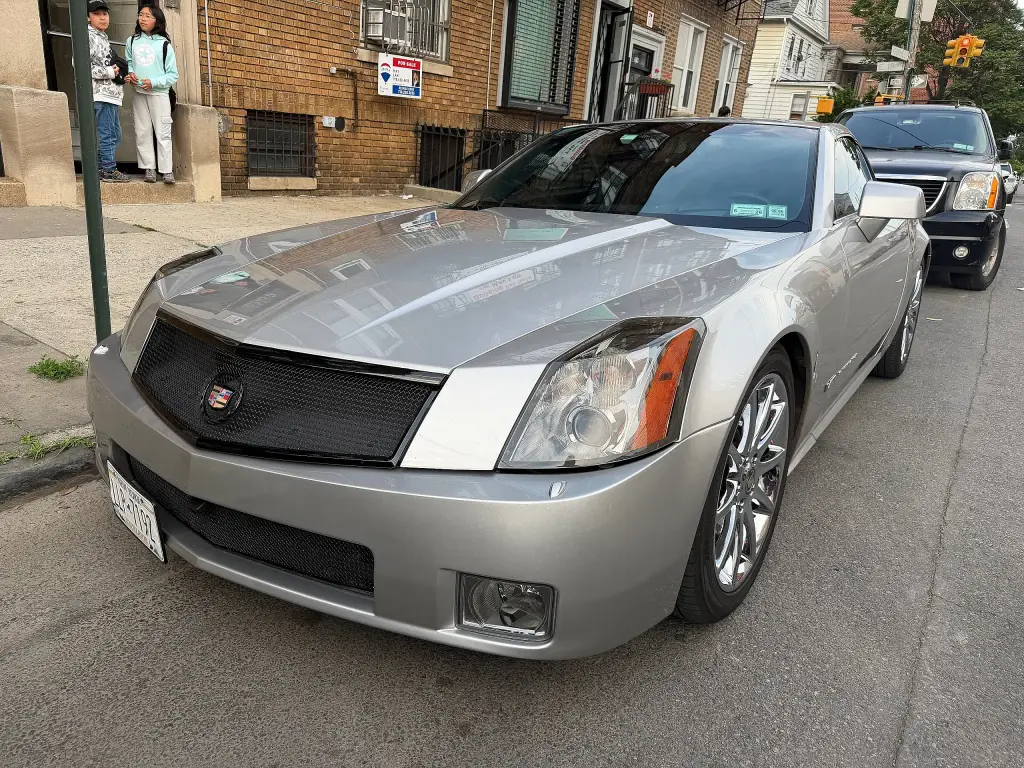
Equipment
The XLR was the first production Cadillac with radar-based adaptive cruise control and with seats that were both heated and cooled, and it was nominated for the North American Car of the Year award for 2004. It had Bulgari-designed instruments, a head-up display, adaptive Magnetic Ride Control suspension with magneto-rheological dampers, a rear-mounted transmission and near 50:50 weight distribution. Standard and optional equipment included a touchscreen navigation radio with XM satellite radio and voice control, a Bose premium system, HID headlamps, perforated leather seats with driver memory, polished alloy wheels and wood trim. The aluminium and magnesium roof, supplied by Magna Car Top Systems, opened in under 30 seconds and needed 2.1 metres of clearance, cutting boot space from 11.6 to 4.4 cubic feet.
XLR-V and the end
The XLR-V, part of the first-generation V-Series, was previewed in a Super Bowl commercial in February 2005 and shown at the New York auto show that year. It used the supercharged 4.4-litre Northstar of the STS-V in a slightly milder state of tune, with 443 hp and 414 lb-ft, a six-speed automatic, larger brakes from the Corvette Z51 and 19-inch wheels, reaching 60 mph in 4.6 seconds and a limited 155 mph. For 2009 the XLR gained a new front and rear fascia, chrome side vents and an Alcantara headliner. Production ended on 31 March 2009.
Design and features
- Folding hardtop: aluminium and magnesium, opening in under 30 seconds, even by remote.
- Magnetic Ride Control: magneto-rheological dampers reading wheel motion four times per corner.
- Corvette bones: the Y platform and composite body technology of the C6 Corvette.
- Cadillac firsts: adaptive cruise control and heated and cooled seats.
Cadillac XLR versions
- XLR (2004-2009): 320 hp Northstar V8, five-speed then six-speed automatic.
- XLR-V (2006-2009): 443 hp supercharged V8 with Z51 brakes and 19-inch wheels.
- 2009 update: new fascias, chrome fender vents and Alcantara headliner.
The XLR was Cadillac’s modern roadster after the Allante, and it shared its engine with the STS and Northstar family. More Cadillacs are in the Cadillac collection.
Video: 2009 Cadillac XLR-V Supercharged Start Up and Drive
Video by Saabkyle04 on YouTube.
Sources
- Cadillac XLR, English Wikipedia: platform, equipment, roof, XLR-V, prices