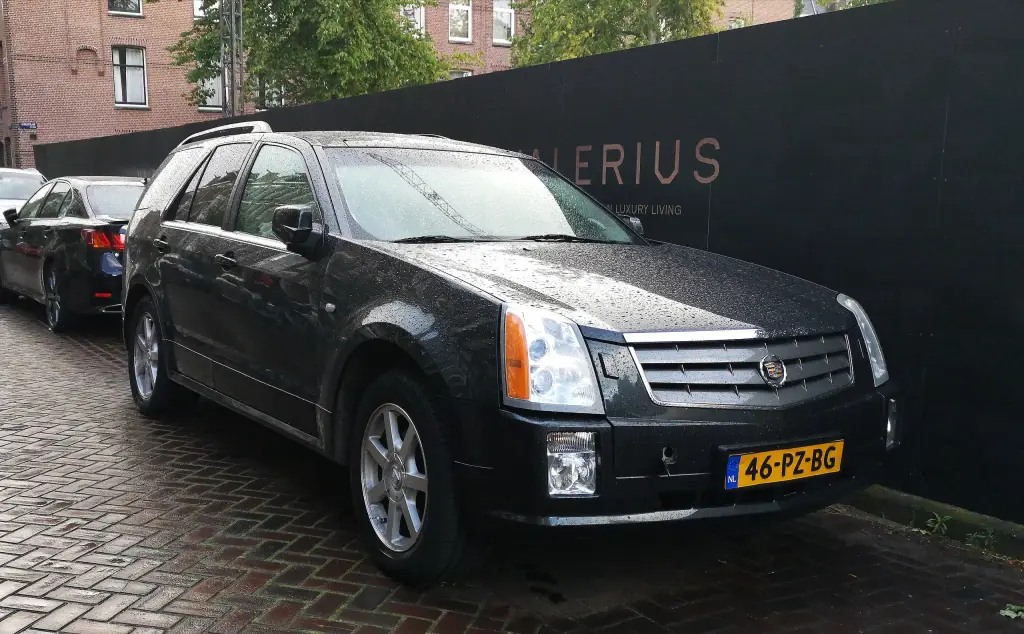
The Cadillac SRX was a mid-size luxury crossover sold over two generations. The first, from 2004 to 2009, was a five-door, three-row, seven-passenger car on the rear-drive Sigma platform; the second, from 2010 to 2016, was a smaller five-passenger crossover that became Cadillac’s best-selling model in the United States.
Cadillac SRX at a glance
| Maker | Cadillac, General Motors |
|---|---|
| Production | 2004-2016 |
| Generations | two |
| First generation | 2004-2009, Sigma platform, seven seats |
| Second generation | 2010-2016, Epsilon II platform, five seats |
| First engines | 3.6 L V6, 255 hp; 4.6 L Northstar V8, 320 hp |
| Second engines | 3.0 L V6; 2.8 L turbo V6; 3.6 L V6 from 2012 |
| Drive | rear- or four-wheel drive; front- or all-wheel drive later |
| Predecessor concept | Cadillac Vizon (2001) |
| Successor | Cadillac XT5 (2016) |
| Award | Car and Driver Five Best Trucks luxury SUV, 2004-2006 |
Based on one source: the English Wikipedia article on the SRX.
History of the Cadillac SRX
The SRX was preceded by the Cadillac Vizon concept, designed by Mike Torpey and shown at the 2001 Detroit auto show, where it rolled down a runway like a fashion model. The Vizon was a soft-road luxury SUV with angular styling, all-wheel drive and a 300 hp Northstar V8, with an interior co-developed with Bulgari. The production car that followed kept the angular look and used the GM Sigma platform, with a longitudinally mounted front engine, the transmission behind it and a rear differential; the four-wheel-drive version added a transfer case and a propeller shaft to a front differential.
First generation (2004-2009)
Engine choices were a 255 hp High Feature V6 and the 4.6-litre 320 hp Northstar V8, with five- or six-speed automatics, rear- or four-wheel drive and MagneRide available. An all-leather interior and curtain side airbags were standard, with heated seats and wood trim standard on the V8. The SRX won Car and Driver’s Five Best Trucks luxury SUV award in 2004, 2005 and 2006, but the Insurance Institute for Highway Safety found the 2005-08 car the worst in its class for driver fatalities. There was no V-Series version. Updates through the years brought a power tailgate and satellite radio for 2006, a six-speed automatic for the V8 in 2007 and the SRX4 tailgate badge for all-wheel-drive cars in 2008.
Second generation (2010-2016)
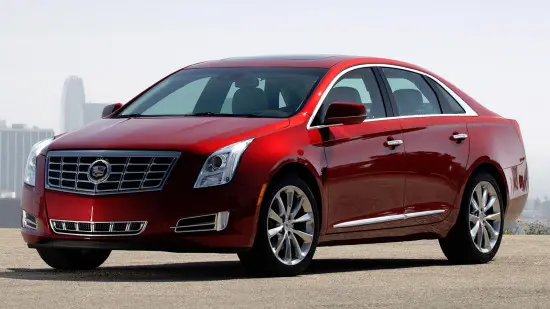
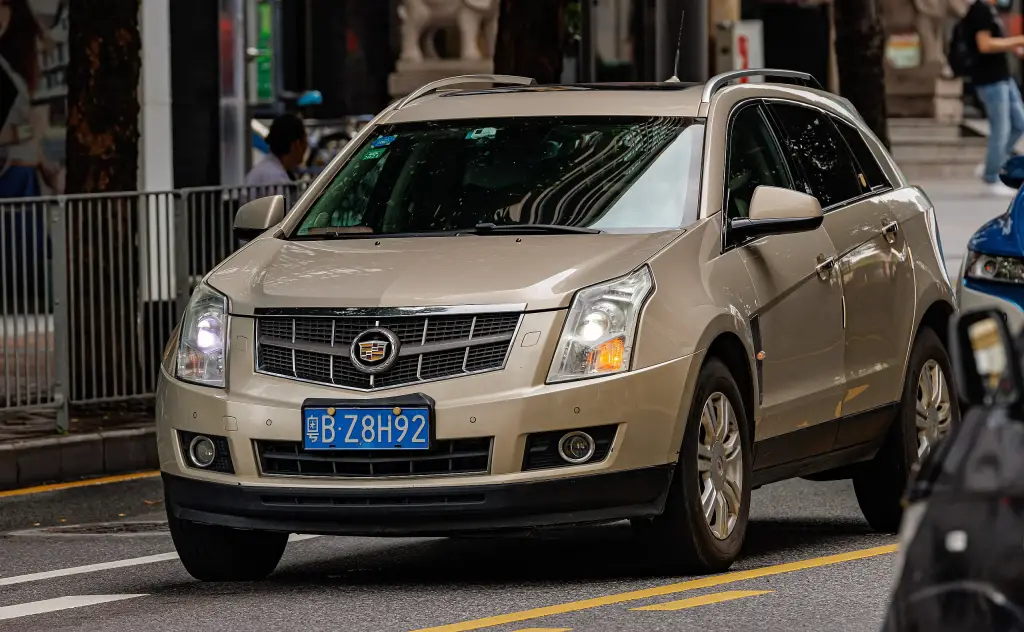
The second-generation SRX followed the Provoq concept of 2008 and moved to a variation of the Epsilon II platform, with a transverse V6 driving the front wheels and all-wheel drive available through a power take-off. It launched with a 3.0-litre direct injection V6 or a 2.8-litre turbo V6, the latter dropped in January 2011 after fewer than 10% of buyers chose it, and replaced for 2012 by a 3.6-litre V6 with E85 capability. A 2013 facelift brought the Cadillac User Experience infotainment system, active noise cancellation and revised front styling. The last model year was 2016, when the XT5 replaced it.
Design and features
- Rear-drive origins: the first generation used the Sigma platform of the CTS, with a longitudinal engine.
- Seven seats: the first SRX had a three-row layout, dropped for the second generation.
- MagneRide and Northstar V8: up to 320 hp in the early car.
- CUE infotainment: standard across the range from the 2013 facelift.
Cadillac SRX versions
- SRX V6 (2004-2009): 255 hp High Feature V6.
- SRX V8 (2004-2009): 320 hp Northstar V8 with standard wood trim.
- SRX4: the all-wheel-drive cars, badged from 2008.
- Second generation (2010-2016): front-drive five-seater with 3.0, 2.8 turbo or 3.6-litre V6.
The SRX sat below the Escalade in the SUV range and was replaced by the XT5; its sedan relatives include the CTS and STS. More Cadillacs are in the Cadillac collection.
Video: Cadillac SRX im Test
Video by Motorvision Deutschland on YouTube.
Sources
- Cadillac SRX, English Wikipedia: both generations, engines, equipment, awards