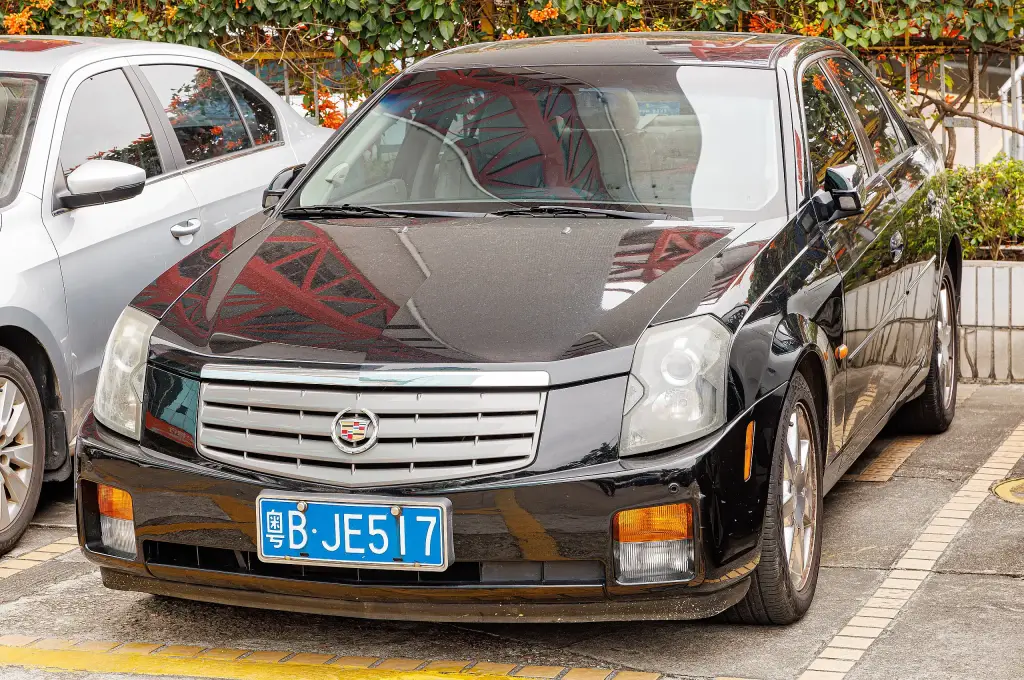
The Cadillac CTS was Cadillac’s luxury car from 2002 to 2019, across three generations. It began as a rear-wheel-drive sedan on the Sigma platform, gained coupe and wagon versions in its second generation, and introduced the Art and Science design language that shaped Cadillac for two decades.
Cadillac CTS at a glance
| Maker | Cadillac, General Motors |
|---|---|
| Production | 2002-2019 |
| Generations | three |
| Platforms | Sigma (first and second), Alpha (third) |
| Bodies | sedan; coupe and wagon in the second generation |
| Assembly | Lansing Grand River, Michigan |
| Predecessor | Cadillac Catera |
| First engine | 3.2 L LA3 V6, 220 hp |
| CTS-V engine | 5.7 L LS6 V8, 400 hp (2004-2005); 6.0 L LS2 from 2006 |
| Replaced by | Cadillac CT5 in 2019 |
| Meaning | Catera Touring Sedan |
Based on one source: the English Wikipedia article on the CTS.
History of the Cadillac CTS
The first-generation CTS was introduced in January 2002 as a 2003 model, on General Motors’ new rear-wheel-drive Sigma platform with fully independent suspension. It replaced the Opel-based Catera, and its initials stood for Catera Touring Sedan. It was the first Cadillac with a manual transmission since the 1988 Cimarron. All cars were built at Lansing Grand River in Michigan. The design, by Wayne Cherry and Kip Wasenko, was the production debut of the Art and Science language first seen on the Evoq concept, and the program represented a $4 billion investment to give Cadillac a new rear-drive platform and a new styling course.
Engines and the CTS-V
The CTS started with a 3.2 L LA3 V6 of 220 hp. A 3.6 L DOHC V6 with variable valve timing and 255 hp became optional in 2004, and a 2.8 L V6 replaced the 3.2 L in 2005. Transmission choices were GM’s five-speed 5L40-E automatic or a five-speed Getrag 260 manual, replaced for 2005 by an Aisin AY-6 six-speed. In 2004 came the CTS-V, aimed at the BMW M3 and M5, Audi S4 and S6 and the Mercedes-Benz AMG cars: a 5.7 L LS6 V8 with 400 hp, a Tremec T56 six-speed manual, Brembo four-piston calipers, six-lug hubs and a stiffer suspension. From 2006 the LS2 of 6.0 litres replaced the LS6 with the same 400 hp but a wider torque band.
Later generations
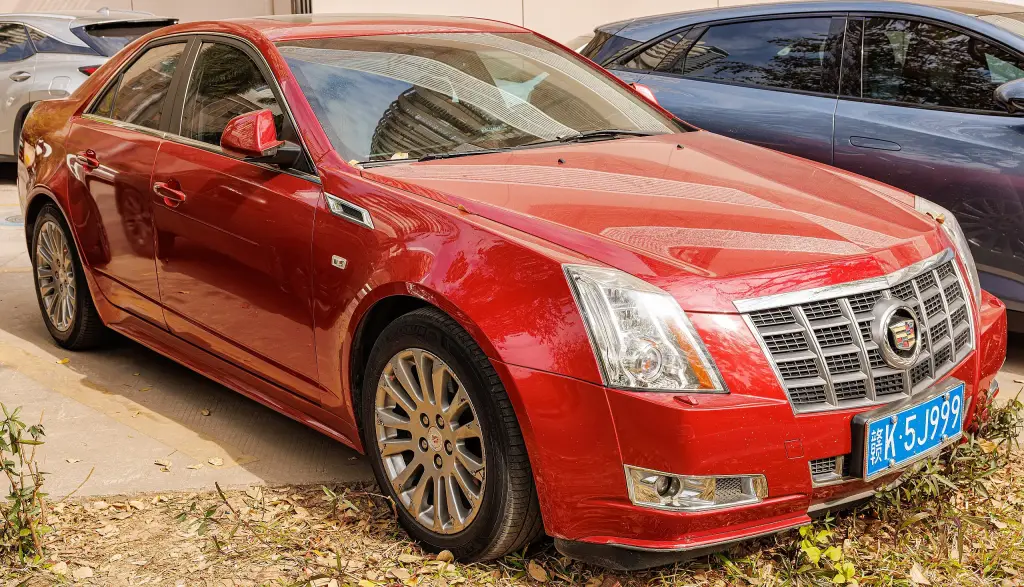
The second generation was offered as a four-door sedan, a two-door coupe and a five-door sport wagon, with a CTS-V in each body style. The third generation returned to a sedan only, on a stretched version of the GM Alpha platform, and ended production in 2019, replaced by the CT5, which shared its platform with the last CTS as well as with the smaller CT4. The coupe of the second generation grew out of a sketch by Robert Munson, while John Manoogian II directed the second-generation design and Bob Boniface and Robin Krieg the third.
Design and features
- Art and Science styling: sharp, geometric forms first shown on the Evoq concept and described by one critic as a fractal geometric style.
- Rear-wheel drive: the Sigma platform marked Cadillac’s return to rear-drive sedans.
- Manual gearbox: the first Cadillac with a manual since the 1988 Cimarron.
- CTS-V performance: V8 power, Brembo brakes and track-ready suspension from 2004.
Cadillac CTS versions
- CTS (2003-2007): first generation sedan, 3.2, 3.6 and 2.8 litre V6 engines.
- CTS-V (2004-2007): 5.7 L LS6 then 6.0 L LS2 V8, six-speed manual.
- Second generation: sedan, coupe and sport wagon.
- Third generation: sedan on the Alpha platform, built until 2019.
The CTS replaced the Catera and was itself replaced by the CT5; its smaller relative was the BLS in Europe. More Cadillacs are in the Cadillac collection.
Video: Cadillac CTS-V Sport Wagon
Video by AUTO BILD on YouTube.
Sources
- Cadillac CTS, English Wikipedia: generations, engines, CTS-V, design