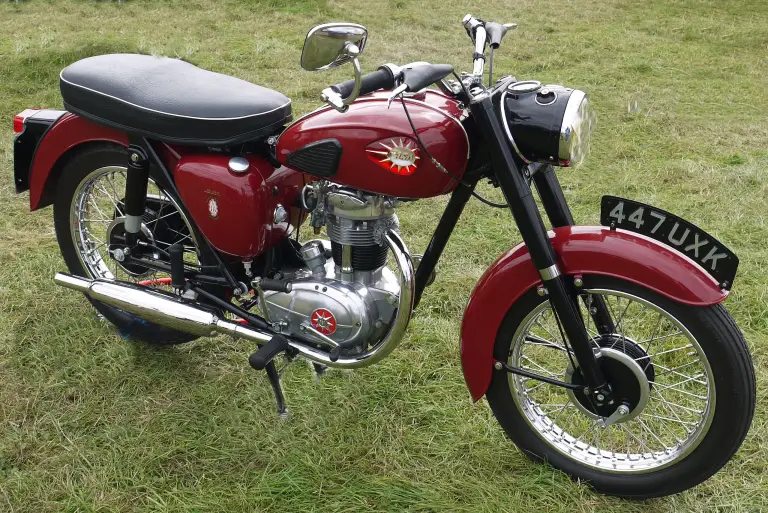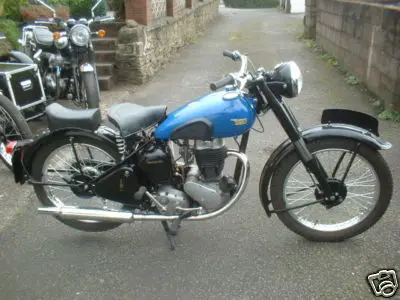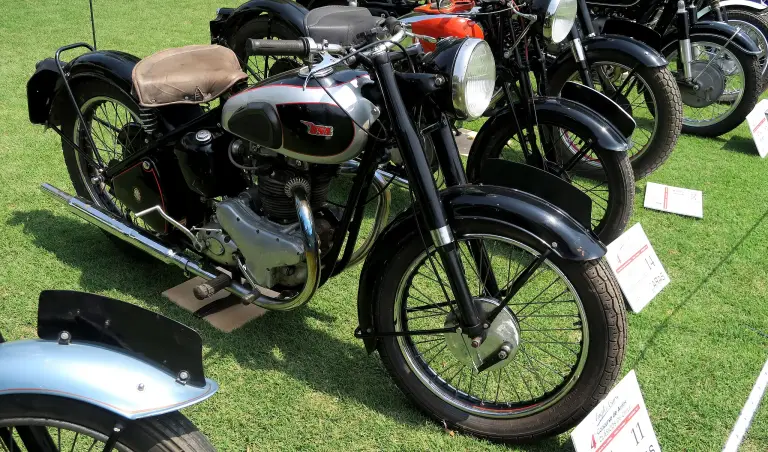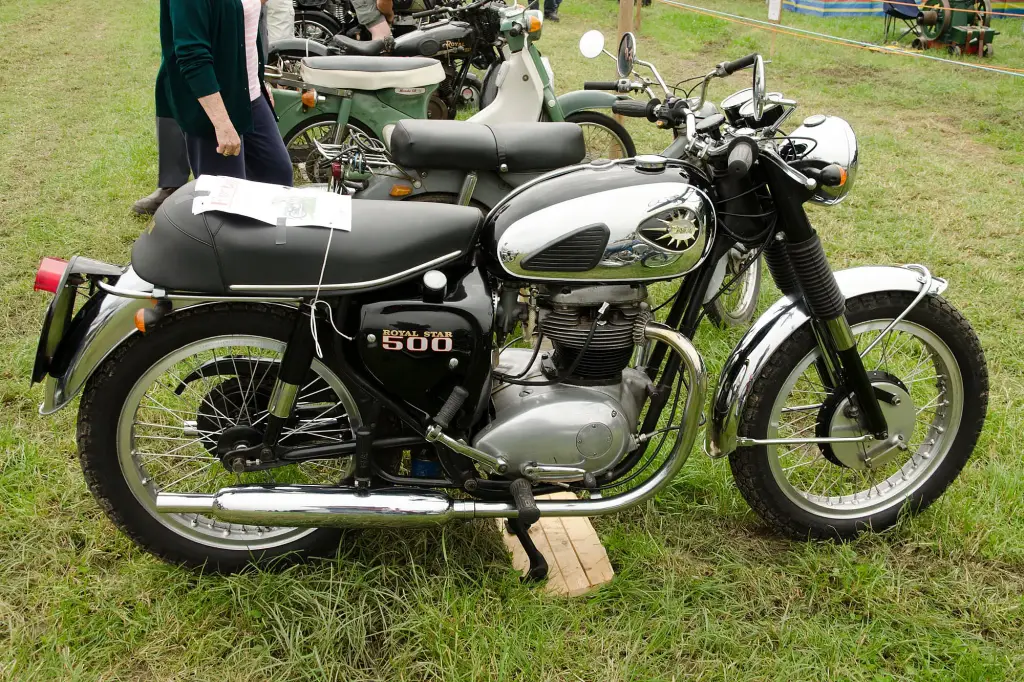
The BSA Royal Star was a Birmingham Small Arms Company motorcycle whose new engine design paved the way for a range of successful unit-construction twins. Putting the pushrod passages into the cylinder block casting not only gave the engine a cleaner look but cut the number of places oil could leak from.
BSA A50 Royal Star at a glance
| Maker | Birmingham Small Arms Company |
|---|---|
| Launched | 1962 |
| Model name | A50 Star in the UK, Royal Star for export; Royal Star everywhere from 1966 |
| Engine | 499 cc unit-construction parallel twin, OHV |
| Carburettor | 1 inch Amal Monobloc, later Concentric |
| Top speed | about 90 mph |
| 1964 update | 8.5:1 pistons and a new gearbox |
| 1965 update | roller drive-side main bearing, bronze timing-side bush |
| Shared parts | engine and cycle parts with the larger A65 Star |
| Competition versions | A50CC Cyclone Competition and A50C Cyclone Road |
Based on one source, the English Wikipedia article on the A50 Royal Star.
History of the BSA A50 Royal Star
In the late 1950s Lucas decided to switch production of motorcycle electrical components from magneto and dynamo systems to alternator and coil systems, which forced British manufacturers to redesign their engines completely. Triumph and BSA used the opportunity to move from pre-unit and semi-unit construction to full unit construction, with the engine and gearbox in one integrated casting. At the same time Bob Fearon, BSA’s managing director and general manager, saw the need for an updated look that built on the best features of the A10 and would succeed in the lucrative but competitive United States market.
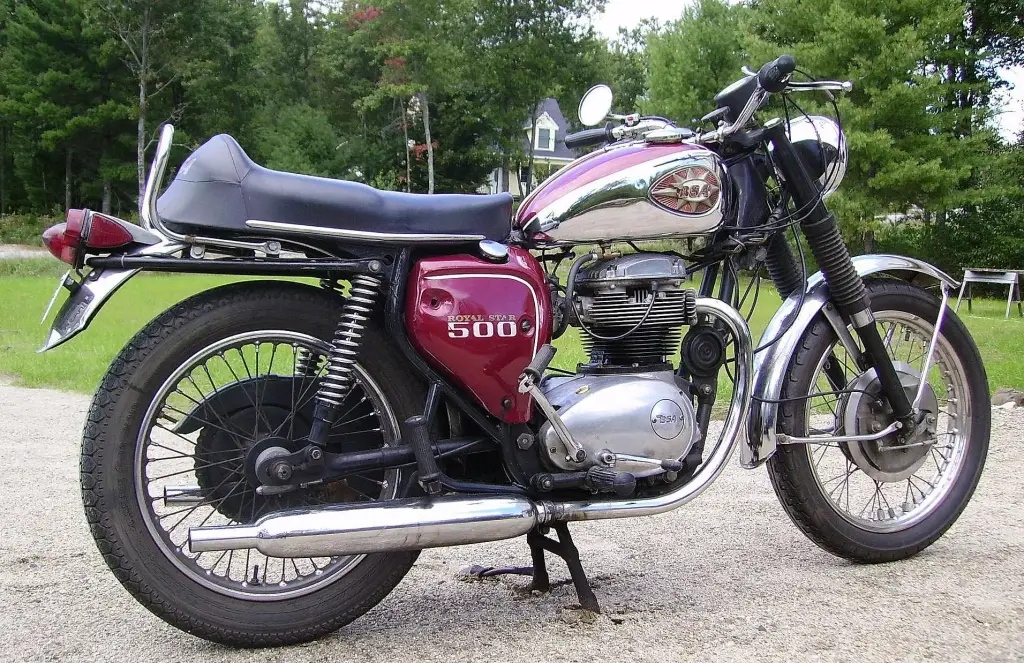
Working with chief development engineer Bert Perrigo, he developed the unit-construction Star twins. The 500 cc BSA A50 Star was launched in 1962 and was widely exported to the United States and Australia as well as becoming a top seller in Britain in the early 1960s. The model was called the Royal Star in export markets and the Star or Star Twin at home; from 1966 it was the Royal Star everywhere.
The Royal Star had a relatively small one-inch single Amal Monobloc carburettor, later replaced by a Concentric, but in 1964 new 8.5:1 pistons and a new gearbox improved performance. The machine had a top speed of about 90 mph and was relatively free of vibration. Sharing common engine and cycle parts with the larger BSA A65 Star 650 twin, it was an over-engineered machine and proved very robust.
The one major fault in the engine design was a plain crankshaft bearing on the timing side which, once worn, caused a drop in oil pressure. In 1965 BSA dealt with the bearing problems by fitting a roller bearing on the drive side, as the pre-unit engines had, together with an improved bronze bushing on the timing side.
Design and features
- Unit construction: engine and gearbox in one casting, with pushrod passages cast into the block, which reduced oil leaks and simplified the engine.
- Shared with the 650: common engine and cycle parts with the A65 Star made the 500 robust and over-engineered.
- Smooth running: about 90 mph with relatively little vibration for a British twin of the period.
- Design fix in 1965: a roller drive-side main bearing and a bronze timing-side bush cured the oil-pressure weakness.
BSA A50 Royal Star versions
- A50 Star / Star Twin: the 1962 home-market name for the standard 500.
- Royal Star: the export name, used in all markets from 1966.
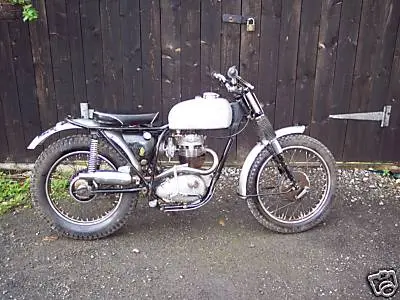
- A50CC Cyclone Competition: a 1964 US-market scrambler with twin 1 1/16 inch carburettors, 10.5:1 compression, magneto ignition, a larger front brake, a two-gallon tank, upswept open exhaust and no road lights.
- A50C Cyclone Road: the 1964–1965 US road version with twin carburettors, 9:1 compression, battery ignition, full lighting and a two-gallon tank.
- UK Cyclones: both Cyclone models were offered at home with 9:1 compression, battery ignition and four-gallon tanks.
The Royal Star shared its engine family with the BSA A65 and replaced the pre-unit A10 twins. More models are in the BSA collection.
Video: Tickle Me Amal: BSA Royal Star A50 First Start and Ride
Video by YouTube on YouTube.
Sources
- BSA A50 Royal Star, English Wikipedia: development, engine, Cyclone versions