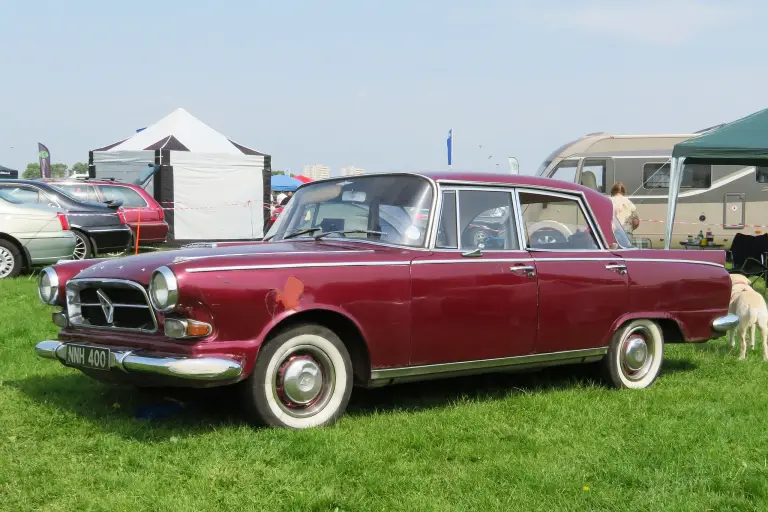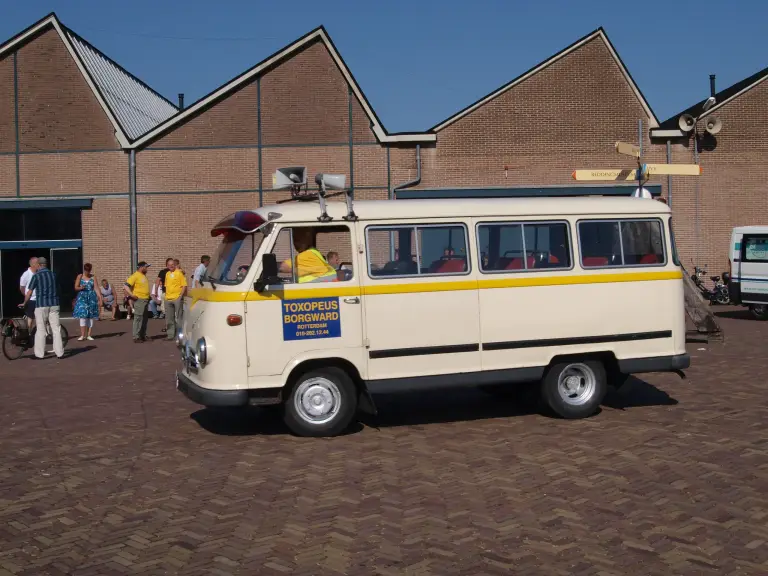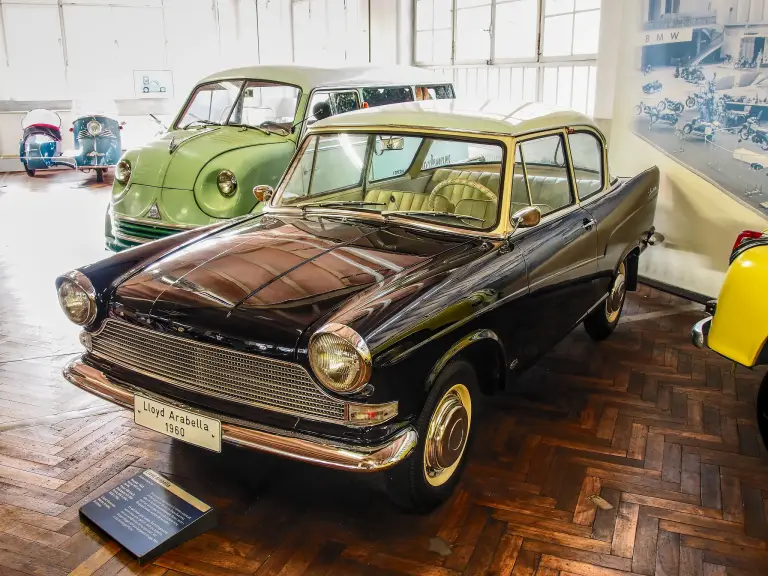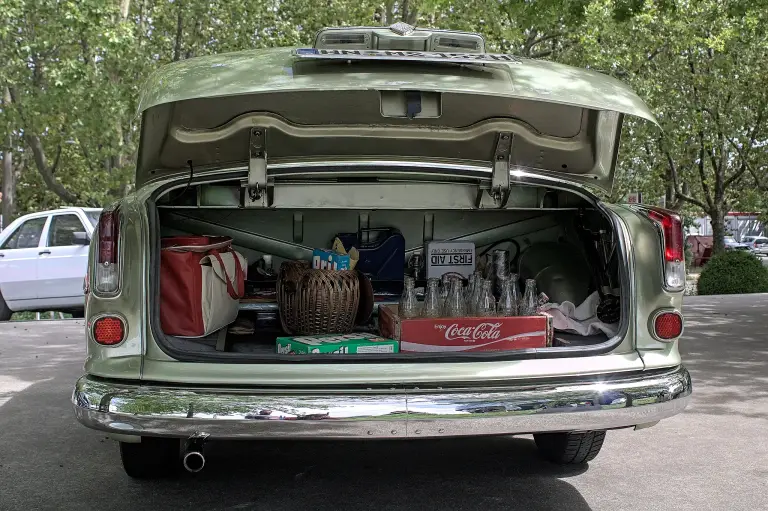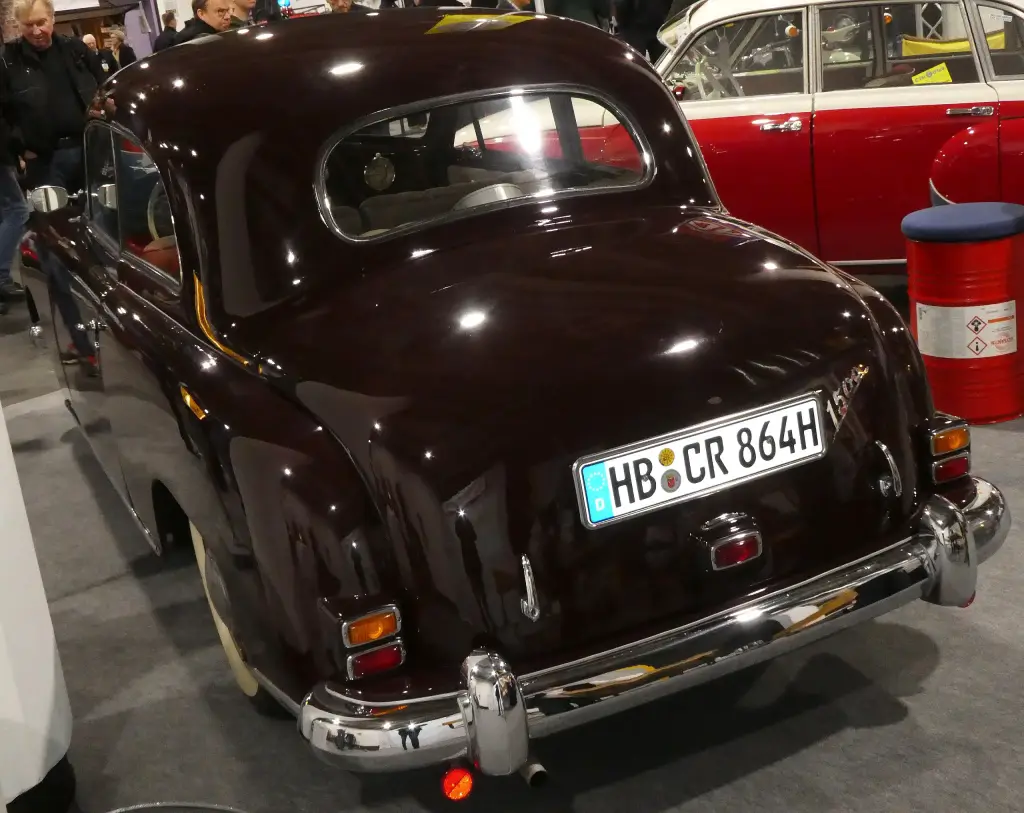
The Borgward Hansa 1500 was the first completely new passenger car designed and built in West Germany after the Second World War. Presented at the Geneva Motor Show in March 1949, it reached the production line at Bremen-Sebaldsbrück on 13 October 1949. Its ponton, three-box body was copied across Europe within a few years and was replaced only in 1954, by the Borgward Isabella.
Borgward Hansa 1500 at a glance
| Maker | Carl F. W. Borgward GmbH, Bremen |
|---|---|
| Production | October 1949–1954 |
| First shown | Geneva Motor Show, March 1949 |
| Bodies | two- and four-door saloon, estate, cabriolets |
| Engine | 1,498 cc four-cylinder OHV, 48 PS (52 PS from late 1950) |
| Bore and stroke | 72 × 92 mm |
| Top speed | 120–125 km/h |
| Gearbox | four-speed; floor change first, column change from late 1950 |
| Suspension | independent front, swing axle at the rear |
| Width | 1,620 mm |
| Hansa 1800 | 1,758 cc, 60 PS, from 1952; diesel 42 PS from 1953 |
| Replaced by | Borgward Isabella |
History of the Borgward Hansa 1500
A clean sheet in 1949
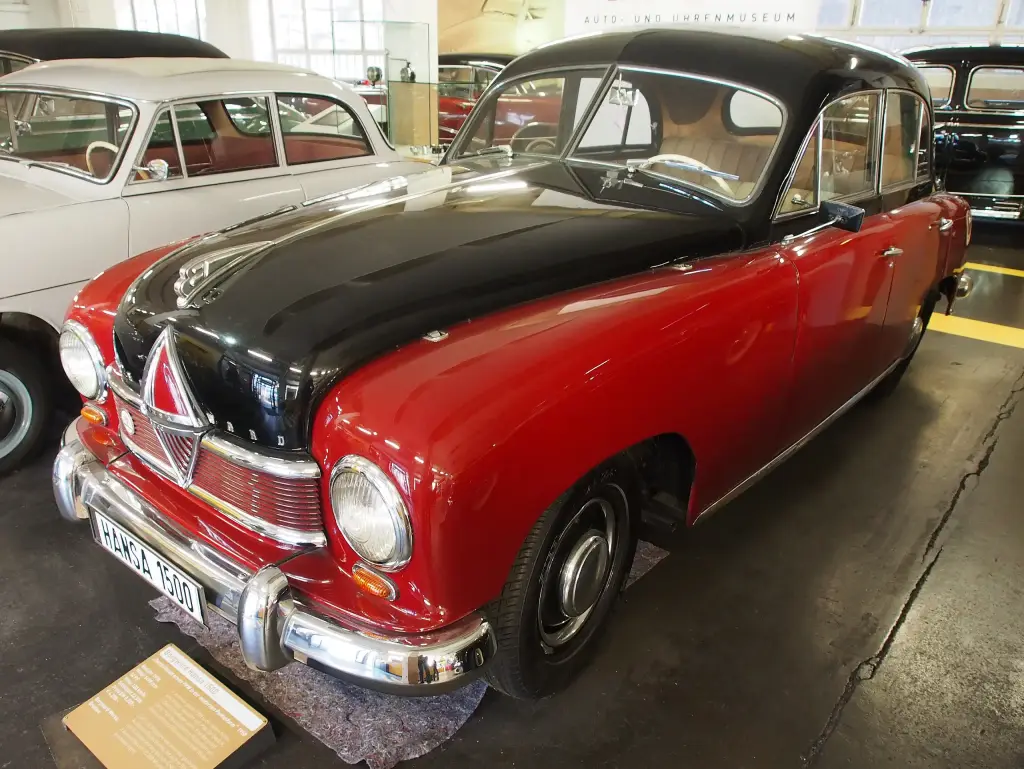
The Hansa 1500 was the first German series saloon with a ponton body and with flashing indicators instead of the semaphore arms still used on the Opel Olympia and the Mercedes-Benz W136. Because the wings were built into the body sides, almost the full width of the car was available inside: with bench seats front and rear, it was sold as a genuine six-seater, and the press praised the room it offered against its narrower rivals. Other novelties were a boot lid that opened from outside, a bonnet hinged at the side and openable from either side, and a white three-spoke steering wheel whose spokes were made of four thin metal rods, leaving the instruments in view. The gear lever was mounted on the steering column once the two individual front seats gave way to a bench.
Engine, transmission and chassis
The 1,498 cc four-cylinder had an overhead-valve head and a side camshaft, with the intake manifold and carburettor sitting on top of the valve cover. At launch it produced 48 PS (35 kW) at 4,000 rpm; from the end of 1950 the same engine gave 52 PS (38 kW) at 4,200 rpm. The sports cabriolet used a 66 PS version that reached about 150 km/h, and in 1953 this model could even be ordered with the 80 PS engine of the Borgward racing cars. The car started with a four-speed floor change; from late 1950 the lever moved to the column. The front wheels were suspended on upper wishbones with a transverse leaf spring, the rear axle was a swing axle with trailing arms, and the lever shock absorbers of the first series were replaced by telescopic dampers at the end of 1950. The brakes worked hydraulically on all four wheels, the handbrake mechanically on the rear ones.
Saloon, estate, cabriolets and records
Besides the two- and four-door saloon there was a three-door estate, a five-seat two-door cabriolet and a two-seat sports cabriolet on a shortened 2,400 mm wheelbase; the cabriolets came from the coachbuilder Hebmüller in Wülfrath. Rometsch showed a fastback Sport Coupé with a tall bonnet and rear-hinged doors, but only two were built. In August 1950 a racing car developed from the Hansa 1500 by the INKA engineering office in Stuttgart set twelve international records at Montlhéry in France; it had a streamlined aluminium body and the 66 PS engine, and was driven by August Momberger, Adolf Brudes, Heinz Meier and Karl-Heinz Schäufele.
Hansa 1800 and the end
In 1952 the larger Hansa 1800 arrived with a 1,758 cc engine of 60 PS, a four-speed gearbox synchronised between the top two ratios and indicator lamps moved from under the headlights to the tops of the front wings. In 1953 it became available with a 1,758 cc diesel of 42 PS, making it the fourth German passenger car offered with a diesel engine after the Mercedes-Benz 260 D and 170 D and the Hanomag Rekord. A 1954 road test of the diesel saloon by The Motor recorded 68 mph, 0–50 mph in 27.9 seconds and 45.6 mpg, at £1,493 including taxes. The Hansa was replaced by the Isabella in 1954.
Design and features
- Ponton body: fully integrated wings and a full-width cabin, four years before Mercedes-Benz adopted the same shape.
- Room for six: two bench seats and a 1,620 mm body that gave more interior width than its rivals.
- Flashing indicators: electric direction flashers instead of semaphore arms, repeated in the rear light units.
- Unusual detailing: a boot lid openable from outside and a bonnet hinged so that it could be lifted from either side.
- Record-breaking engine: the 1.5-litre four also powered the INKA record car and the 1500 RS racing cars.
Borgward Hansa 1500 versions
- Saloon (1949–1954): two- or four-door, all-steel body on a central-tube frame.
- Estate (1949–1954): three-door, the practical version of the same car.
- Cabriolet: five-seat two-door built by Hebmüller, with a 66 PS engine in the sporting form.
- Sports cabriolet: two-seater on a 2,400 mm wheelbase, about 150 km/h.
- Hansa 1800 (1952–1954): 1,758 cc, 60 PS, later also a 42 PS diesel.
- Sport Coupé by Rometsch: fastback two-door, two examples built.
The Hansa was replaced in 1954 by the Borgward Isabella, and its 1.8-litre diesel later went into the Borgward B 611 van. More cars are in the Borgward collection.
Video: Borgward Werke Bremen Hansa 1500
Video on YouTube.
Sources
- Borgward Hansa 1500, English Wikipedia: launch, bodies, engine, Hansa 1800, road test
- Borgward Hansa 1500, German Wikipedia: engine output, chassis, INKA records, production