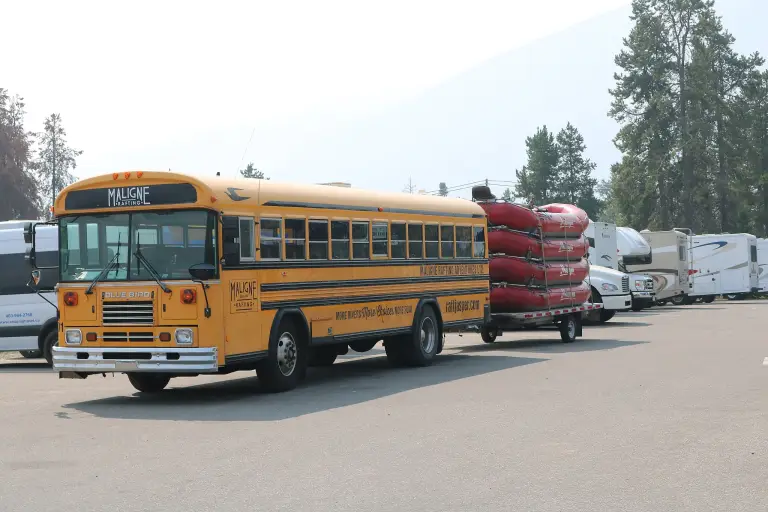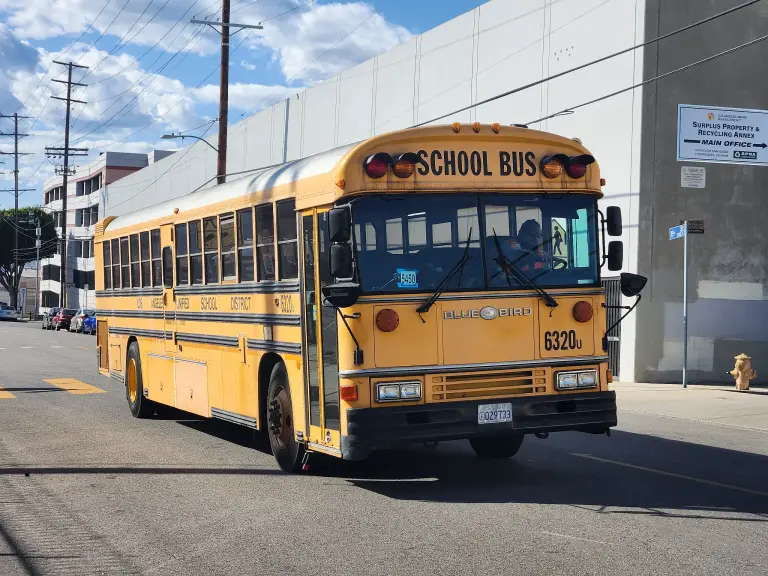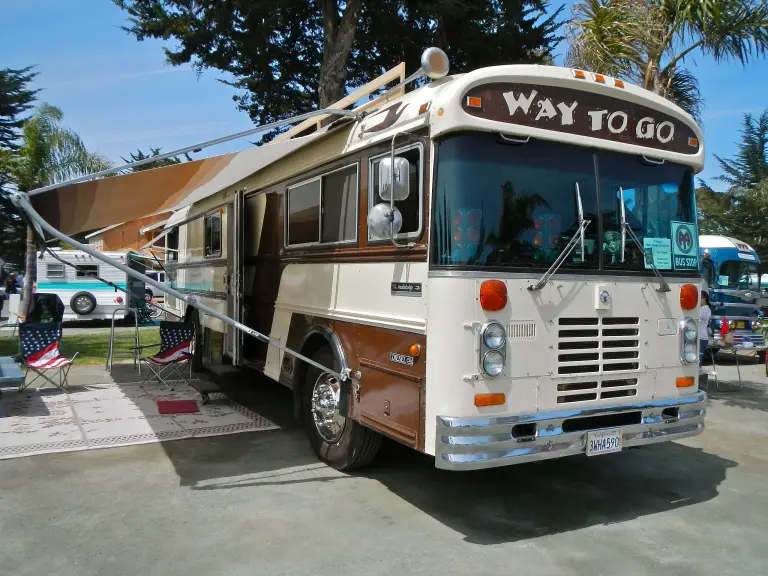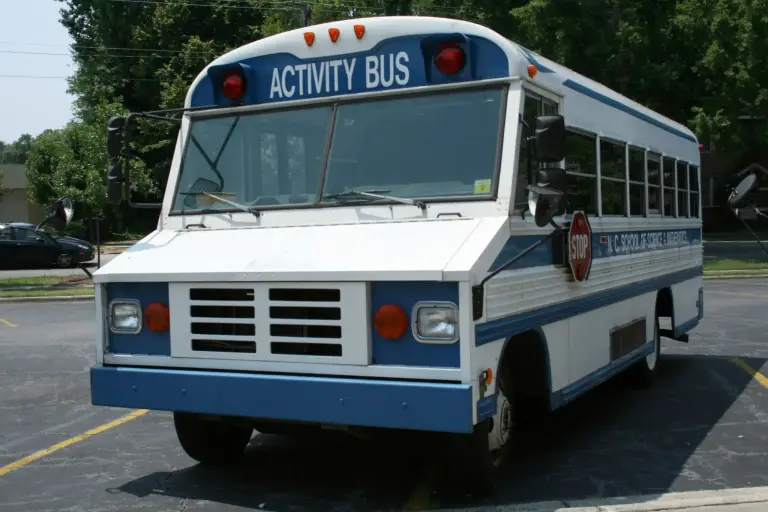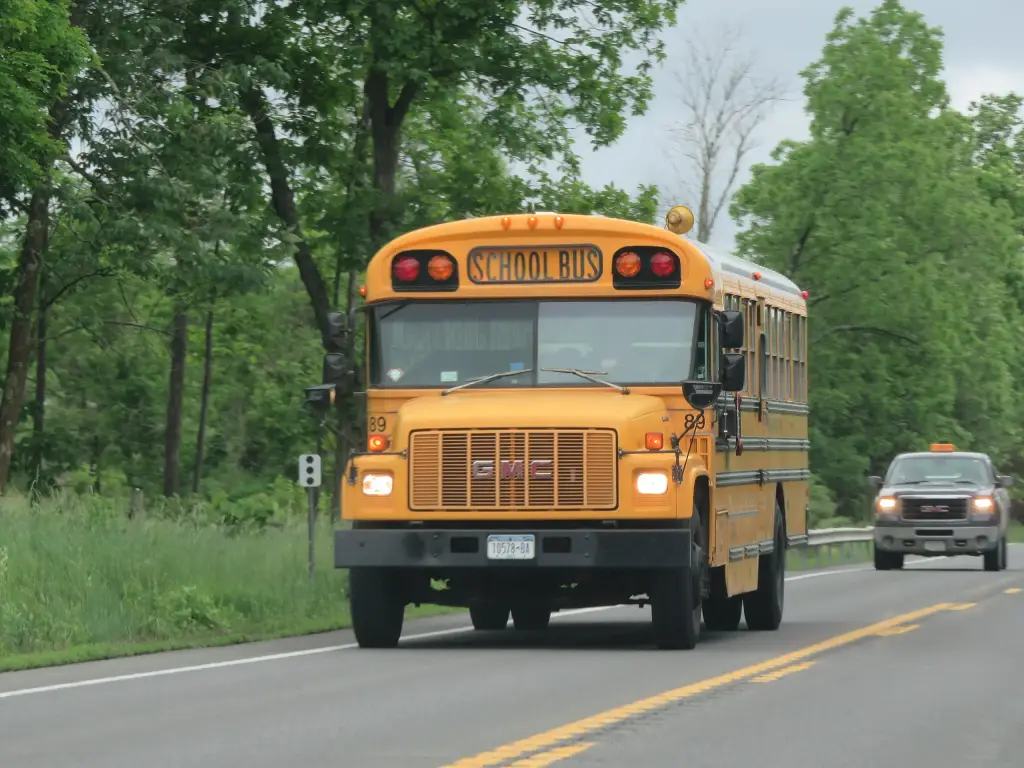
The Blue Bird Conventional, later known as the SBCV, was Blue Bird’s school bus with a conventional bonnet and a chassis bought from a truck maker. It was made from 1957 until 2004, when the Vision took its place, and it shared its body structure with the All American.
Blue Bird Conventional at a glance
| Maker | Blue Bird Corporation, Fort Valley, Georgia |
|---|---|
| Also called | Blue Bird SBCV (from 2005) |
| Production | 1957–2004 |
| Type | Type C school bus on a cowled truck chassis |
| Chassis suppliers | International, General Motors, Ford |
| Body plants | Fort Valley, Georgia; Brantford, Ontario; Mount Pleasant, Iowa |
| Headroom option | high-headroom body of 77 inches |
| Key deal | GM GMT530 chassis, bodied as the CV200 from 1991 |
| Panoramic windshield | introduced in 1962 |
| Replaced by | Blue Bird Vision |
Based on the English Wikipedia article; one source.
History of the Blue Bird Conventional
Blue Bird’s first bus was completed in 1927 by A.L. Luce and sold as a school bus; after the Blue Bird Body Company was founded in 1932 it became known as Blue Bird “Number One”. The Luce family bought the bus back in 1946, put the body on a Ford Model TT chassis and restored it again in the 1970s. In 2008 it was donated to the Henry Ford Museum, and a replica now stands beside the 1948 All American on the factory floor in Fort Valley.
The Conventional was introduced in 1957 together with a complete body redesign shared with the All American: a higher roofline and flatter sides, with a high-headroom body raising interior height to 77 inches. It was built in Fort Valley alongside the All American, and Blue Bird opened plants at Brantford, Ontario in 1958 and Mount Pleasant, Iowa in 1962 to keep up with demand. By the early 1960s the company was the fourth-largest school bus manufacturer in the United States, introduced its roofline brand emblem and in 1962 adopted the panoramic windshield.
The bus was bodied on chassis from several makers. In 1965 Blue Bird opened its Central America plant in Guatemala, where the Conventional used locally sourced chassis such as the Toyota FA. In 1991 Blue Bird signed a ten-year supply and marketing agreement with General Motors and became the exclusive body maker for the new GMT530 cowled chassis, sold as the Blue Bird CV200; the GM B-7 chassis became standard, with International and Ford (later Freightliner) as options.
A 2001 agreement with Ford produced a small number of Conventionals on Ford F-750 chassis, which became the last Ford-chassis school buses ever built; the 2002 version had a Safety View Vision Panel ahead of the entry door, later used on the Vision. After Blue Bird failed to renew the GM agreement in 2002, the Conventional stayed on Navistar chassis. With the Vision launched for 2004 on Blue Bird’s own chassis, the Conventional became the SBCV for 2005 and was built into the 2008 model year.
Design and features
- Conventional layout: a bonneted truck chassis with the engine ahead of the driver.
- Multiple chassis suppliers: International, General Motors and Ford over the years.
- Shared body: the 1957 body design also served the All American and later the Vision.
- Safety View panel: the 2002 Ford-chassis bus carried the loading-zone window that reached production on the Vision.
Blue Bird Conventional versions
- Conventional (1957–2004): the standard model with a choice of chassis.
- High-headroom body: 77-inch interior height option.
- CV200 (1991–): on the GM GMT530 / B-7 cowled chassis.
- Ford F-750 cars (2001–2002): the last Ford-chassis school buses built.
- SBCV (2005–2008): the Navistar-chassis version at the end of production.
The Conventional shared its body with the All American and was replaced by the Vision. More buses are in the Blue Bird collection.
Video: Blue Bird Conventional drive-by
Video by the uploader on YouTube.
Sources
- Blue Bird Conventional, English Wikipedia: history, chassis suppliers, model changes