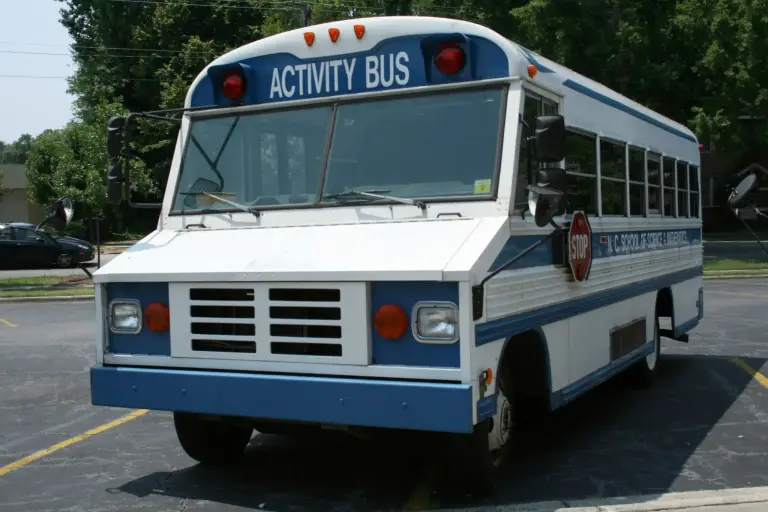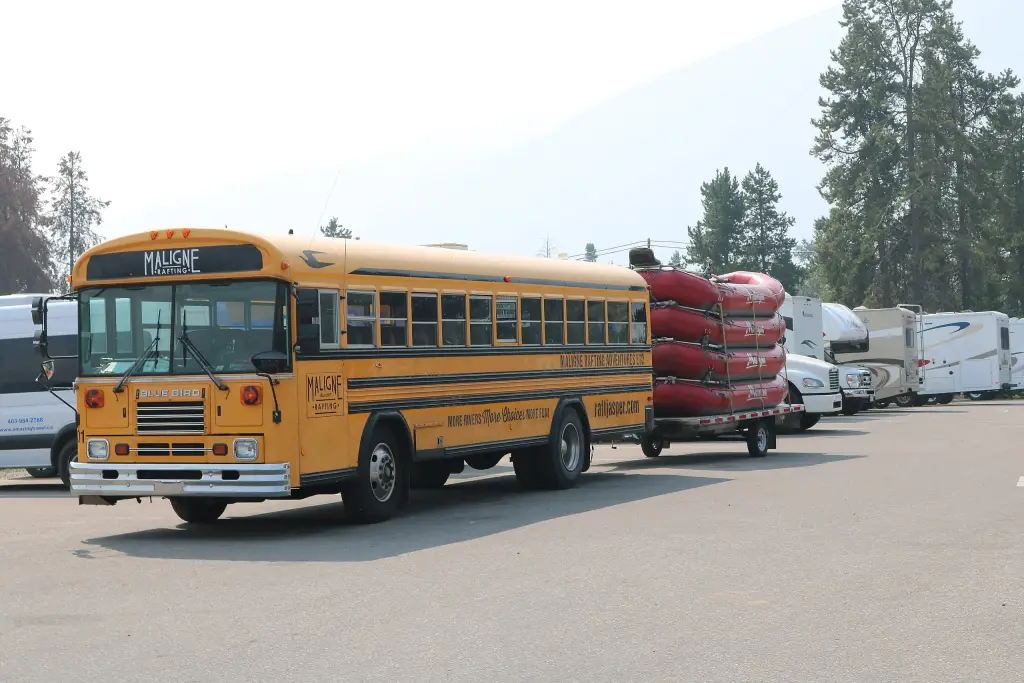
The Blue Bird TC/2000 was a transit-style school bus made from 1987 to 2003 as a second, lower-priced range alongside the All American. It used the same passenger body and chassis but simplified front-end engineering, and it was sold for commercial work as the APC 2000, All Purpose Coach.
Blue Bird TC/2000 at a glance
| Maker | Blue Bird Corporation (then Blue Bird Body Company) |
|---|---|
| Production | 1987–2003, plus a short run of 2004 models |
| Type | transit-style (flat-front) school bus |
| Layout | front engine and rear engine |
| Commercial name | APC 2000 (All Purpose Coach) |
| Standard engine | Chevrolet 7.0-litre petrol V8 |
| Diesel option | Cummins 5.9-litre inline-six |
| Gearbox | five-speed manual, Allison AT545 automatic option |
| Capacity | 54 to 90 students |
| Assembly | five plants in Georgia, Iowa, Virginia and Ontario |
Based on the English Wikipedia article; one source.
History of the Blue Bird TC/2000
Transit-style school buses were the flagship vehicles of their makers, with 84 to 90 seats against 60 to 72 for conventional buses. When demand fell sharply in the late 1970s and early 1980s, those high purchase prices became hard to sell, and in 1986 Wayne Corporation showed the Lifestar, the first low-price transit school bus, built with a high degree of parts commonality. Blue Bird faced the same problem with its own All American, which had changed only in detail since the early 1960s.
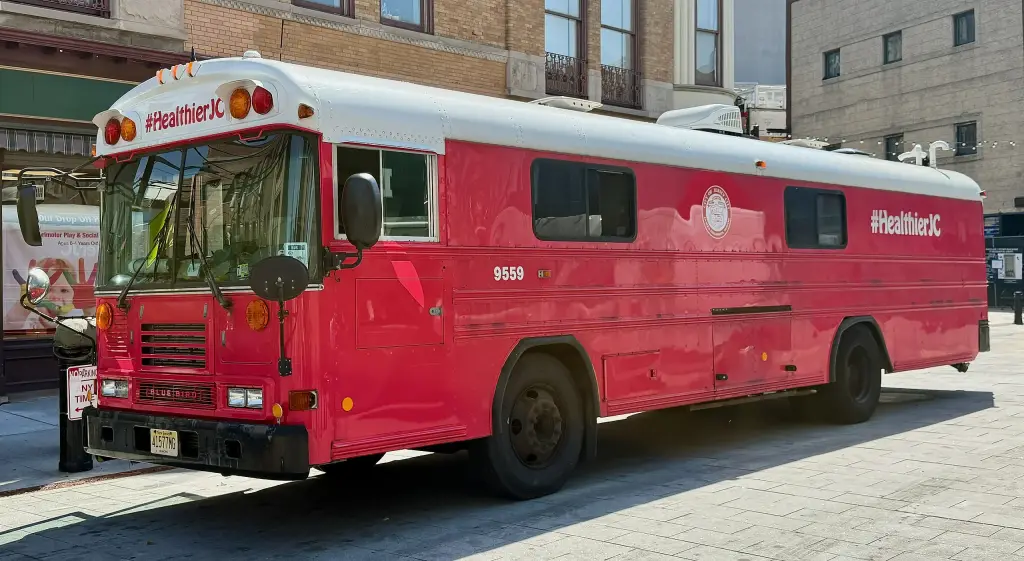
The TC/2000 was introduced in 1987 to solve both issues. It shared much of the body, passenger compartment and chassis with the All American and Conventional, but the front was changed to cut production cost: chrome trim virtually disappeared and the grille went from 14 slots to four. The quad headlights of the All American became dual rectangular units, and when the All American was redesigned in 1989 the headlight count became the easiest way to tell the two apart.
Inside, the All American’s wood-panel dashboard gave way to a black fiberboard design with instruments closer to the driver and a smaller steering wheel. Mechanically Blue Bird kept the combinations few: at launch in 1987 only a front-engine version was offered, with the Chevrolet 7.0-litre petrol V8 as standard and the Cummins 5.9-litre diesel as an option, though nearly all were built with the Cummins. A five-speed manual was standard and the Allison AT545 automatic optional, but almost every customer chose the automatic. Student capacity ranged from 54 to 90.
In 1991 compressed natural gas became an alternative fuel option on the rear-engine version, using an 8.1-litre John Deere engine; it was the first school bus offered with CNG. The rear-engine TC/2000 was discontinued in 1999 and indirectly replaced by the new All American RE. With the TC/1000 added in 1997 Blue Bird had five distinct transit-style buses, and in 2003 it ended TC/2000 production after a short run of 2004 models, consolidating on the All American. The bus was assembled at Fort Valley and LaFayette in Georgia, Mount Pleasant, Iowa, Buena Vista, Virginia and Brantford, Ontario.
Design and features
- Lower price: simplified front-end trim and fewer build combinations than the All American.
- Dual rectangular headlights: the quickest visual difference from the quad-headlight All American.
- Own driver’s compartment: black fiberboard dash, closer instruments and a smaller wheel.
- Cummins power: the 5.9-litre diesel was specified on nearly every example.
- First CNG school bus: a compressed natural gas option from 1991 on the rear-engine model.
Blue Bird TC/2000 versions
- TC/2000 FE: front-engine version, the only one at launch in 1987.
- TC/2000 RE: rear-engine version, offered with CNG from 1991 and dropped in 1999.
- APC 2000: commercial All Purpose Coach version.
- 2004 models: a short final run before production ended.
The TC/2000 was the cheaper stablemate of the All American and shared its passenger body with the Conventional and Mini Bird. More buses are in the Blue Bird collection.
Video: Ride on a 2001 Blue Bird TC/2000
Video by the uploader on YouTube.
Sources
- Blue Bird TC/2000, English Wikipedia: history, design, engines, plants