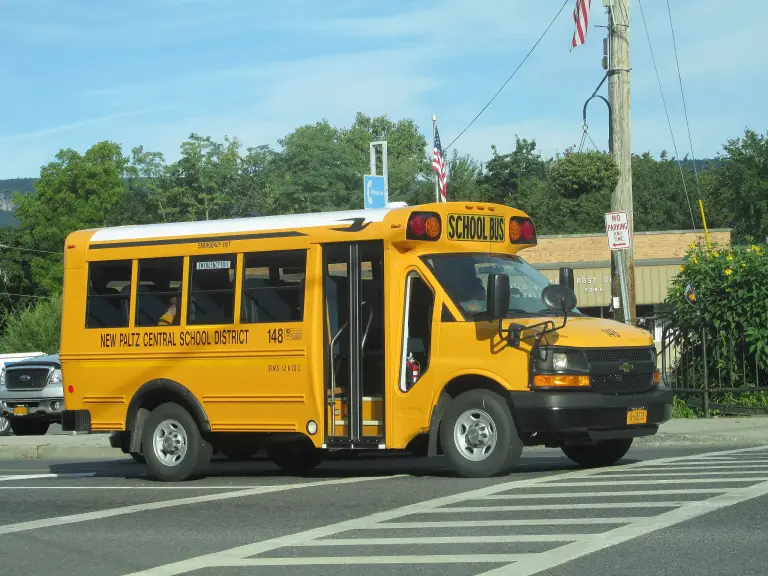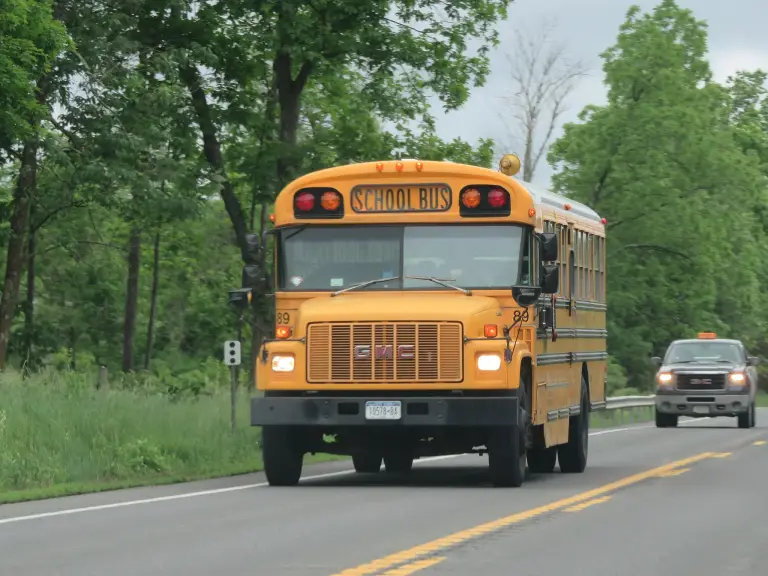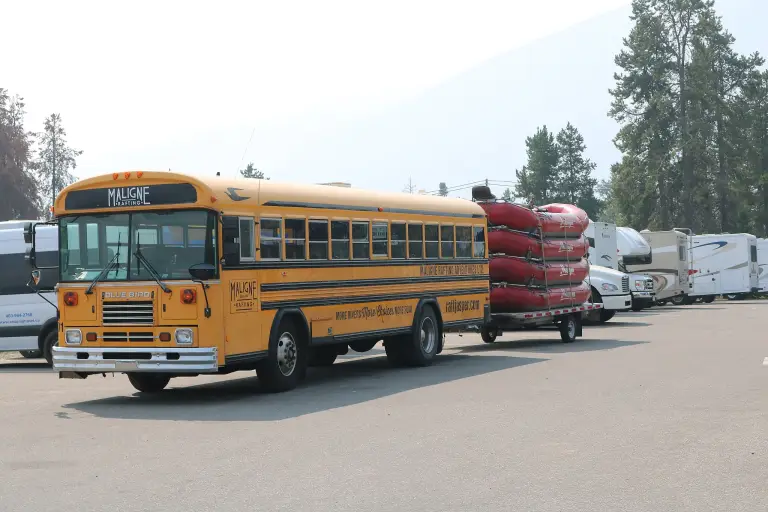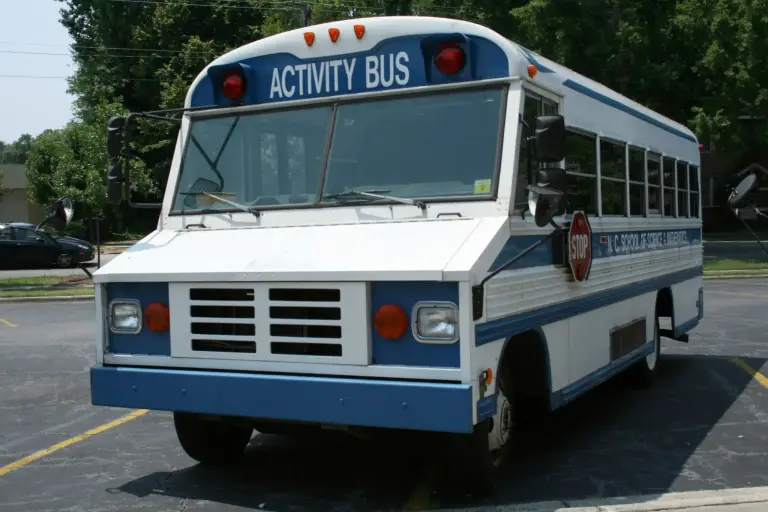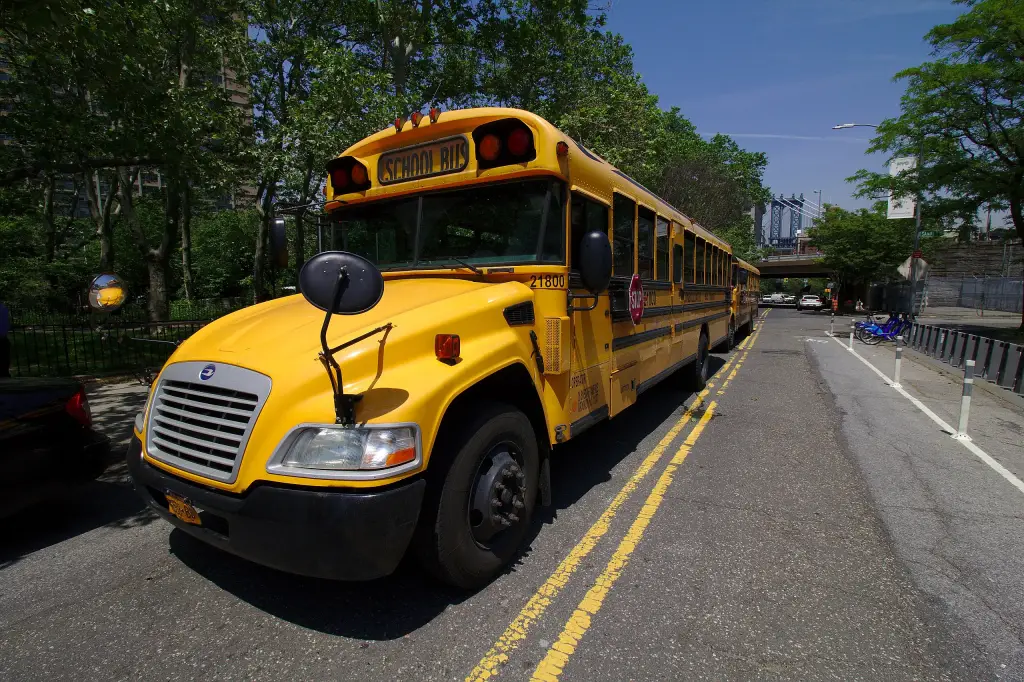
The Blue Bird Vision is the conventional-bonnet school bus that replaced the Blue Bird Conventional for 2004. In production since 2003, it was the first cowled-chassis bus built on a chassis designed and made by the bus builder itself, and it remains the main Blue Bird Type C model.
Blue Bird Vision at a glance
| Maker | Blue Bird Corporation, Fort Valley, Georgia |
|---|---|
| Production | since 2003, for the 2004 model year |
| Type | Type C school bus on a proprietary cowled chassis |
| Predecessor | Blue Bird Conventional / SBCV |
| Generations | three by 2018, updates for 2008 and 2015 |
| Engine, 2003–2009 | Caterpillar C7 standard, Cummins ISB6.7 option from 2008 |
| Propane | GM 8.1-litre Vortec V8 with CleanFuel USA system from 2009 |
| Wheel cut | 50 degrees on the 2003 model |
| Headroom | 72 or 77 inches |
| Assembly | Fort Valley, Georgia; LaFayette, Georgia before 2014 |
Based on the English Wikipedia article; one source.
History of the Blue Bird Vision
In the early 2000s Blue Bird needed a dependable chassis source for its Conventional buses. Its 1991 supply agreement with General Motors was due to end in 2003 with little sign of renewal, Navistar had owned Blue Bird’s competitor AmTran since 1995, and Freightliner, owner of Thomas Built Buses, stopped supplying chassis to competitors after 2000.
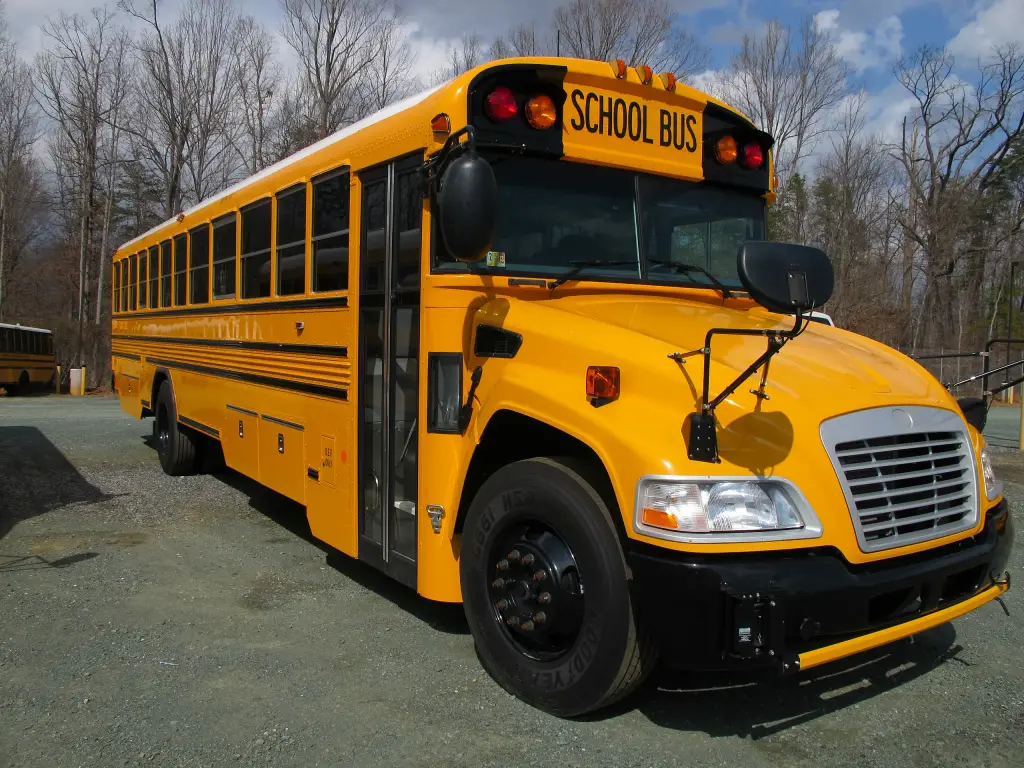
Blue Bird set out to design a next-generation Conventional, first with Ford on the F-650 medium-duty chassis introduced in 2000. Several prototypes were built with features new to school buses, including a wide-angle lens beside the entry door, but by the end of 2002 the Ford plan had failed to materialise. Blue Bird carried the concept forward on its own chassis, as it already did for the All American, TC/2000, TC/1000, Wanderlodge and Q-Bus.
The Vision kept almost the whole body of the Conventional, including its 1957 structure, but changed the driver’s view of the loading zone. The patented Safety View Vision Panel ahead of the entry door is a wide-angle Fresnel lens in laminated glass that removes a major blind spot. The Vision has had three generations by 2018, with a major chassis redesign for 2008 and a second update for 2015 released in mid-2013.
The first generation (2003–2007) was optimised for forward visibility, with a hood sharply angled from the base of the windshield and matching front fenders, and a 50-degree wheel cut for manoeuvrability. It had large back-lit gauges, a Handy Bus package with wheelchair lift and flat floor, and 72- or 77-inch headroom. The Caterpillar C7 was standard from 2003 to 2009, with the Cummins ISB6.7 added as an option in 2008; a lower-cost EC-72 prototype ran to 28 examples but never entered production.
For 2008 the body stayed the same but the hood was redesigned to be more aerodynamic, with a larger grille and the Blue Bird emblem moved onto it. Headlights, steering column and instrument cluster were sourced from Volvo trucks, and an electric service door became an option. In 2009 the Vision became the first factory-built school bus with a propane powertrain, using a GM 8.1-litre Vortec V8 and a CleanFuel USA system; the Caterpillar C7 was dropped at the end of that model year. For 2011 the rub rails changed and the instruments were shared with the All American.
Design and features
- Proprietary cowled chassis: the first Type C school bus designed and built by its body maker.
- Safety View panel: a Fresnel lens in laminated glass that widens the driver’s view of the loading zone.
- Visibility-led shape: a sharply angled hood and fenders on the original version.
- Factory propane: the first production school bus with a propane powertrain, from 2009.
- Volvo-sourced parts: headlights, steering column and instruments on the 2008 generation.
Blue Bird Vision versions
- First generation (2003–2007): Caterpillar C7, sharply angled hood.
- Second generation (2008–2014): redesigned hood, Volvo parts, propane option.
- Third generation (2015–): the update released in mid-2013.
- Handy Bus: wheelchair lift and flat floor package.
- EC-72: 28 low-cost prototypes that never reached series production.
The Vision replaced the Blue Bird Conventional and is built alongside the All American. More buses are in the Blue Bird collection.
Video: 2014 Blue Bird Vision
Video by the uploader on YouTube.
Sources
- Blue Bird Vision, English Wikipedia: background, generations, engines, features