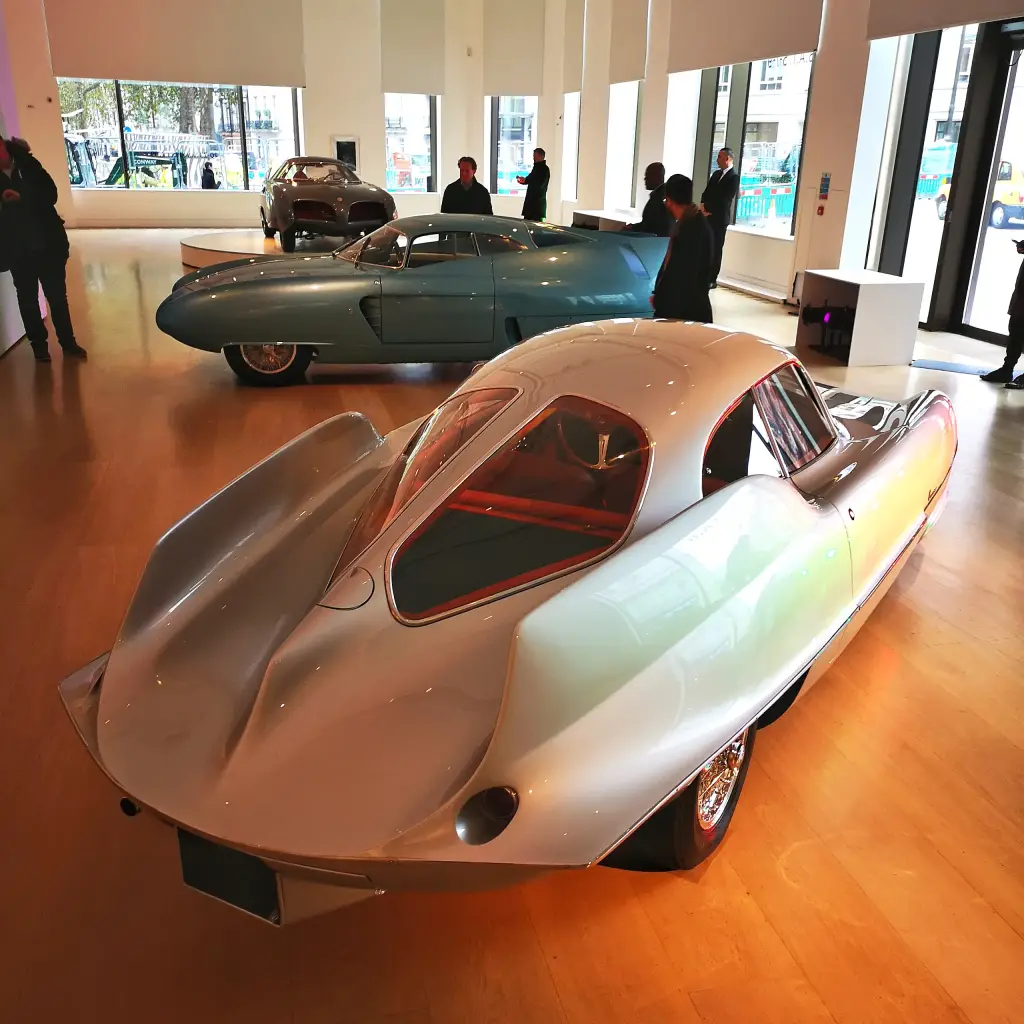
Bertone, the Turin coachbuilder led by Giuseppe “Nuccio” Bertone, designed or built some of the most famous Alfa Romeos, from the BAT aerodynamic concepts of 1953–1955 to the Alfa Romeo GT of 2003, the last production Alfa Romeo designed by Bertone. This page tells the story of the BAT concepts first and then lists the other Bertone-designed Alfas.
Bertone-designed Alfa Romeos at a glance
| BAT 5, 7, 9 (1953–1955) | three aerodynamic concepts on the Alfa Romeo 1900 chassis, shown each year at the Turin Auto Show; BAT 7 Cd 0.19, BAT 9 Cd 0.23 |
|---|---|
| Giulietta Sprint (1954) | 2+2 coupé designed by Franco Scaglione at Bertone, produced at Bertone’s Grugliasco plant |
| Giulia Sprint GT (1963) | coupé body by Giorgetto Giugiaro for Bertone, the basis of the 105/115 series coupés |
| Giulia GT Spider (1963) | prototype designed by Ernesto Cattoni and realised by Bertone; never produced |
| Carabo (1968) | wedge concept by Marcello Gandini on the 33 Stradale chassis |
| Navajo (1976) | wedge concept on the 33 Stradale chassis, shown at Geneva |
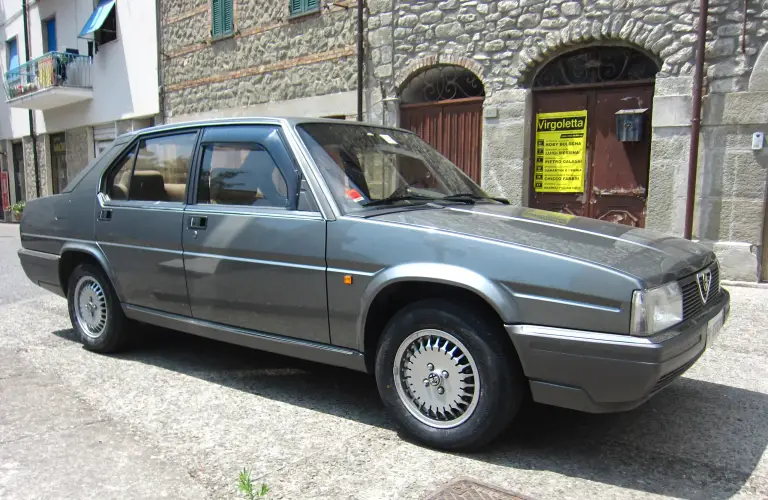
| Alfa Romeo 90 (1984) | executive saloon designed by Bertone |
| Alfa Romeo GT (2003–2010) | last production Alfa Romeo designed by Bertone |
The BAT part of this page is based on a short article by Michael Fordham at Adrian Flux, retold in our own words; the other entries come from English Wikipedia. The figures could not be cross-checked against a third source.
History of the Bertone-designed Alfa Romeos
The BAT concepts
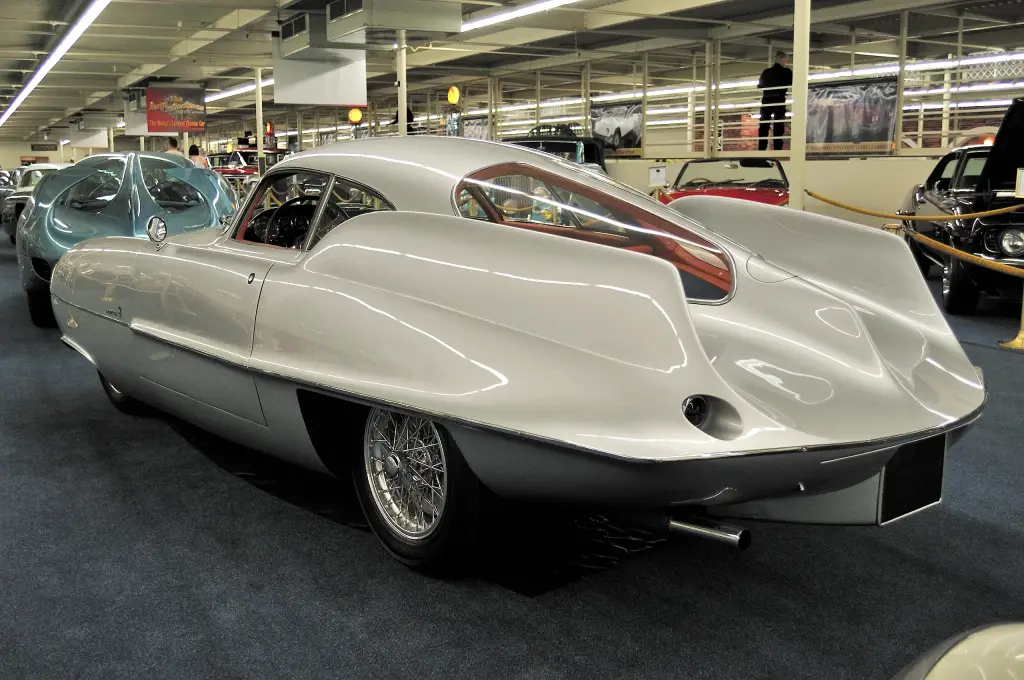
In the early 1950s Alfa Romeo commissioned Nuccio Bertone to build concept cars that explored the effects of drag. Italy was starting to rebuild eight years after the war, and it was time to bring some of the technology developed during the war years into the design of Italian cars. The cars were built on the Alfa Romeo 1900 chassis, and by a happy coincidence of language their name, BAT, stood for Berlinetta Aerodinamica Tecnica. Bertone and Alfa Romeo showed one BAT each year at the Turin Auto Show between 1953 and 1955.
All three look slippery to the naked eye, but the most interesting part is the tail, with a lengthwise rear window divided by a slim pillar and two fins that taper upwards and slightly inwards. For the BATs Bertone drew on his experience with wing profiles in the aeronautical industry.
The first, BAT 5, was presented in Turin in 1953. BAT 7 followed a year later with an extremely low drag coefficient of 0.19. BAT 9, shown in 1955, had a drag coefficient of 0.23 and is considered the most pleasing of the three and the most Alfa-looking; it shows that the wings and chrome of the 1950s could be functional as well as decorative.
Bertone road cars and later concepts
The first Giulietta to be introduced was the Giulietta Sprint 2+2 coupé at the 1954 Turin Motor Show, designed by Franco Scaglione at Bertone and produced at the coachbuilder’s Grugliasco plant near Turin. In 1963 the Giulia Sprint GT followed, with a body by Giorgetto Giugiaro for Bertone, one of his first major projects there. Its shape was shared by all the 105 and 115 series coupés until 1977.
Bertone also built concept cars on the chassis of the Alfa Romeo 33 Stradale: the Carabo of 1968, drawn by Marcello Gandini, and the Navajo of 1976. The Alfa Romeo 90 of 1984 and, in 2003, the Alfa Romeo GT were later Bertone designs, the GT being the last production Alfa Romeo designed by Bertone.
Design and features
- BAT tail: a lengthwise rear window split by a slim pillar, framed by two fins tapering upwards and slightly inwards.
- Aeronautical influence: Bertone applied his experience with wing profiles to the BATs.
- Chassis: the BATs were built on the Alfa Romeo 1900 chassis; the Carabo and Navajo on the 33 Stradale.
Bertone-designed Alfa Romeos versions
- BAT 5 (1953): the first of the series.
- BAT 7 (1954): drag coefficient 0.19.
- BAT 9 (1955): drag coefficient 0.23, the most Alfa-looking.
Read more about the cars in our Alfa Romeo collection: the BAT concepts, the 105/115 coupés, the Carabo, the Navajo, the Alfa Romeo 90 and the Alfa Romeo GT.
Bertone-designed Alfa Romeos questions and answers
What does BAT mean?
Berlinetta Aerodinamica Tecnica.
Who built the BAT concepts?
Bertone, led by Giuseppe “Nuccio” Bertone, on the Alfa Romeo 1900 chassis.
Which BAT had the lowest drag?
BAT 7 of 1954, with a drag coefficient of 0.19; BAT 9 had 0.23.
When were the BATs shown?
One each year at the Turin Auto Show between 1953 and 1955.
What was the last production Alfa Romeo designed by Bertone?
The Alfa Romeo GT (2003–2010).
Sources
- Bertone BAT: Alfa Romeo concept cars, Adrian Flux (Michael Fordham): the BAT story and drag figures, retold in our own words
- Alfa Romeo Giulietta (1954), English Wikipedia: Giulietta Sprint
- Alfa Romeo 105/115 Series Coupés, English Wikipedia: Giulia Sprint GT
- Alfa Romeo Carabo, English Wikipedia: Carabo
- Alfa Romeo GT, English Wikipedia: Alfa GT
- Alfa Romeo Spider, English Wikipedia: Giulia GT Spider prototype
- Alfa Romeo Navajo, English Wikipedia: Navajo
- Alfa Romeo 90, English Wikipedia: Alfa Romeo 90