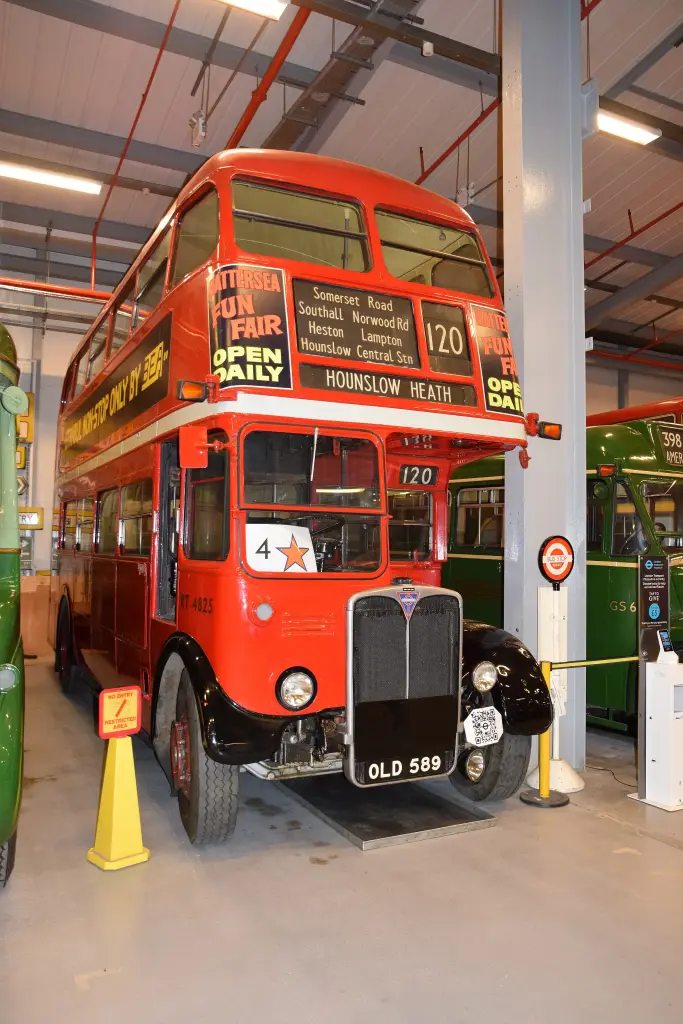
The AEC Regent III RT was one of the variants of the AEC Regent III and a double-decker bus produced jointly by AEC and London Transport. It was the standard red London bus in the 1950s and continued to outnumber the better-known AEC Routemaster throughout the 1960s.
AEC Regent III RT at a glance
| Built by | AEC and London Transport |
|---|---|
| Prototype | RT 1, built 1938 |
| Prototype engine | 8.8-litre, pending the 9.6-litre |
| Prototype body | built at London Transport’s Chiswick Works |
| Pre-war order | 338 chassis ordered, reduced to 150 |
| Post-war production | 1946–1954 |
| Post-war RTs to London Transport | 4,674 delivered 1947–1954 |
| RT family total | 6,956: 4,825 RT, 1,631 RTL, 500 RTW |
| Other operators | 101 chassis to ten operators, 1946–1951 |
| Last in service | RT624, route 62 from Barking, 7 April 1979 |
History of the AEC Regent III RT
The prototype, London Transport RT 1, was built in 1938 with an AEC 8.8-litre engine as a stopgap until the new 9.6-litre unit was available, and with an air-operated pre-selective gearbox. Finding a satisfactory British substitute for the German Bosch air compressor was to cause problems for AEC once war broke out. The prototype chassis was put into service disguised as an old vehicle, carrying a secondhand open-staircase body from a 1931 Leyland Titan; as ST 1140 it ran from July to December 1938. While the chassis was on trial a new four-bay body was constructed at Chiswick Works, resembling the Roe Leeds City Pullman body shown at the 1937 Commercial Motor Show, and the bus re-entered service in 1939.
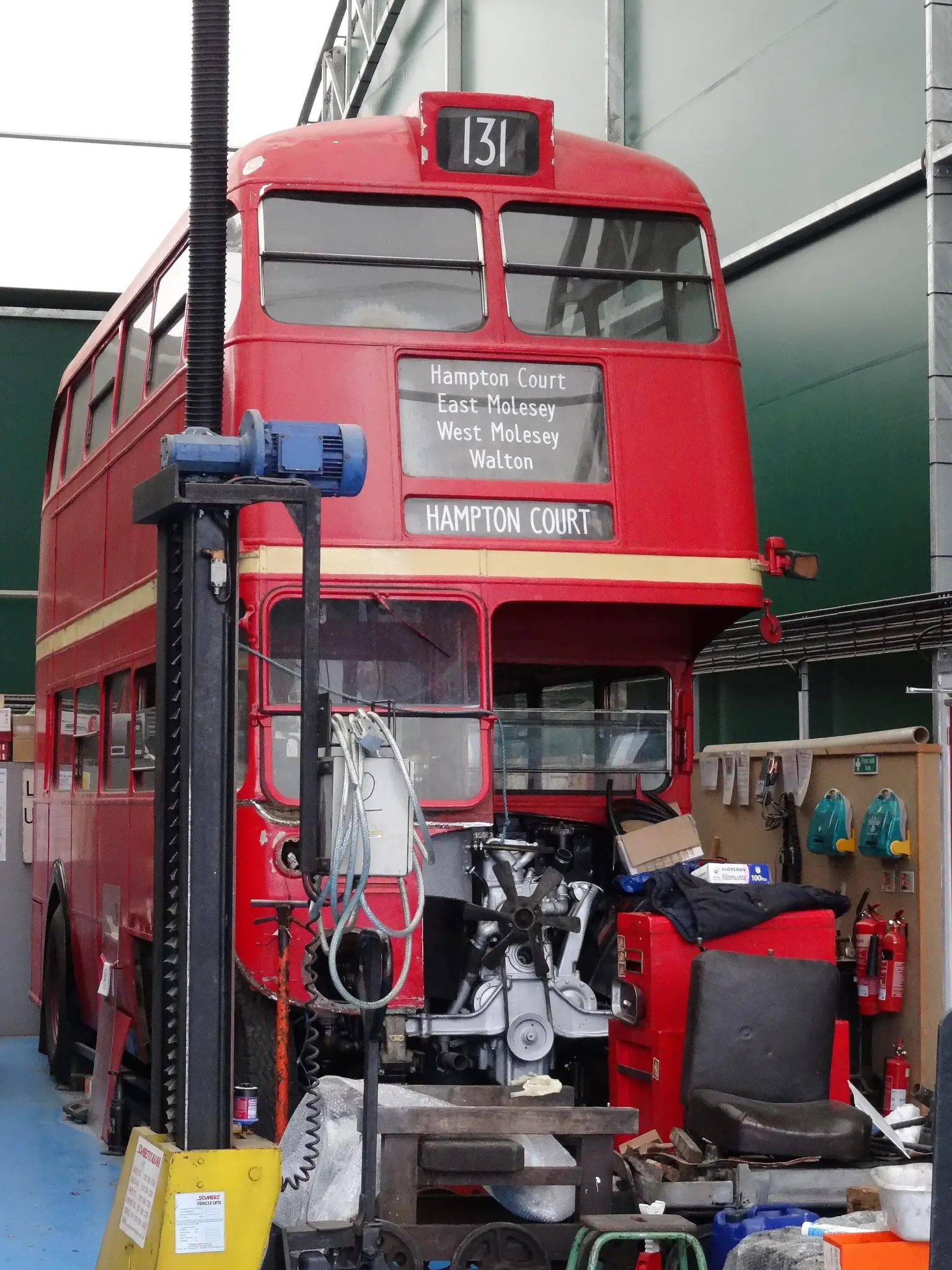
London Transport ordered 338 chassis before the war, later reduced to 150, which were in production when war broke out in September 1939. With the fall of France in June 1940 deliveries slowed, and the last of the batch, RT 151, did not reach London Transport until January 1942, six months after its predecessor, although all were built to full pre-war specification. These vehicles were lighter than RT 1 and their post-war counterparts because they had metal-framed rather than composite wood-and-metal bodies. The only other RT-type chassis finished before the war ended went to Glasgow Corporation, where it carried a Weymann H30/26R body and was delivered in February 1940.
Production restarted in late 1946, delayed by London Transport’s wish to have bodies jig-built following its experience building Halifax bombers at Aldenham. The new buses followed a modified version of the pre-war design but looked similar; the narrow ultimate destination blind moved just above the driver, the rear route number was dropped, bodies came from several contractors rather than London Transport itself, and the number of ventilation slats below the windscreen fell from six to four. London Transport received 4,674 post-war RT-class buses between 1947 and 1954, and the wider RT family numbered 6,956 vehicles: 4,825 RTs, 1,631 RTLs and 500 RTWs, the last two using a variant of the Leyland Titan chassis. Not all production went to London: between 1946 and 1951, 101 chassis were delivered to ten other operators, of which only forty had RT-style bodies. The very last RT in service, RT624, now preserved by Ensignbus, ran on route 62 from Barking Garage on 7 April 1979.
Design and features
- Joint design: developed by AEC and London Transport, with bodies built at Chiswick and then by outside contractors.
- Standard London bus: the red RT was the capital’s standard double-decker in the 1950s and still outnumbered the Routemaster in the 1960s.
- Family of types: RT, RTL and RTW shared the layout, the last two on Leyland Titan chassis variants.
- Long service: the last RT ran in London in April 1979, more than forty years after the prototype.
AEC Regent III RT versions
- RT 1 (1938): the prototype with an 8.8-litre engine and a Chiswick-built body.
- Pre-war RT (1939–1942): 150 chassis, lighter than later buses, with metal-framed bodies.
- Post-war RT (1947–1954): 4,825 buses to the modified London design.
- RTL and RTW: 1,631 and 500 buses using Leyland Titan chassis variants.
- SRT: surplus bodies briefly fitted to modified STL chassis.
The RT was the direct predecessor of the Routemaster and a London variant of the AEC Regent III. More buses are in the AEC collection.
Video: AEC Regent III RT bus from Epping to Ongar, 27 April 2013
Video by ilesmarktransport on YouTube.
Sources
- AEC Regent III RT, English Wikipedia: prototype, production, fleet numbers, last bus