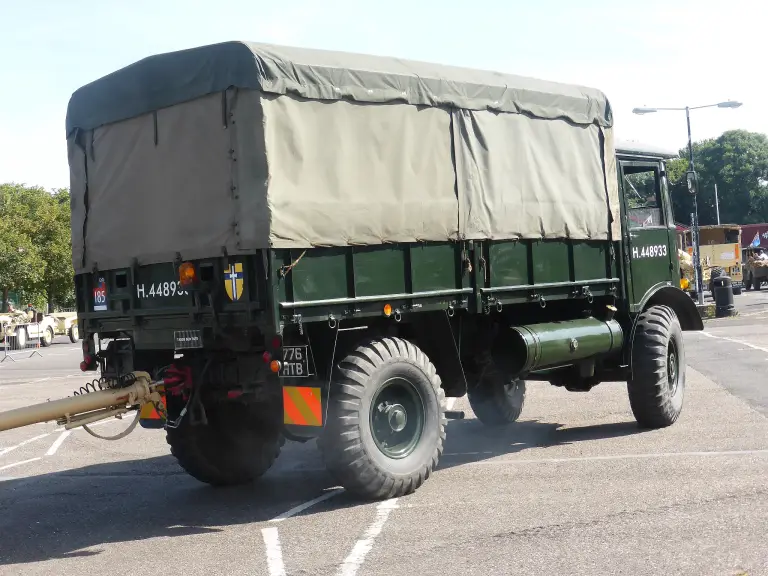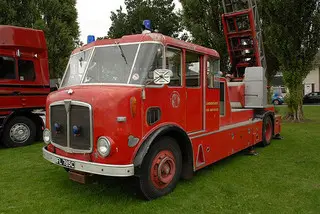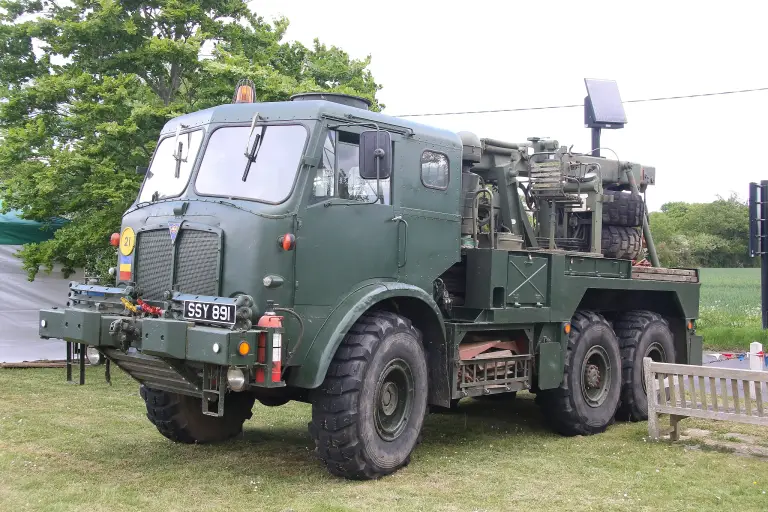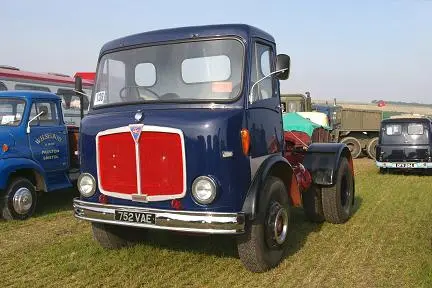
The AEC Mercury was a medium-duty lorry name used by Associated Equipment Company in two periods. The first Mercury, the Model 440, appeared in 1928; the name was revived after the Second World War for 4×2 lorries and tractors that remained in production into the 1970s.
AEC Mercury at a glance
| Maker | Associated Equipment Company (AEC), Southall |
|---|---|
| First model | Mercury 440, 1928, forward-control lorry |
| Wheelbase | 14 ft for 4-ton payloads |
| Model 640 | from 1930, four-cylinder petrol engine, 65 bhp |
| 640 production | 1928–1937, 4×2 normal control |
| Name revived | medium-duty 4×2 lorries and tractors, 1950s–1970s |
| Mercury G4M | 1953–1965, 4×2 medium-duty cabover |
| Cabs | Duramin (Mk.I), Park Royal ‘tin front’ and Mk.V, Bowyers |
| Mercury TGM4 | 1964–1977, Ergomatic tilting cab |
| Export name | sold as Monarch in some markets |
There is no separate Wikipedia article on the AEC Mercury; the facts above come from the model list in the article on Associated Equipment Company.
History of the AEC Mercury
The first AEC Mercury, model 440, was built from 1928. It was a forward-control lorry with a wheelbase of 14 feet for four-ton payloads, and the model 640 that followed in 1930 used a four-cylinder petrol engine developing 65 bhp. In 1928 G. J. Rackham had been appointed chief engineer and designer, and from 1929 AEC’s lorry names began with “M” — Majestic, Mammoth, Mercury and others — while its bus names began with “R”. Diesel engines were introduced across the range in the mid-1930s, and the original M-models continued in production until the end of the Second World War.
The name was resurrected for medium-duty 4×2 lorries and tractors built from the 1950s to the 1970s. The G4M of 1953–65 was a 4×2 medium-duty cabover: the Mk.I of 1953–55 usually carried a Duramin cab, while the Mk.II of 1955–65 usually had Park Royal cabs, first the ‘tin front’ and later the Mk.V type, with Bowyers among the other cab suppliers. In some export markets this model was sold as the Monarch. Park Royal designed a new cab for the AEC Mercury in the mid-1950s, and it appeared on all models across the range about that time.
The second generation closed with the TGM4 of 1964–77, a 4×2 medium-duty cabover with the Ergomatic tilting cab, again sold as the Monarch in some export markets, notably New Zealand. The Mercury was also the basis of other AEC vehicles: the Mustang GM6 of 1956–61 was a twin-steer 6×2 derived from it, the Matador Mk.I of 1932–35 was a 4×2 cabover version of the Mercury, and the last Matador, built in 1960, was a 4×4 variant of the Mercury.
Design and features
- Long-lived name: first used in 1928, revived in the 1950s and kept until 1977.
- Medium-duty 4×2: the post-war Mercury was a cabover lorry and tractor rather than a heavy eight-wheeler.
- Several cab suppliers: Duramin, Park Royal and Bowyers bodies were fitted to the G4M.
- Ergomatic cab: the TGM4 of 1964–77 used AEC’s tilting cab.
AEC Mercury versions
- Mercury 440 (1928): forward-control lorry on a 14 ft wheelbase for four-ton payloads.
- Mercury 640 (1928–1937): 4×2 normal-control lorry with a 65 bhp four-cylinder petrol engine.
- Mercury G4M (1953–1965): 4×2 medium-duty cabover, sold as Monarch in some export markets.
- Mercury TGM4 (1964–1977): 4×2 cabover with Ergomatic tilting cab.
The Mercury also underpinned the Matador and the 6×2 Mustang, and it sat below the heavier Marshal in the range. More vehicles are in the AEC collection.
Sources
- Associated Equipment Company, English Wikipedia: model history, cabs, dates, export names