The AEC Matador was a heavy 4×4 truck and medium artillery tractor built by the Associated Equipment Company for British and Commonwealth forces during the Second World War. AEC had already used the name in 1931 for a 4×2 lorry, as all its lorries received “M” names.
AEC Matador at a glance
| Maker | Associated Equipment Company (AEC), Southall |
|---|---|
| Type | 4×4 heavy truck and medium artillery tractor |
| Built | over 9,600 |
| Cab | flat front with gently curved roof, ash frame clad in steel |
| Winch | 7-ton load, fitted as on all artillery tractors |
| Load area | flat, covered by canvas or tarpaulin tilt |
| Crew seating | two transverse bench seats, reached through side doors |
| Related 6×6 | O854, based on Marshal and Matador components |
| Wartime roles | gun tractor, cargo, RAF refuelling tanker, flamethrower |
| Post-war | recovery truck, showman’s vehicle, forestry and contractor use |
History of the AEC Matador
The Matador is best known as the 4×4 artillery tractor introduced in 1938, although AEC had used the name in 1931 for a five-ton 4×2 commercial lorry. The military vehicle exploited the company’s experience with four-wheel drive, gained from its involvement with the British Four Wheel Drive vehicles marketed under the Hardy name.
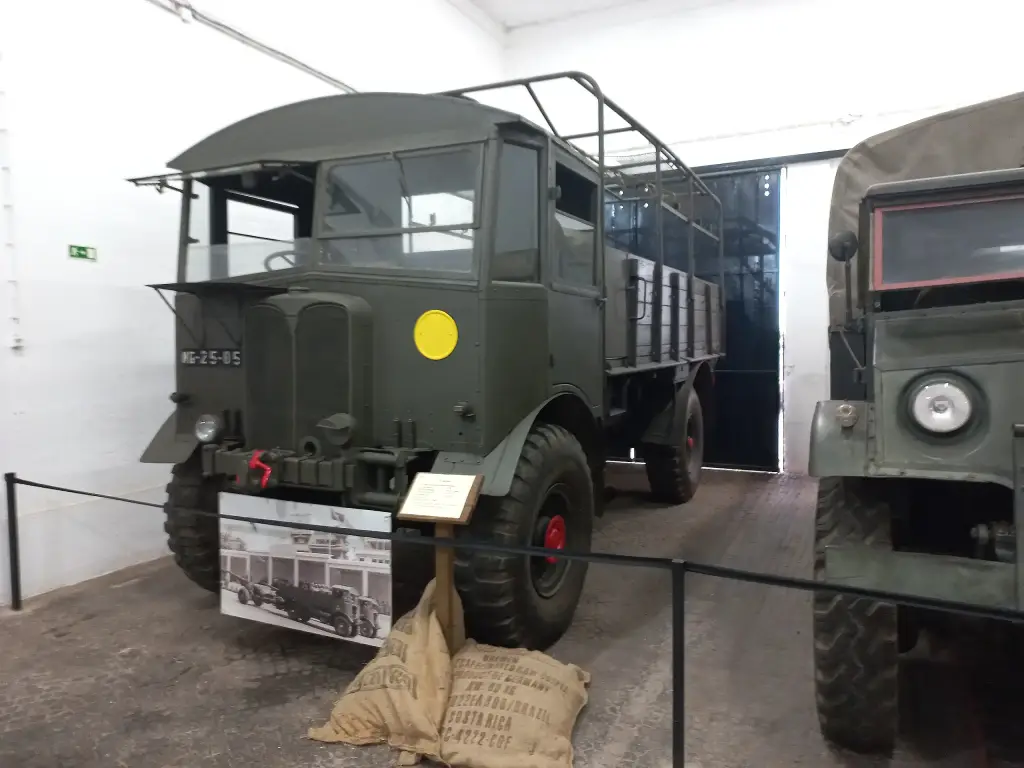
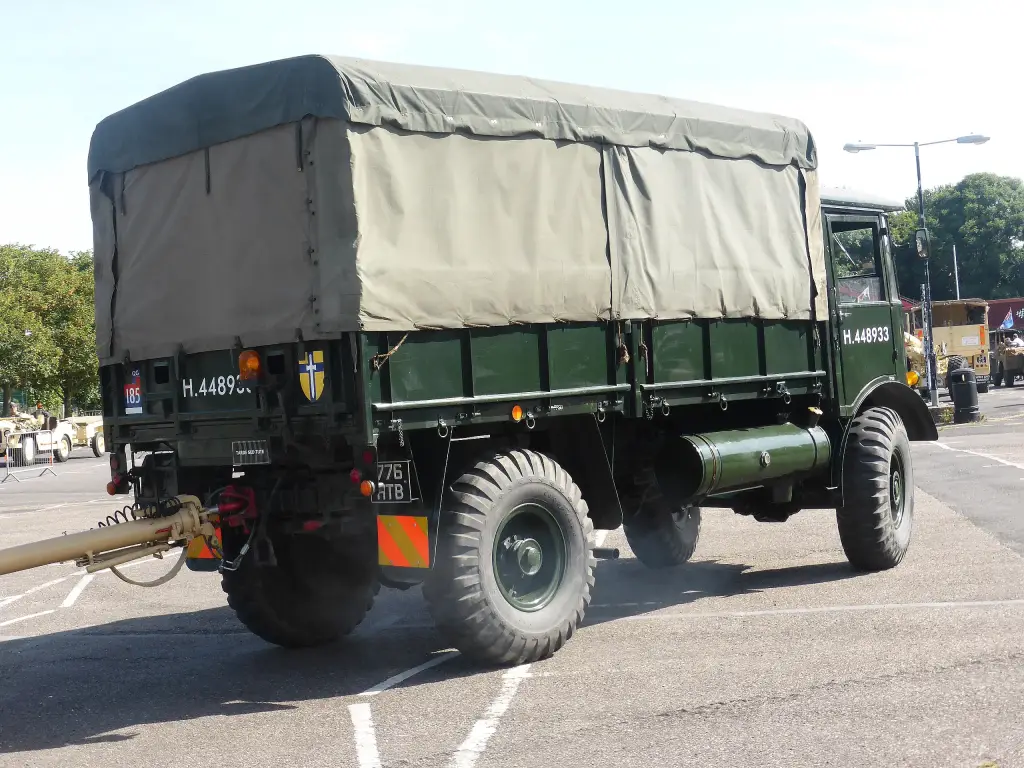
It was distinctive for its flat fronted cab with a gently curved roof, wheels at the corners and a flat load area covered by a canvas or tarpaulin tilt. As an artillery tractor rather than a cargo vehicle it had fixed wooden sides that did not fold down, but a narrow crew door on each side; two transverse bench seats for the gun crew were reached through those doors. The cab was framed in ash and clad in steel, and the vehicle carried a winch rated at seven tons. The O853 provided the basis for the Dorchester armoured command vehicle, while the larger 6×6 O854 used components from both the Marshal 6×4 and the 4×4 Matador; a small number of petrol-engined 4×4 Matadors were built as model 853.
Over 9,600 Matadors were built, some going to the Royal Air Force. For the British Army it filled the gap between field artillery tractors such as the Morris C8 Quad, which towed smaller guns like the 25-pounder, and the Scammell Pioneer, used with the 7.2-inch howitzer. It commonly towed the 5.5-inch medium gun and the QF 3.7-inch anti-aircraft gun, and was adapted to carry a 25-pounder. The RAF used flat-bed Matadors for load carrying and a six-wheeled Type A with Zwicky refuelling equipment as a tanker carrying 2,500 imperial gallons, also used for towing Short Sunderland flying boats ashore. Six armoured flamethrowers, the Heavy Cockatrice, served on the 6×6 chassis for airfield defence, and in 1942–43 some Matadors mounted a 6-pounder anti-tank gun as the Deacon gun carrier. The Canadian Army also used the type.
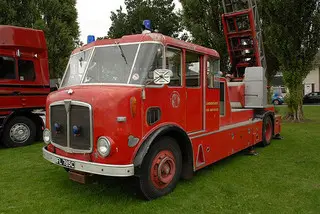
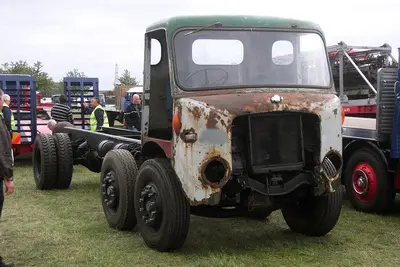
After the war Matadors passed into civilian hands as recovery trucks, showmen’s vehicles and general contractor transport. Their good off-road performance made them useful in forestry, and bus fleet recovery examples were often fitted with lifting jibs and rebodied with semi-enclosed bodies, frequently based on bodywork from scrapped buses.
Design and features
- Four-wheel drive: a 4×4 layout with wheels at the corners and a flat, canvas-covered load area.
- Ash-framed cab: steel-clad over a timber frame, with a curved roof and a crew door on each side.
- Seven-ton winch: standard equipment on the artillery tractor.
- Adaptability: gun tractor, cargo lorry, refuelling tanker, flamethrower and gun carrier.
AEC Matador versions
- O853 artillery tractor: the standard 4×4, basis of the Dorchester armoured command vehicle.
- Model 853: a small number of petrol-engined 4×4 Matadors.
- O854: larger 6×6 based on Marshal 6×4 and Matador components, built as petrol and diesel and also called Matador.
- Deacon: 6-pounder anti-tank gun mounted on the Matador for North Africa in 1942–43.
- RAF Type A tanker: six-wheeler with Zwicky refuelling equipment and 2,500-gallon capacity.
The Matador was replaced in production by the six-wheeled Militant, and its 6×6 wartime relative was the Marshal. More vehicles are in the AEC collection.
Video: Wreck Rescue AEC Matador RAF Truck
Video by markevanswreckrescue on YouTube.
Sources
- AEC Matador, English Wikipedia: description, production, service, post-war use